Pomegranate Tree Identification Guide
Identify the pomegranate tree (Punica granatum) by its glossy narrow leaves, often-thorny twigs, vivid orange-red tubular flowers, and round leathery fruit crowned with a persistent calyx full of seedy arils.
Read the full Pomegranate Tree encyclopedia entry →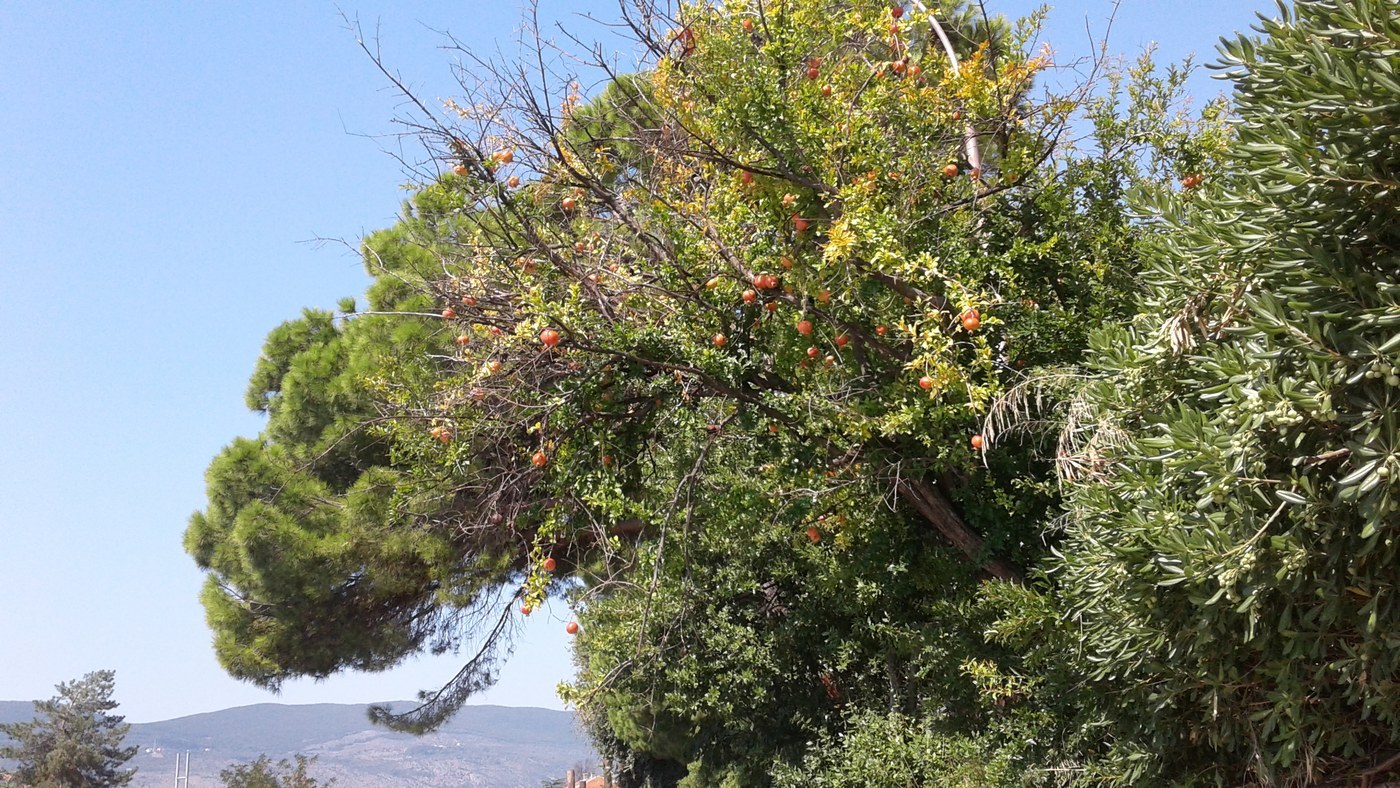
Key Identifying Features
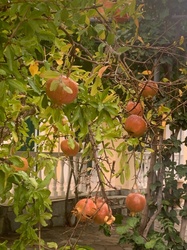
The pomegranate (Punica granatum) is a deciduous shrub or small tree, 2-5 m tall, often multi-stemmed and bushy. Identify it by its small, glossy, narrow oblong leaves, stiff often-spiny twigs, the brilliant orange-red, fleshy, trumpet-shaped flowers, and the distinctive round leathery-skinned fruit topped by a persistent crown-like calyx. Cut the fruit and you find hundreds of juicy red seeds (arils) in white membranous chambers — a near-definitive sign.
Leaves & Stems
- Leaves are simple, opposite or whorled (sometimes nearly so), narrow oblong to lance-shaped, 2-7 cm, glossy green, with smooth margins.
- New growth is often bronze-red to coppery, and autumn color is yellow.
- Twigs are slender, angular, and frequently end in a sharp spine.
- Bark is gray-brown; older trunks become gnarled and shreddy.
- The plant is deciduous in cool climates, leafing out in spring.
Flowers & Fruit
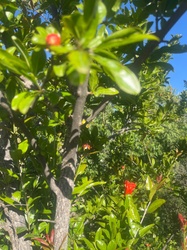
- Flowers are showy, 3-4 cm, with crumpled orange-red (sometimes white/variegated) petals emerging from a thick, waxy, tubular red calyx shaped like a small vase.
- They appear in late spring through summer, singly or in small groups at branch tips.
- Fruit is a round berry, 5-12 cm, with tough red-brown to pink leathery skin and a persistent crown of calyx lobes at the top — a key field mark.
- Inside: many seeds surrounded by translucent red juicy arils in compartments.
How to Tell It Apart from Look-Alikes
- Crabapple/quince: Have rounder, often downy leaves and pome fruit with a core, not a calyx-crowned leathery berry full of arils.
- Ornamental flowering shrubs (e.g., Hibiscus): May have showy red flowers but lack the waxy tubular calyx and crowned fruit.
- Guava: Leathery fruit but with a soft skin, opposite veined leaves, and no aril-packed interior.
The glossy narrow leaves + spiny twigs + waxy orange-red tubular flowers + round leathery fruit with a calyx crown and red arils is unique to pomegranate.
Where You'll Find It
Pomegranates thrive in hot, dry Mediterranean and subtropical climates (USDA zones 7-11), grown in orchards, gardens, and as ornamental/hedge shrubs. They tolerate drought and poor soil but need full sun and heat to fruit well. Dwarf ornamental forms are common in containers. Look for the bushy spiny form with bright flowers in summer and crowned fruit in autumn.
Quick ID Checklist
- Bushy shrub/small tree with slender, often spiny twigs
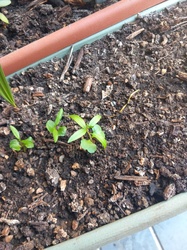
- Small glossy narrow leaves, bronze when young
- Orange-red, crumpled, trumpet-shaped flowers from a waxy tubular calyx
- Round fruit with tough leathery skin
- Persistent crown (calyx) at the fruit's top
- Interior packed with red juicy seed arils
Frequently asked questions
What is the crown on top of a pomegranate?
It is the persistent calyx, the remains of the flower's tube that stays attached as the fruit develops. This little crown of pointed lobes at the blossom end is a hallmark that helps identify pomegranate fruit at a glance.
How do I recognize a pomegranate tree when it is not fruiting?
Look for a bushy, often multi-stemmed shrub with small glossy narrow leaves (bronze-red when young), slender spiny twigs, and, in summer, vivid orange-red trumpet-shaped flowers emerging from a thick waxy tubular calyx.
Are pomegranate flowers and fruit the same color?
Both are typically in the red-orange range. The flowers are bright orange-red with crumpled petals, and the fruit ripens to red-brown or pink leathery skin, though some ornamental varieties have white or variegated flowers.
Does a pomegranate lose its leaves in winter?
In cool climates yes, it is deciduous and drops its leaves, leafing out again in spring. In very mild tropical areas it may stay partly evergreen.
Pomegranate Tree identified by the community
Recent Pomegranate Tree specimens identified with Plant Identifier.