Ponytail Palm Identification Guide
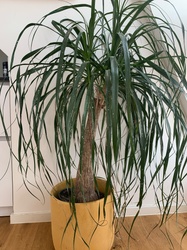
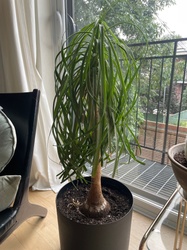
Identify the Ponytail Palm (Beaucarnea recurvata) by its swollen bulb-like base and cascading fountain of long, curling strap leaves — a succulent, not a true palm.
Read the full Ponytail Palm encyclopedia entry →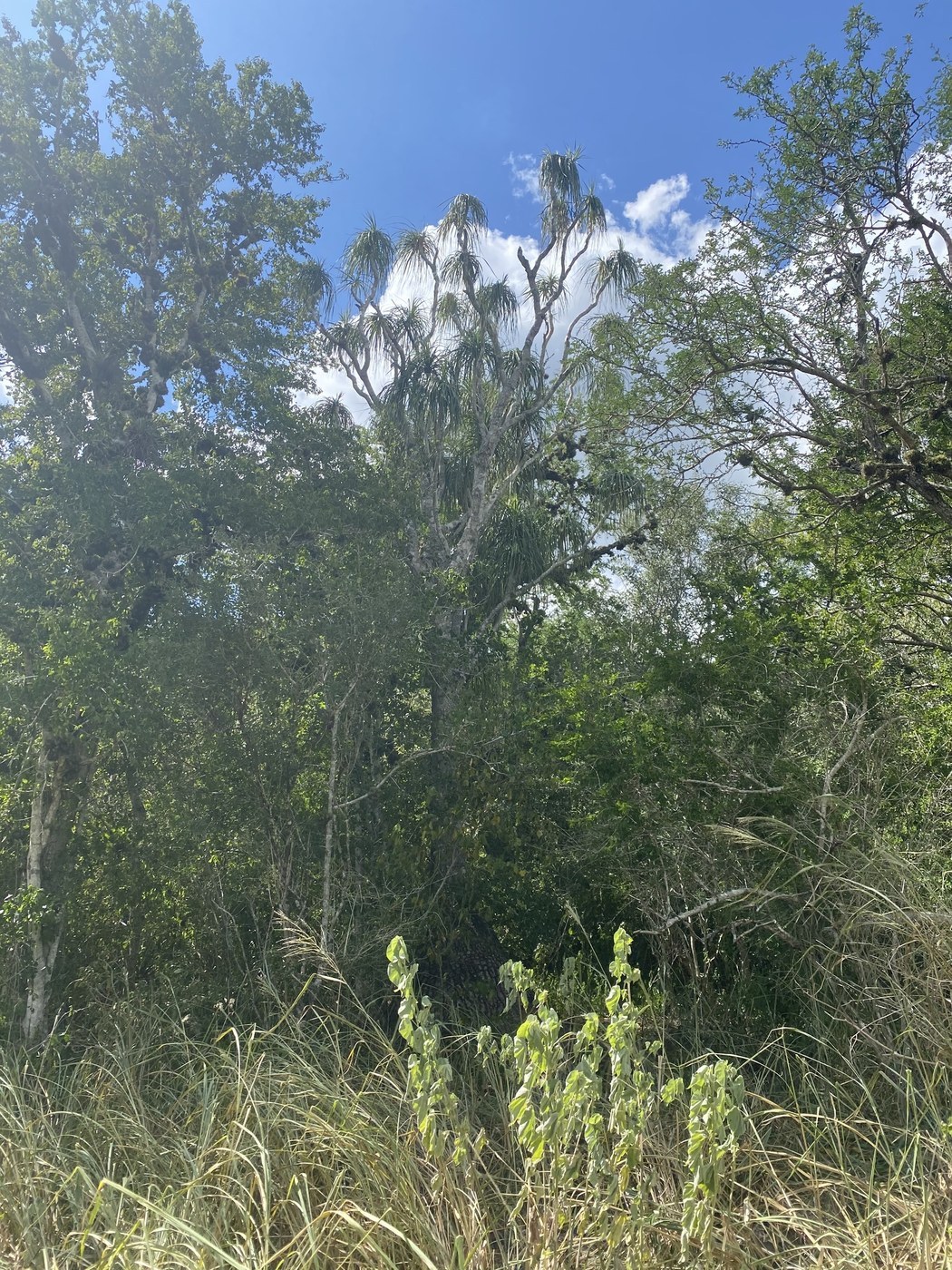
Key Identifying Features
The Ponytail Palm (Beaucarnea recurvata) is neither a ponytail nor a palm — it is a succulent in the asparagus family. It is instantly recognized by its swollen, dome-shaped base that stores water, topped by a spray of long, thin, curling leaves like a fountain or ponytail.
- A bulbous, bottle- or elephant-foot-shaped trunk base (the caudex)
- Long, narrow, strap-like leaves that arch and curl downward
- Smooth gray, slightly cracked bark on the swollen base
- Slow-growing; indoor plants stay 1–2.5 m, wild ones reach much taller
Leaves & Stems
The leaves are flat, leathery, and 0.5–1.8 m long but only about 1–2 cm wide, dark to mid green, with finely rough or minutely serrated edges. They emerge in a dense rosette from the top of the trunk and cascade outward, giving the "ponytail" effect. The defining feature is the caudex — the rounded, water-storing swollen base. Young plants may look like a green onion with hair; older specimens develop a thick, woody, gray, fissured trunk that can branch after flowering.
Flowers & Fruit
Mature plants (often decades old) can produce tall, branching plumes of creamy-white to pinkish flowers held above the foliage. The species is largely dioecious. Flowering is rare in houseplants, so do not rely on blooms — the swollen base is the key identifier.
How to Tell It Apart from Look-Alikes
- True palms: have fronds (pinnate or fan-shaped) and a uniform trunk; none have the bulbous bottle base of Beaucarnea.
- Dracaena and Yucca: can have strap leaves but lack the dramatic swollen water-storing caudex.
- Elephant Foot Yucca (Yucca elephantipes): has a thick base but stiffer, upright, broader leaves with sharper tips, not the soft cascading curls of a Ponytail Palm.
- The combination of a bulbous base plus long, thin, curling leaves is unique to Beaucarnea.
Where You'll Find It
Native to the semi-desert regions of eastern Mexico, it grows in dry, rocky soils. As a houseplant it is prized for being drought-tolerant and forgiving — the caudex lets it go weeks without water. Grow it in bright light and gritty, fast-draining soil; the swollen base shrinks slightly when very thirsty.
Quick ID Checklist
- Swollen, dome- or bottle-shaped base (caudex)
- Long, thin, strap-like leaves that curl and cascade
- Smooth gray cracked bark on the base
- Slow growth; thrives on neglect and drought
- Not a true palm — no fronds
Frequently asked questions
Is the Ponytail Palm a real palm?
No. Despite its name, Beaucarnea recurvata is a succulent in the asparagus family (Asparagaceae), more closely related to agaves than to true palms.
What is the swollen base for?
The bulbous base, called a caudex, stores water so the plant can survive long droughts in its native Mexican deserts. It is the single most reliable identifying feature.
How do I tell a Ponytail Palm from a Yucca?
Yuccas have stiffer, broader, upright leaves with sharp tips and lack the dramatic water-storing bulbous base. The Ponytail Palm has soft, thin, cascading leaves above a swollen caudex.
Why is the base of my Ponytail Palm shriveling?
A softening or wrinkling caudex usually means the plant is very thirsty and drawing on its water reserves, though a mushy base can indicate rot from overwatering. Let the soil dry fully between waterings.
Ponytail Palm identified by the community
Recent Ponytail Palm specimens identified with Plant Identifier.