Prostrate Spurge Identification Guide
Identify prostrate spurge by its flat ground-hugging mat, small oval leaves often with a red blotch, and the milky white sap that oozes from broken stems.
Read the full Prostrate Spurge encyclopedia entry →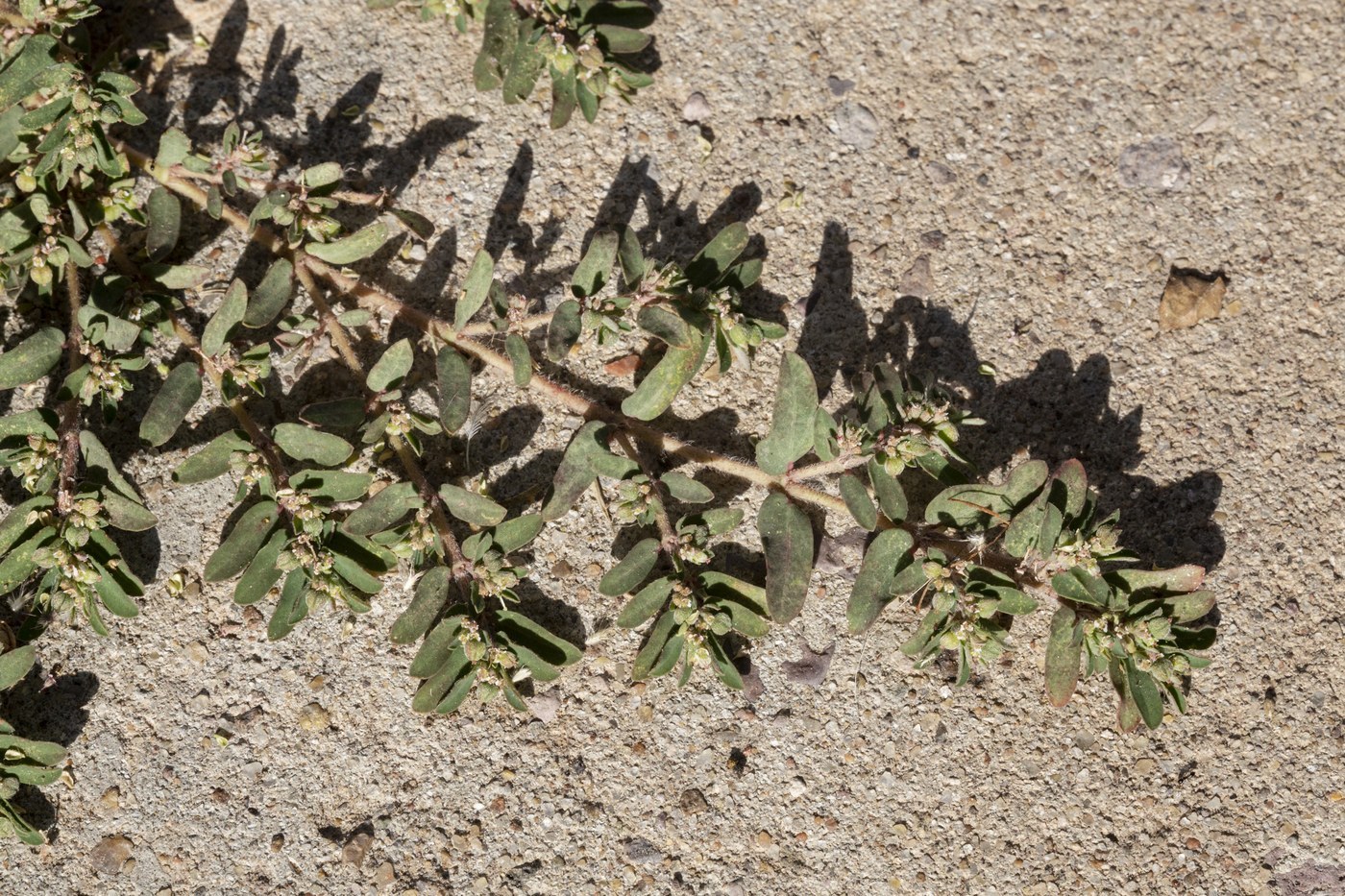
Key Identifying Features
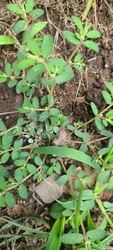
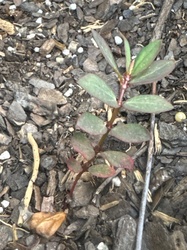
Prostrate spurge (Euphorbia maculata, also called spotted spurge) is a low summer annual that grows as a flat, ground-hugging mat radiating from a central taproot. Two features make it easy to confirm: the milky white sap that flows from any broken stem or leaf, and the small reddish-purple blotch often found on the upper surface of the leaves. The mat-forming habit pressed tight against the soil is itself distinctive.
- Flat, mat-forming growth radiating from one central root
- Milky white sap oozes from broken stems
- Small oval, opposite leaves, often with a dark red/purple spot
- Pinkish, often hairy stems
Leaves & Stems
Leaves are small (under half an inch), oval, arranged in opposite pairs, with finely toothed margins and frequently a maroon blotch in the center of the blade. Stems radiate outward flat along the ground, are often tinged pink or red, and are usually covered in fine hairs. Snap any stem and a white latex sap appears immediately — this is the single most reliable spurge confirmation and distinguishes it from non-spurge mat weeds.
Flowers & Fruit
The flowers are tiny and inconspicuous, clustered in the leaf axils. Spurges produce specialized structures called cyathia rather than typical petals, so the flowers look like minute greenish-pink cups. These develop into small three-lobed seed capsules, often slightly hairy, that release seeds. You usually need to look closely to see the reproductive parts; the plant rarely appears "flowery."
How to Tell It Apart from Look-Alikes
- Prostrate knotweed: Also forms ground mats but has no milky sap and has a papery sheath (ocrea) at each leaf node. Spurge's white sap settles it instantly.
- Purslane: Mat-forming too, but has thick, fleshy succulent leaves and stems with no white sap.
- Spotted/nodding spurge vs. prostrate spurge: Related Euphorbia species can be more upright; prostrate spurge stays pressed flat to the ground.
Where You'll Find It
Prostrate spurge loves hot, dry, compacted, and disturbed sites — cracks in sidewalks and driveways, thin lawns, gravel, garden beds, and field edges. It germinates in late spring and summer as soil warms and tolerates poor soil and drought, often colonizing bare patches where turf is weak.
Quick ID Checklist
- Grows as a flat mat from a central taproot
- Milky white sap from broken stems (essential)
- Small opposite leaves, often with a red blotch
- Tiny flowers in leaf axils
- Found in hot, dry, compacted, disturbed ground in summer
Mat habit plus milky sap equals spurge — the red leaf spot confirms prostrate (spotted) spurge.
Frequently asked questions
Why is the milky sap useful for identification?
The milky white latex that flows from any broken stem or leaf is the most reliable way to confirm you have a spurge rather than a look-alike mat weed such as knotweed or purslane, neither of which has it.
How do I tell prostrate spurge from prostrate knotweed?
Both form flat mats, but prostrate spurge bleeds milky white sap when broken and often has a red blotch on the leaves, while knotweed has clear sap and a papery sheath at each leaf joint.
Why does it grow in sidewalk cracks and driveways?
Prostrate spurge is highly tolerant of heat, drought, and compacted poor soil. These harsh bare spots have little competition, so the fast-growing summer annual readily colonizes them.
Is prostrate spurge an annual or perennial?
It is a summer annual. It germinates as soil warms in late spring, grows and sets seed through summer, and dies with the first frost, returning the next year from seed.
Prostrate Spurge identified by the community
Recent Prostrate Spurge specimens identified with Plant Identifier.