Prostrate Spurge
Euphorbia maculata
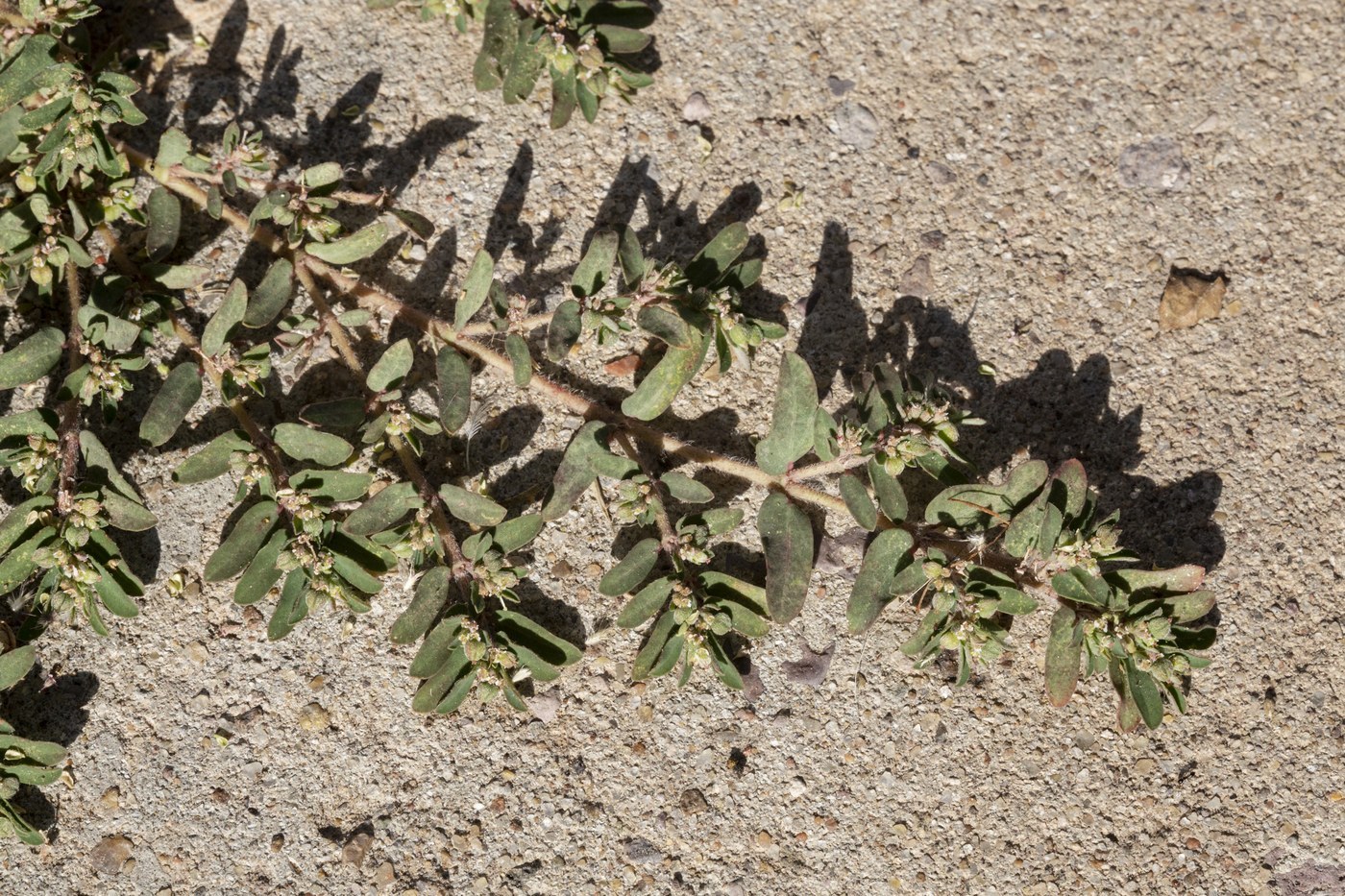
A fast-growing summer annual that forms flat, ground-hugging mats with small oval leaves often marked by a maroon spot. It exudes a milky sap and is a widespread weed of lawns, cracks and gardens.
- Light
- Full sun
- Water
- Very drought-tolerant
- Difficulty
- Easy
Got a plant like this?
Identify any plant from a photo, free.
Overview
Prostrate spurge (Euphorbia maculata, syn. Chamaesyce maculata) is a low, mat-forming summer annual in the spurge family (Euphorbiaceae). It is closely related and often grouped with spotted spurge.
It germinates in warm soil and spreads outward into a dense, flat rosette that hugs the ground. When any part is broken, it releases a milky white latex that can irritate skin. It is a familiar weed of compacted soil, sidewalk cracks, gardens and thin lawns.
How to identify it
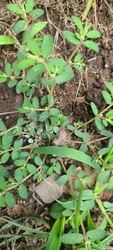
Look for a flat, spreading mat of small paired leaves radiating from a central taproot.
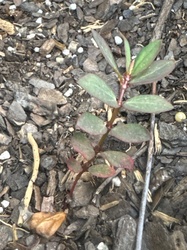
- Reddish, hairy stems that branch and lie flat on the ground
- Small oval leaves arranged in opposite pairs, often with a distinctive maroon or purple blotch in the center
- Tiny, inconspicuous pinkish-white flowers in leaf axils
- Milky white sap that oozes from any cut or broken stem
- Forms circular patches up to 2 ft across
Care & growing
Prostrate spurge is an unwanted weed; care information is for control.
- Light: Full sun; loves hot, open spots
- Water: Extremely drought-tolerant; thrives where other plants struggle
- Soil: Tolerates poor, compacted, dry soils and pavement cracks
- Temperature: Warm-season annual killed by frost
- Propagation: By abundant seed; can germinate and set seed quickly in summer
- Control: Pull young plants (wear gloves due to the sap), maintain dense turf, mulch beds, and use pre-emergent herbicides in late spring
Habitat & origin
Native to North America, prostrate spurge has spread to many warm and temperate regions worldwide as a weed.
It colonizes hot, dry, disturbed sites: sidewalk and driveway cracks, gravel, compacted soil, garden beds and thin or stressed lawns. Its heat and drought tolerance let it thrive in mid-to-late summer when lawns are weakest.
Frequently asked questions
How do I control prostrate spurge in my lawn?
Pull young plants before they seed, thicken your turf to shade the soil, mulch bare beds, and apply a pre-emergent herbicide in late spring since it germinates in warm weather.
What's the difference between prostrate and spotted spurge?
They are very similar mat-forming Euphorbia annuals often treated as the same weed; spotted spurge reliably shows the maroon leaf blotch, and the two are managed identically.
Why does spurge spread so fast?
It germinates quickly in warm soil, tolerates drought and poor ground, and a single plant produces thousands of seeds in one season, allowing rapid reinfestation.
Prostrate Spurge guides
In-depth guides for identifying, growing, and caring for Prostrate Spurge.
How to Care for Prostrate Spurge
Grow prostrate spurge (Euphorbia maculata), a tough, ground-hugging annual that thrives in full sun and dry, poor soils.
Prostrate Spurge Identification Guide
Identify prostrate spurge by its flat ground-hugging mat, small oval leaves often with a red blotch, and the milky white sap that oozes from broken stems.
Prostrate Spurge identified by the community
Real specimens identified with Plant Identifier.