Pumpkin Identification Guide
How to identify pumpkin (Cucurbita species) by its sprawling bristly vines, large lobed leaves, big yellow flowers, and ribbed orange fruit.
Read the full Pumpkin encyclopedia entry →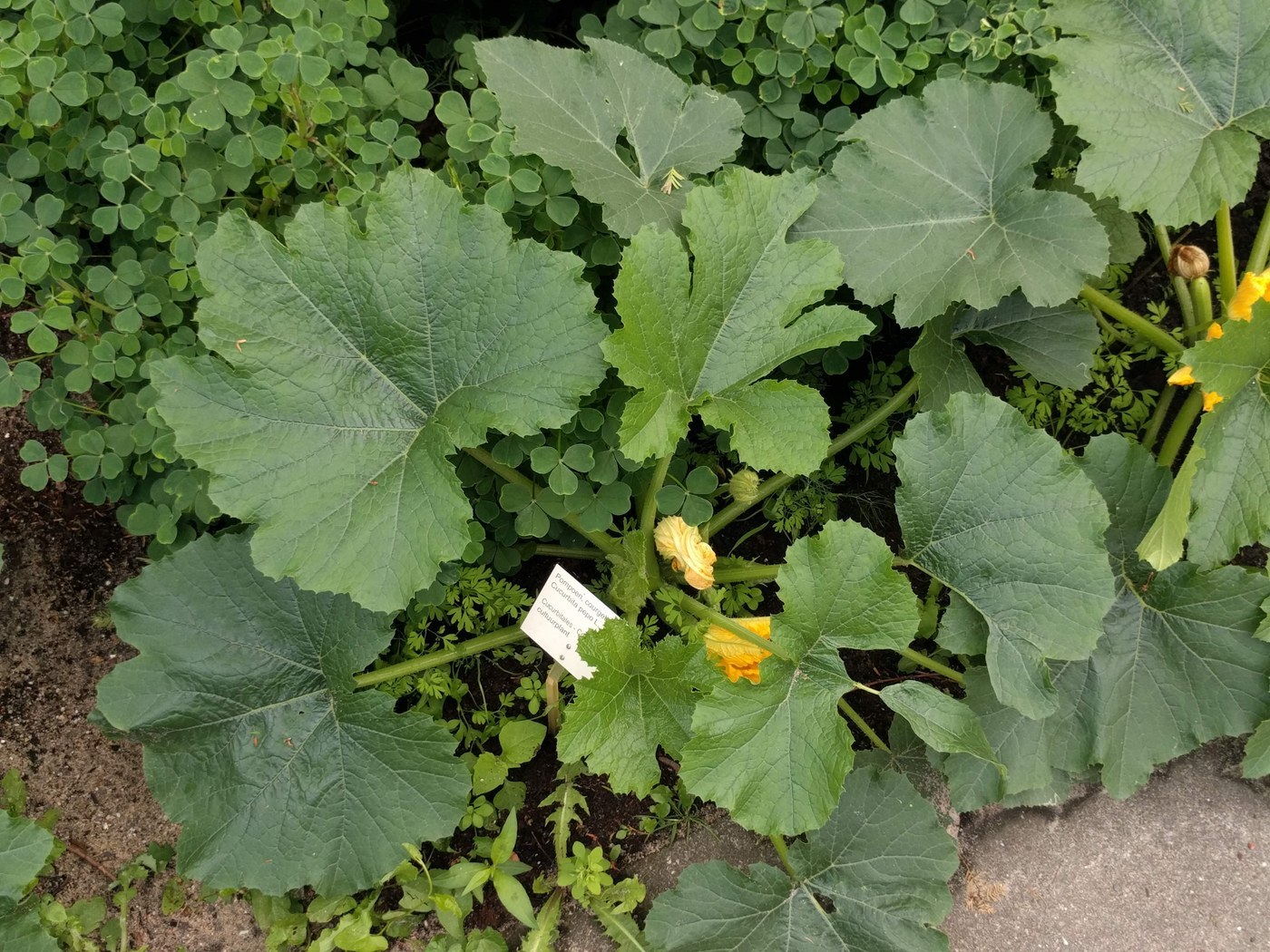
Key Identifying Features
Pumpkin refers to several large-fruited squashes in the genus Cucurbita (mainly C. pepo, C. maxima, and C. moschata). It is a vigorous, ground-running annual vine with rough hairy stems, huge lobed leaves, branching tendrils, and large golden-yellow funnel-shaped flowers that give way to the familiar ribbed orange fruit.
- Long trailing or climbing vine, often 10-20+ ft
- Bristly, somewhat prickly stems and leaf stalks
- Large, shallowly lobed, sandpaper-textured leaves
- Big, bell-shaped yellow-orange flowers, male and female separate
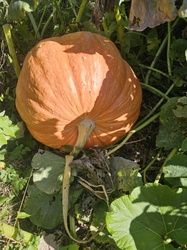
- Hard-shelled, ribbed gourd fruit with a stout corky stem
Leaves & Stems
Leaves are very large (up to 12 in or more), broadly heart-shaped with 3-5 shallow lobes and toothed edges. They feel rough and bristly-hairy on both sides, often with silvery-gray flecking or pale blotches along the veins (normal, not mildew). Stems are thick, angular or ridged, and covered in stiff hairs; coiled branched tendrils emerge near the leaf bases to grip supports. Stems sprawl across the ground and root at the nodes.
Flowers & Fruit
Pumpkins are monoecious: each plant bears separate male and female flowers. Both are large (3-4 in), deep yellow to orange, and funnel- or bell-shaped with five fused petal lobes. Female flowers sit on a tiny round ovary (a mini pumpkin) just below the bloom; male flowers stand on plain slender stalks. The fruit is a hard-rinded pepo: typically round and ribbed, orange when mature, attached by a hard, ridged, 5-sided corky stem (the "handle"). Inside are stringy pulp and flat white seeds.
How to Tell It Apart from Look-Alikes
- Other squashes/gourds: zucchini, acorn, and butternut share the same vines and flowers; the distinguishing clue is fruit shape and the stem. A hard, woody, sharply 5-angled stem indicates C. pepo (pumpkins, zucchini); a soft, round, corky flared stem indicates C. maxima (giant pumpkins).
- Cucumber and melon: also cucurbits with yellow flowers, but their leaves and fruit are far smaller and the flowers are not the big bell shape.
- Wild gourds: smaller, hard fruit; pumpkin's huge orange fruit and broad leaves set it apart.
Where You'll Find It
Pumpkins grow in vegetable gardens, farm fields, and compost heaps (from discarded seed) in warm, frost-free months. They need full sun and lots of room to sprawl. Vines are common in autumn-harvest patches across temperate and subtropical regions worldwide.
Quick ID Checklist
- Long, bristly, ground-running vine with branched tendrils
- Large lobed sandpaper leaves, often silver-flecked
- Big yellow-orange bell flowers; female on a tiny round ovary
- Ribbed orange fruit on a hard corky stem
- Full-sun garden or field, late summer to fall
Frequently asked questions
How do I tell a pumpkin vine from other squash vines?
They look nearly identical when young. The clearest clue is the fruit: pumpkins are round and ribbed with a hard, often 5-sided corky stem. Until fruit forms, the big bristly lobed leaves and tendrils just tell you it is a Cucurbita squash.
Why do some leaves have white or silver patches?
Many pumpkin varieties naturally have silvery-gray mottling or flecking along the veins. It is a genetic trait, not powdery mildew. Mildew appears as a powdery, wipeable white dust over the whole leaf surface.
How can I tell male from female pumpkin flowers?
Look at the base of the flower. Female flowers have a small swollen round ovary (a tiny pumpkin) right beneath the petals; male flowers sit on a plain thin stalk with no swelling.
Are all pumpkins orange?
No. Pumpkins can be white, green, blue-gray, tan, or red-orange depending on the variety. Identify by the vine, leaves, flowers, and ribbed shape rather than color alone.
Pumpkin identified by the community
Recent Pumpkin specimens identified with Plant Identifier.