Rosemary Identification Guide
Identify rosemary by its needle-like aromatic leaves, woody evergreen stems and small two-lipped blue flowers. This guide covers its pine-camphor scent and look-alikes.
Read the full Rosemary encyclopedia entry →Key Identifying Features
Rosemary (Salvia rosmarinus, formerly Rosmarinus officinalis) is a woody evergreen Mediterranean shrub in the mint family with a powerful resinous fragrance.
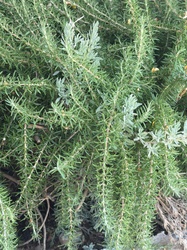
- Leaves: narrow, needle-like (linear), leathery, dark green above and pale/white-woolly beneath, 1-4 cm long
- Aroma: crushing the leaves releases a strong pine-camphor, resinous scent (key ID trait)
- Stems: woody, evergreen, square in new growth
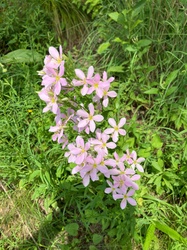
- Flowers: small two-lipped pale blue to violet (sometimes white/pink) flowers clustered along the stems
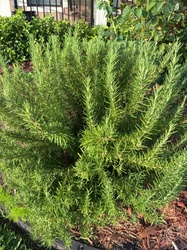
- Habit: upright bushy or trailing/prostrate shrub, 0.5-1.5 m
Leaves & Stems
Leaves are opposite or densely clustered, stalkless, with margins rolled under (revolute) so they look like short pine needles. The underside is whitish and felty, while the top is dark glossy green; this two-tone needle is highly diagnostic. Stems become woody and gray-brown with age, with the youngest shoots faintly square (mint family). Trailing forms cascade over walls; upright forms make stiff bushes.
Flowers & Fruit
Flowers grow in small clusters in the leaf axils along the upper stems, mostly in winter and spring (and sporadically year-round in mild climates). Each is a small two-lipped salvia-type flower with two protruding stamens, usually soft blue with darker speckles. After flowering, four tiny nutlets form in the calyx. The combination of evergreen needle foliage and blue mint-family flowers is unmistakable.
How to Tell It Apart from Look-Alikes
- Lavender (Lavandula): also gray-green and aromatic, but leaves are soft, flat-ish and gray (not glossy needles), and flowers are in dense spikes on long bare stalks with a sweet floral scent
- Russian sage (Perovskia): silvery toothed leaves, not needles, and airy blue flower panicles
- Conifer seedlings (pine/fir): true needles but no aroma of camphor-pine herb and no flowers like rosemary
- Santolina (cotton lavender): finely divided gray foliage and yellow button flowers
The resinous pine-camphor scent + leathery needle leaves white beneath + small blue two-lipped flowers + woody evergreen habit confirm rosemary.
Where You'll Find It
Native to the Mediterranean, rosemary is grown worldwide as a garden herb and ornamental in herb gardens, borders, containers, rockeries and as low hedging. It thrives in full sun and dry, well-drained soil, tolerates drought, and stays evergreen in mild climates.
Quick ID Checklist
- Narrow, leathery, needle-like leaves, dark above and white beneath
- Strong pine-camphor resinous aroma when crushed
- Woody evergreen stems
- Small two-lipped pale blue/violet flowers along stems
- Upright or trailing shrub habit
- Thrives in dry sunny well-drained sites
Frequently asked questions
How do I tell rosemary from lavender?
Rosemary has stiff, glossy needle-like leaves that are white underneath and a piney camphor scent, while lavender has soft gray flat-ish leaves, a sweet floral scent and flowers in dense spikes on long bare stalks.
What does rosemary smell like?
Crushed rosemary leaves give off a strong resinous, pine-and-camphor herbal aroma, which is one of the most reliable identification cues.
Why are the leaves white underneath?
Rosemary leaves have rolled-under margins and a felty white underside, a Mediterranean drought adaptation that also makes the two-tone needles easy to recognize.
When does rosemary flower?
It blooms mainly in winter and spring with small two-lipped pale blue to violet flowers, and may flower sporadically year-round in mild climates.
Rosemary identified by the community
Recent Rosemary specimens identified with Plant Identifier.