Rosemary
Salvia rosmarinus
An aromatic, woody Mediterranean herb with needle-like evergreen leaves and a piney fragrance, grown as a culinary herb and as a drought-tolerant ornamental shrub.
- Light
- Full sun
- Water
- Low; let soil dry between waterings
- Difficulty
- Easy
Got a plant like this?
Identify any plant from a photo, free.
Overview
Rosemary is an evergreen woody herb native to the Mediterranean, long valued for its intensely fragrant, resinous foliage. Recently reclassified into the genus Salvia, it remains widely known by its old name Rosmarinus officinalis.
Drought-tolerant and sun-loving, this aromatic culinary herb also makes an attractive landscape shrub, with forms ranging from upright bushes to trailing types for walls and containers. Its small blue flowers are a magnet for bees.
How to identify it
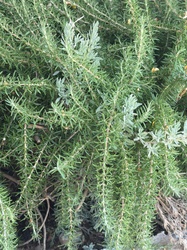
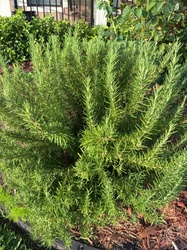
A woody evergreen shrub with a distinctive pine-like scent.
- Leaves: narrow, needle-like, leathery, dark green above and paler beneath, intensely aromatic
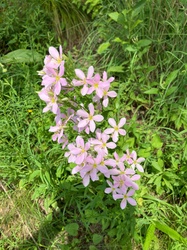
- Flowers: small, two-lipped blooms in pale blue to violet (sometimes pink or white), clustered along the stems
- Stems: woody and branching, becoming gnarled with age
- Habit: upright and bushy or low and trailing, depending on cultivar
- Size: typically 0.5-1.5 m tall as a shrub
Care & growing
- Light: full sun is essential
- Water: drought tolerant; let the soil dry between waterings and avoid soggy roots, the main cause of failure
- Soil: light, gritty, well-drained, even poor soil; dislikes heavy wet ground
- Temperature: Mediterranean plant; many forms tolerate light frost but not prolonged hard freezes
- Feeding: minimal; it thrives in lean conditions
- Propagation: easiest from semi-ripe cuttings; seed is slow and variable. Trim lightly after flowering to keep it shapely
Habitat & origin
Salvia rosmarinus is native to the rocky coasts and scrublands of the Mediterranean region, where it grows in hot, dry, sunny conditions with sharp drainage.
It has been cultivated since antiquity and is now grown worldwide in herb gardens, Mediterranean and water-wise landscapes, and containers. It thrives in regions with mild winters and dry summers.
Frequently asked questions
Why did rosemary's scientific name change?
Genetic studies showed rosemary belongs within the genus Salvia, so Rosmarinus officinalis was reclassified as Salvia rosmarinus, though the old name is still common.
Why is my rosemary dying?
The most frequent cause is overwatering or poor drainage; rosemary needs gritty soil and prefers to dry out between waterings.
Can rosemary survive winter outdoors?
Many forms tolerate light frost, but it is not reliably hardy in cold-winter regions; grow it in a pot to move indoors, or choose a hardy cultivar.
How do I propagate rosemary?
The easiest method is taking semi-ripe stem cuttings; seed germinates slowly and unevenly.
Rosemary guides
In-depth guides for identifying, growing, and caring for Rosemary.
How to Care for Rosemary
Grow woody, aromatic rosemary in full sun with lean, fast-draining soil and infrequent deep watering for a tough Mediterranean evergreen.
Rosemary Identification Guide
Identify rosemary by its needle-like aromatic leaves, woody evergreen stems and small two-lipped blue flowers. This guide covers its pine-camphor scent and look-alikes.
Rosemary identified by the community
Real specimens identified with Plant Identifier.