Savory Identification Guide
How to identify savory (Satureja species) by its small narrow aromatic leaves, square stems, and small white-to-pink two-lipped flowers.
Read the full Savory encyclopedia entry →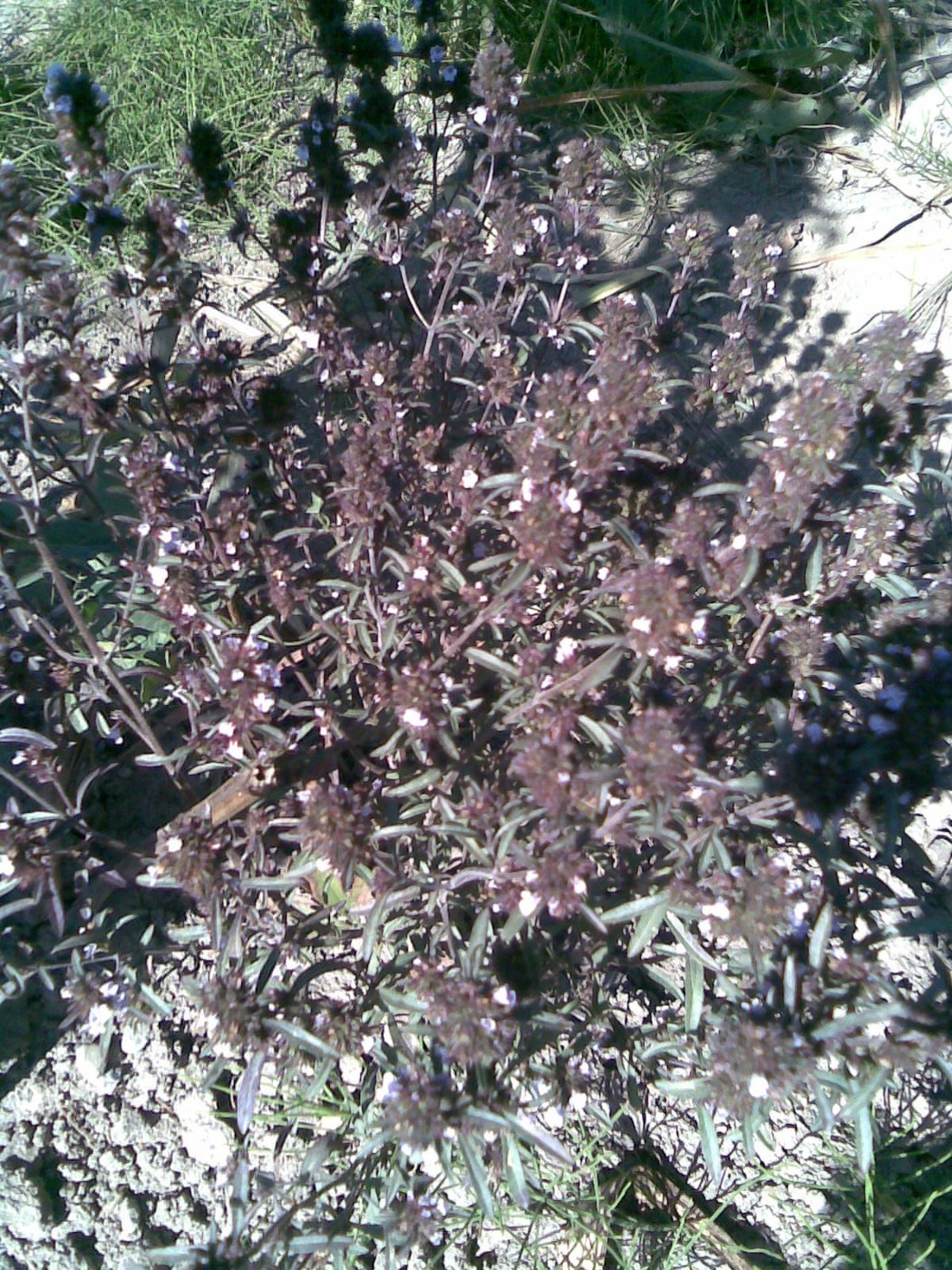
Key Identifying Features
Savory refers to aromatic herbs of the genus Satureja in the mint family — most often summer savory (Satureja hortensis) and winter savory (Satureja montana). Identify them by:
- Small, narrow, aromatic leaves with a peppery, thyme-like scent.
- Square stems typical of the mint family.
- Small two-lipped flowers, white to pale pink or lilac.
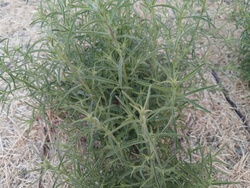
- A bushy, low habit — annual and lax (summer savory) or woody and compact (winter savory).
Leaves & Stems
Leaves are opposite, narrow, linear to lance-shaped, 1–3 cm long, with smooth (entire) margins and a pointed tip. They are dotted with aromatic oil glands and release a spicy, peppery, thyme-meets-oregano scent when crushed. Summer savory has soft, grayish-green leaves on a slender, branching annual stem 20–40 cm tall, often flushing purplish. Winter savory is a woody, semi-evergreen perennial subshrub, lower and denser (15–40 cm) with stiffer, darker, slightly glossy leaves. Both have the family's diagnostic square stems.
Flowers & Fruit
From summer into autumn, savory bears small flowers in whorls (verticillasters) in the leaf axils and at the stem tips. Each flower is a two-lipped tube about 4–8 mm, white, pale pink, lilac, or pale purple, often with faint spotting on the lower lip. The blooms attract bees. The fruit is a set of four tiny nutlets held in the persistent calyx — small and not a primary ID feature.
How to Tell It Apart from Look-Alikes
- Thyme (Thymus): very similar small aromatic leaves and habit, but thyme leaves are usually shorter/rounder and the scent differs; savory's aroma is more peppery and sharp.
- Hyssop (Hyssopus): narrow leaves and square stems too, but hyssop has more upright spikes of stronger blue-violet flowers.
- Oregano / marjoram: broader, more rounded leaves and a different (rounder) scent.
- The pairing of narrow entire aromatic leaves + square stem + small two-lipped white/pink flowers + peppery scent points to Satureja.
Where You'll Find It
Savory is native to the Mediterranean and southern Europe and is grown in herb and kitchen gardens in sunny, well-drained spots. Winter savory can naturalize on dry, rocky, sunny banks; summer savory is grown as an annual crop. Look for it among other Mediterranean herbs.
Quick ID Checklist
- Narrow, smooth-edged aromatic leaves with a peppery scent
- Square stems (mint family)
- Small two-lipped flowers, white to pink or lilac, in leaf-axil whorls
- Summer savory: soft, lax annual; winter savory: woody dense perennial
- Mediterranean herb-garden setting
Narrow peppery-scented leaves on a square stem confirm savory.
Frequently asked questions
What's the difference between summer and winter savory?
Summer savory (Satureja hortensis) is a soft, lax annual with grayish leaves, while winter savory (S. montana) is a woody, semi-evergreen perennial with stiffer, darker, glossier leaves and a sharper flavor.
How do I tell savory from thyme?
Both are small aromatic mint-family herbs, but savory has slightly longer, narrower leaves and a more peppery, sharp scent, while thyme leaves are typically shorter and rounder with a milder aroma.
What do savory flowers look like?
Small two-lipped tubular flowers, about 4–8 mm, white to pale pink or lilac, borne in whorls in the leaf axils and stem tips from summer into autumn.
How can I confirm a plant is savory?
Crush a leaf for the spicy, peppery, thyme-like scent, then check for square stems and narrow, smooth-edged opposite leaves with small white-to-pink two-lipped flowers.
Savory identified by the community
Recent Savory specimens identified with Plant Identifier.