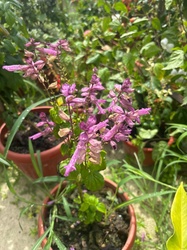
Scarlet Sage Identification Guide
Identify scarlet sage by its dense spikes of tubular red flowers, square stems and aromatic toothed leaves. This guide explains how to separate it from other salvias.
Read the full Scarlet Sage encyclopedia entry →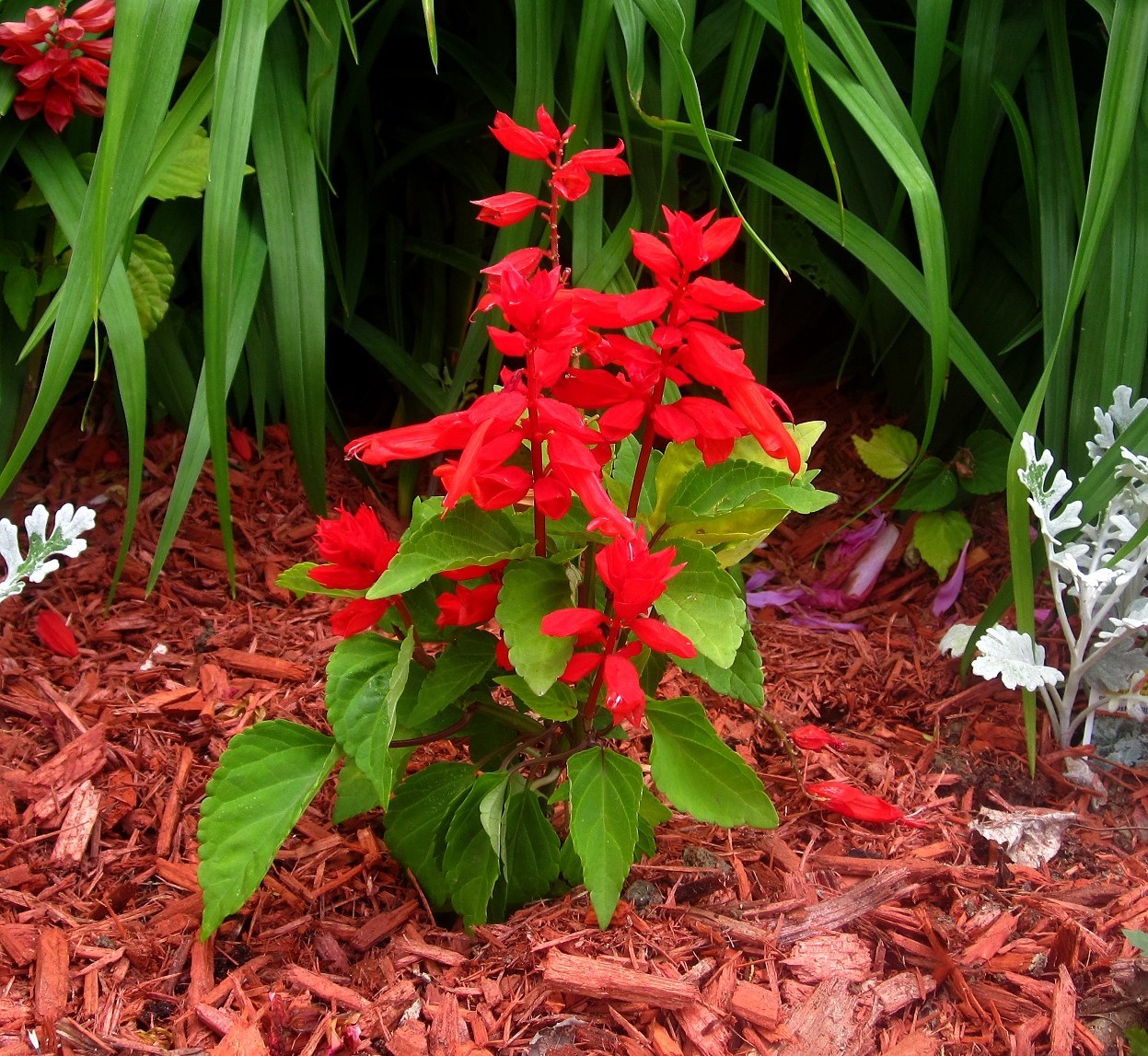
Key Identifying Features
Scarlet sage (Salvia splendens, and the wild Salvia coccinea) is a mint-family plant prized for its vivid red flower spikes.
- Flowers: tubular, two-lipped (bilabiate) blooms in brilliant scarlet (also available in white, salmon, purple in cultivars)
- Bracts: in S. splendens, colorful red bracts surround the flowers, intensifying the display
- Arrangement: flowers in whorls forming a dense terminal spike
- Stems: square (four-angled) like all mints
- Aroma: foliage faintly aromatic when crushed
Leaves & Stems
Leaves are opposite, oval to triangular (heart-shaped at the base), with toothed (serrated) margins and a pointed tip, on slender stalks. They are usually bright to deep green, sometimes glossy. The square stems are a hallmark of the mint family (Lamiaceae) and a quick confirmation. Salvia coccinea (tropical or blood sage) is more open and airy with hairier, more triangular leaves than the compact bedding S. splendens.
Flowers & Fruit
Each flower has a long tube opening into a small upper lip and a larger lower lip. The two stamens use a lever mechanism typical of Salvia to dust pollinators (and hummingbirds, which love the red tubes). The tubular calyx is often the same red color in S. splendens. After flowering, the calyx holds four small nutlets (seeds), the standard mint fruit. Spikes bloom over a long season from summer to frost.
How to Tell It Apart from Look-Alikes
- Pineapple sage (Salvia elegans): also red-flowered, but leaves smell strongly of pineapple and flowers are slimmer and later-blooming
- Scarlet/standing cypress (Ipomopsis): red tubular flowers but ferny needle-like leaves and round stems
- Penstemon: tubular flowers but round stems and a different five-lobed mouth
- Cardinal flower (Lobelia cardinalis): red tubular flowers but alternate leaves and a split lower lip, grows in wet ground
The square stems + opposite toothed leaves + two-lipped red flowers in bracted spikes confirm scarlet sage.
Where You'll Find It
Salvia splendens is native to Brazil and grown worldwide as a summer bedding annual; Salvia coccinea is native to the Americas and naturalized across warm regions in fields, roadsides and gardens. Both like full sun to part shade and bloom from summer until frost.
Quick ID Checklist
- Tubular two-lipped flowers, usually brilliant scarlet
- Colorful bracts and red calyx (in S. splendens)
- Flowers in dense whorled terminal spikes
- Square (four-angled) stems
- Opposite, toothed, oval to heart-shaped leaves
- Faintly aromatic foliage; loved by hummingbirds
Frequently asked questions
How do I know it's a salvia and not another red flower?
Check for square stems, opposite toothed leaves and two-lipped tubular flowers; together these mint-family traits distinguish scarlet sage from look-alikes like cardinal flower or standing cypress.
What is the difference between Salvia splendens and Salvia coccinea?
S. splendens is a compact bedding plant with showy red bracts and a red calyx, while S. coccinea is taller, more open and airy with hairier triangular leaves.
Does scarlet sage attract wildlife?
Yes, the red tubular flowers are highly attractive to hummingbirds and some butterflies, which helps confirm the plant when you see them visiting.
Why are the stems square?
Scarlet sage belongs to the mint family (Lamiaceae), whose members characteristically have four-angled square stems, a reliable identification feature.
Scarlet Sage identified by the community
Recent Scarlet Sage specimens identified with Plant Identifier.