Scarlet Sage
Salvia splendens
A bold bedding salvia famous for its dense spikes of fiery red tubular flowers, a magnet for hummingbirds and a mainstay of summer color schemes.
- Light
- Full sun to part shade
- Water
- Moderate; keep evenly moist
- Difficulty
- Easy
Got a plant like this?
Identify any plant from a photo, free.
Overview
Scarlet sage is a tender perennial from Brazil grown almost everywhere as a flowering annual for its intense, long-lasting color. The species name splendens, meaning splendid, reflects its showy upright spikes of vivid flowers.
While the classic form is brilliant scarlet, modern strains also offer purple, salmon, white, and burgundy. Compact and uniform, it is one of the most widely planted summer bedding flowers and a reliable draw for hummingbirds.
How to identify it
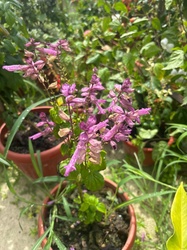
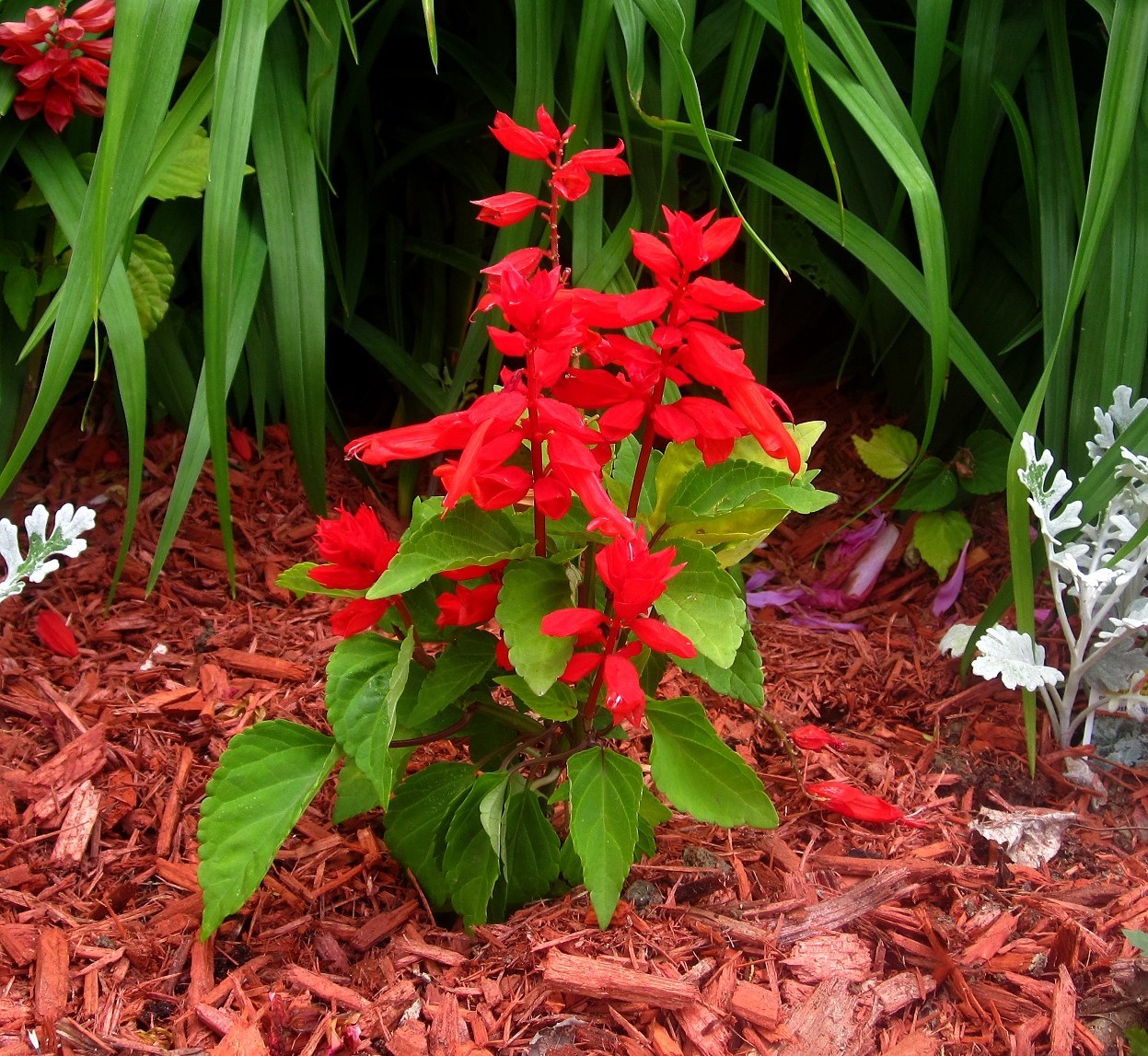
An upright, bushy plant topped with showy flower spikes.
- Flowers: tubular, two-lipped blooms held in dense vertical spikes, with colorful bracts behind each flower
- Color: classically brilliant scarlet, also purple, white, salmon, and burgundy strains
- Leaves: bright green, oval, pointed, and toothed, in opposite pairs on square stems
- Stems: square in cross-section, typical of the mint family
- Height: 20-60 cm depending on cultivar, in a tidy mound
Care & growing
- Light: full sun for best flowering, with light afternoon shade tolerated in hot regions
- Water: keep evenly moist; it is not strongly drought tolerant
- Soil: fertile, well-drained soil enriched with organic matter
- Temperature: a warm-season, frost-tender plant that thrives in summer heat
- Feeding: regular balanced feeding supports lush growth and bloom
- Propagation: from seed started early indoors, or from soft cuttings; deadhead old spikes to encourage rebloom
Habitat & origin
Salvia splendens is native to the forests and clearings of Brazil, where it grows as a perennial in warm, humid conditions.
It is cultivated worldwide as a bedding annual and is a perennial only in frost-free climates. It is widely used in formal bedding schemes, public plantings, and home gardens for dependable mass color.
Frequently asked questions
How can I identify scarlet sage?
Look for dense vertical spikes of tubular, two-lipped flowers, classically vivid scarlet, above bright green toothed leaves on square mint-family stems.
Does scarlet sage attract hummingbirds?
Yes. Its bright red tubular flowers are highly attractive to hummingbirds and butterflies.
Will it come back next year?
It is a tender perennial usually grown as an annual; it returns only in frost-free climates.
How do I keep it flowering longer?
Deadhead faded flower spikes, water regularly, and feed through the season to encourage continued bloom.
Scarlet Sage guides
In-depth guides for identifying, growing, and caring for Scarlet Sage.
How to Care for Scarlet Sage
Grow vivid Scarlet Sage (Salvia splendens) with full sun, even moisture, and regular feeding for a long season of bold red spikes.
Scarlet Sage Identification Guide
Identify scarlet sage by its dense spikes of tubular red flowers, square stems and aromatic toothed leaves. This guide explains how to separate it from other salvias.
Scarlet Sage identified by the community
Real specimens identified with Plant Identifier.