Self-Heal Identification Guide
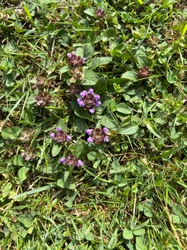
Identify Self-Heal by its low square stems, opposite leaves, and short cylindrical heads of two-lipped violet flowers above leafy bracts.
Read the full Self-Heal encyclopedia entry →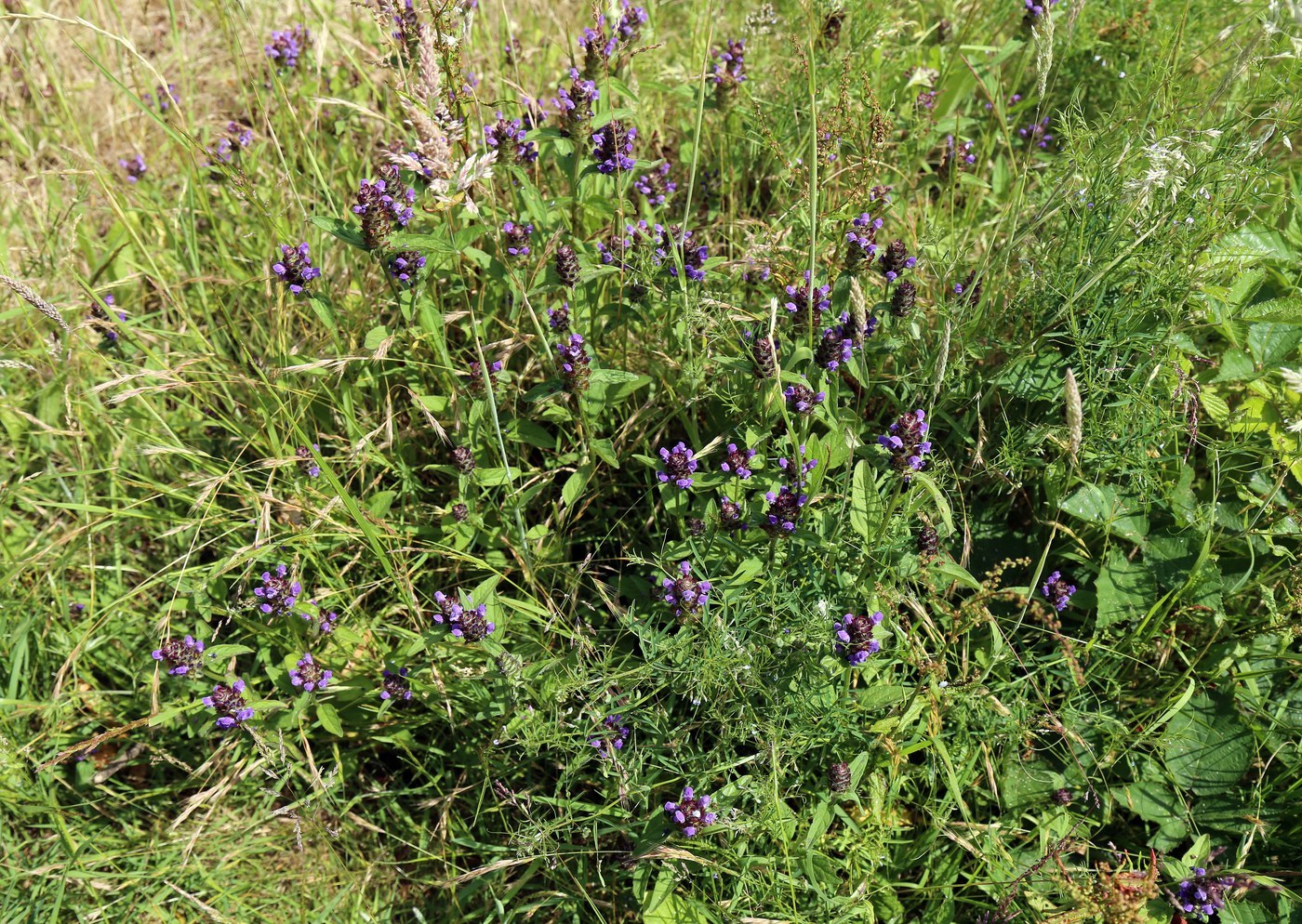
Key Identifying Features
Self-Heal (Prunella vulgaris), also called Heal-All, is a low, creeping member of the mint family found in lawns, meadows, and waysides worldwide. Key signs:
- A short, dense, cylindrical-to-oblong flower head at the stem tip.
- Two-lipped tubular violet-to-purple flowers (the upper lip hooded) emerging from the head.
- Square stems and opposite leaves (mint family).
- A low, often sprawling or mat-forming plant, 5–30 cm (2–12 in) tall.
Leaves & Stems
Stems are square in cross-section, sometimes reddish, creeping at the base and rooting at the nodes before turning upright. Leaves are opposite, lance-shaped to oval, with smooth or slightly toothed margins and short stalks. The plant tolerates mowing, so in lawns it flowers on very short stems.
Flowers & Fruit
Flowering is long, from late spring through autumn (May–October). The flower head is 2–5 cm long, made of overlapping purplish-green bracts, from between which the small violet (occasionally pink or white) two-lipped flowers open a few at a time. The upper lip forms a hood; the lower lip is fringed. After bloom, the head turns brown and persists, holding small nutlets — the dry brown 'bottlebrush' head is a good off-season ID.
How to Tell It Apart from Look-Alikes
- Bugle (Ajuga reptans) has a more open, leafy flower spike with blue flowers and runs by leafy surface runners; its upper flower lip is very short.
- Wild mints have flowers clustered in leaf axils, not one tight terminal head.
- Ground Ivy (Glechoma) trails with kidney-shaped scalloped leaves and flowers in the leaf axils.
The combination of a short blocky terminal flower head with hooded violet flowers on a square stem identifies Self-Heal.
Where You'll Find It
Self-Heal grows almost everywhere temperate — lawns, grassy meadows, pastures, roadsides, woodland edges, and waste ground — across Europe, Asia, and North America. It tolerates sun or part shade and a wide range of soils, thriving even in regularly mown turf where it hugs the ground.
Quick ID Checklist
- Short, dense cylindrical flower head at stem tip
- Two-lipped violet flowers with a hooded upper lip
- Square stem, opposite leaves (mint family)
- Low, 5–30 cm, often sprawling/mat-forming
- Brown persistent seed head after flowering
- Lawns, meadows, roadsides, and waste ground
Frequently asked questions
How do I tell Self-Heal from Bugle?
Self-Heal has a short, blocky terminal flower head with hooded violet flowers, while Bugle has a taller, leafier flower spike of blue flowers and spreads by leafy surface runners.
Is Self-Heal a weed in lawns?
It often grows in lawns and tolerates mowing by flowering on very short stems. Many consider it a beneficial pollinator plant rather than a true weed.
What confirms it's in the mint family?
Feel the stem — it is square in cross-section — and note the opposite leaves and two-lipped tubular flowers, all classic mint-family (Lamiaceae) traits.
Self-Heal identified by the community
Recent Self-Heal specimens identified with Plant Identifier.