Self-Heal
Prunella vulgaris
A low, spreading mint-family herb with squat spikes of violet flowers, forming a tough, pollinator-friendly mat across lawns, meadows, and woodland edges.
- Light
- Full sun to partial shade
- Water
- Moderate; tolerates a range
- Difficulty
- Easy
Got a plant like this?
Identify any plant from a photo, free.
Overview
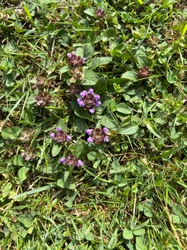
Self-heal is a hardy, low-growing perennial in the mint family found across much of the temperate world. It bears compact, club-like flower heads of small two-lipped violet to purple blooms through summer and tolerates everything from lawns to woodland edges, often persisting as a creeping mat even under mowing.
It carries a long roster of folk names, including heal-all, woundwort, and carpenter's herb. Today it is appreciated as a resilient, bee-friendly groundcover for naturalistic plantings.
How to identify it
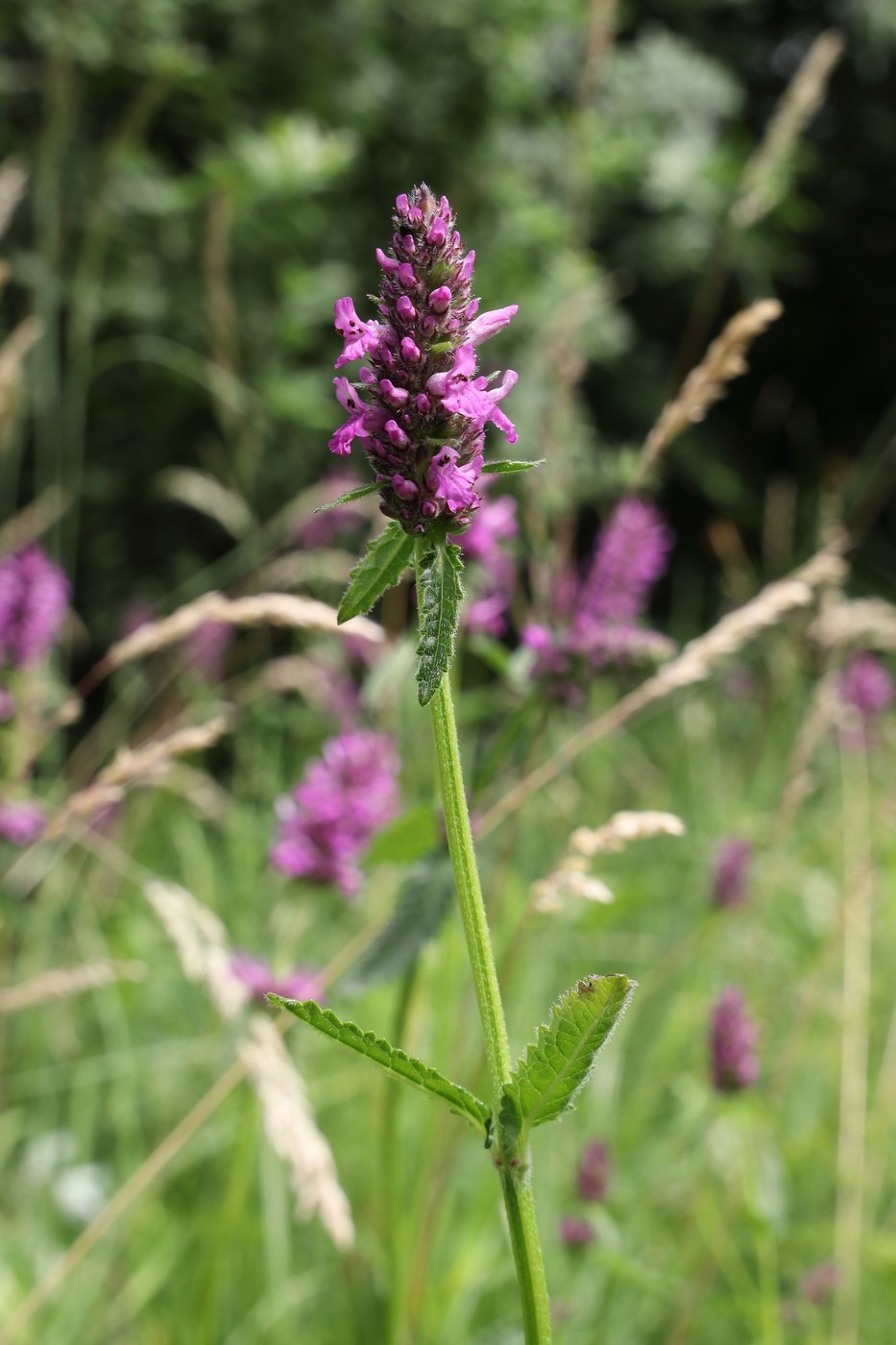
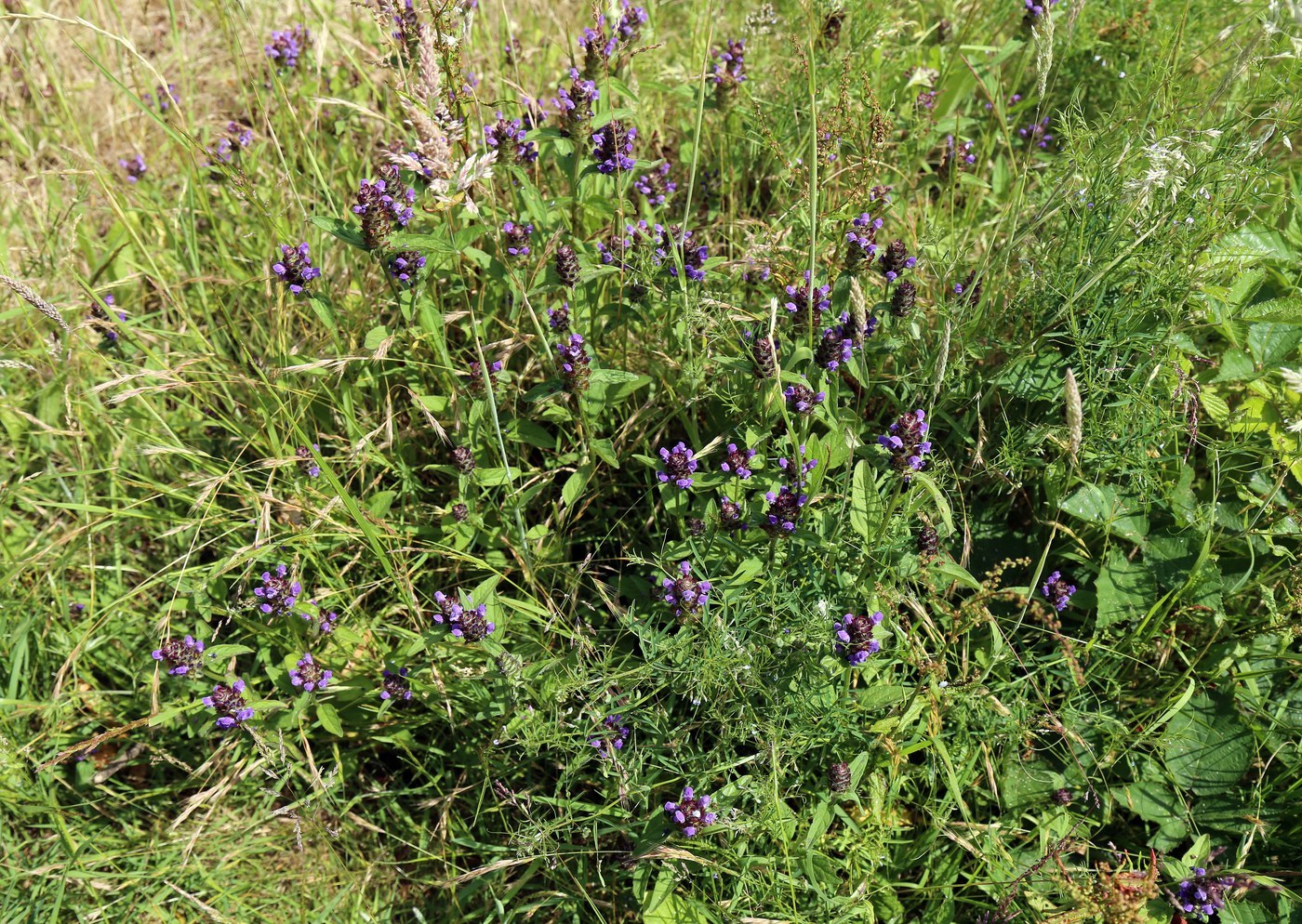
- Flowers: Small, two-lipped, violet to purple (rarely pink or white), packed into a dense, squarish, club-shaped head.
- Leaves: Opposite, oval to lance-shaped, sometimes slightly toothed.
- Stems: Square in cross-section (mint family), often creeping and rooting at the nodes.
- Height: Low, typically 10-30 cm.
- Habit: Spreading, mat-forming perennial.
Care & growing
Light: Full sun to partial shade.
Water: Average moisture; quite adaptable and tolerant of drier or damper spots.
Soil: Tolerates most soils; thrives in ordinary garden ground.
Temperature: Very hardy across a wide range.
Feeding: None needed; it grows readily, even vigorously.
Propagation: Easy from seed, division, or by separating its rooted creeping stems. It can self-seed and spread, so site accordingly.
Habitat & origin
Native across Europe, Asia, and North America (and naturalized nearly worldwide), self-heal grows in meadows, lawns, woodland edges, roadsides, and other open, disturbed ground.
It is extremely adaptable and is grown deliberately in herb gardens, wildlife lawns, and naturalistic plantings, while also occurring as a common lawn weed.
Frequently asked questions
How can I identify self-heal?
Look for a low, creeping mint-family plant with square stems and dense, club-shaped heads of small, two-lipped violet to purple flowers in summer.
Is it a weed?
It can grow as a common lawn plant, but it is unobtrusive and beneficial for pollinators, and many gardeners grow it intentionally as a groundcover.
Is it good for bees?
Yes. Its violet flower spikes are a reliable summer nectar source attractive to bees and other pollinators.
How does it spread?
It spreads by creeping stems that root at the nodes and by self-seeding, gradually forming a low, mat-like cover.
Self-Heal guides
In-depth guides for identifying, growing, and caring for Self-Heal.
How to Care for Self-Heal
Grow Self-Heal (Prunella vulgaris), a tough low-growing perennial with purple flower spikes that thrives in sun or partial shade.
Self-Heal Identification Guide
Identify Self-Heal by its low square stems, opposite leaves, and short cylindrical heads of two-lipped violet flowers above leafy bracts.
Self-Heal identified by the community
Real specimens identified with Plant Identifier.