How to Care for Silk Floss Tree
Grow the dramatic Ceiba speciosa: a fast, thorny-trunked ornamental tree that loves full sun and rewards patience with pink autumn blooms.
Read the full Silk Floss Tree encyclopedia entry →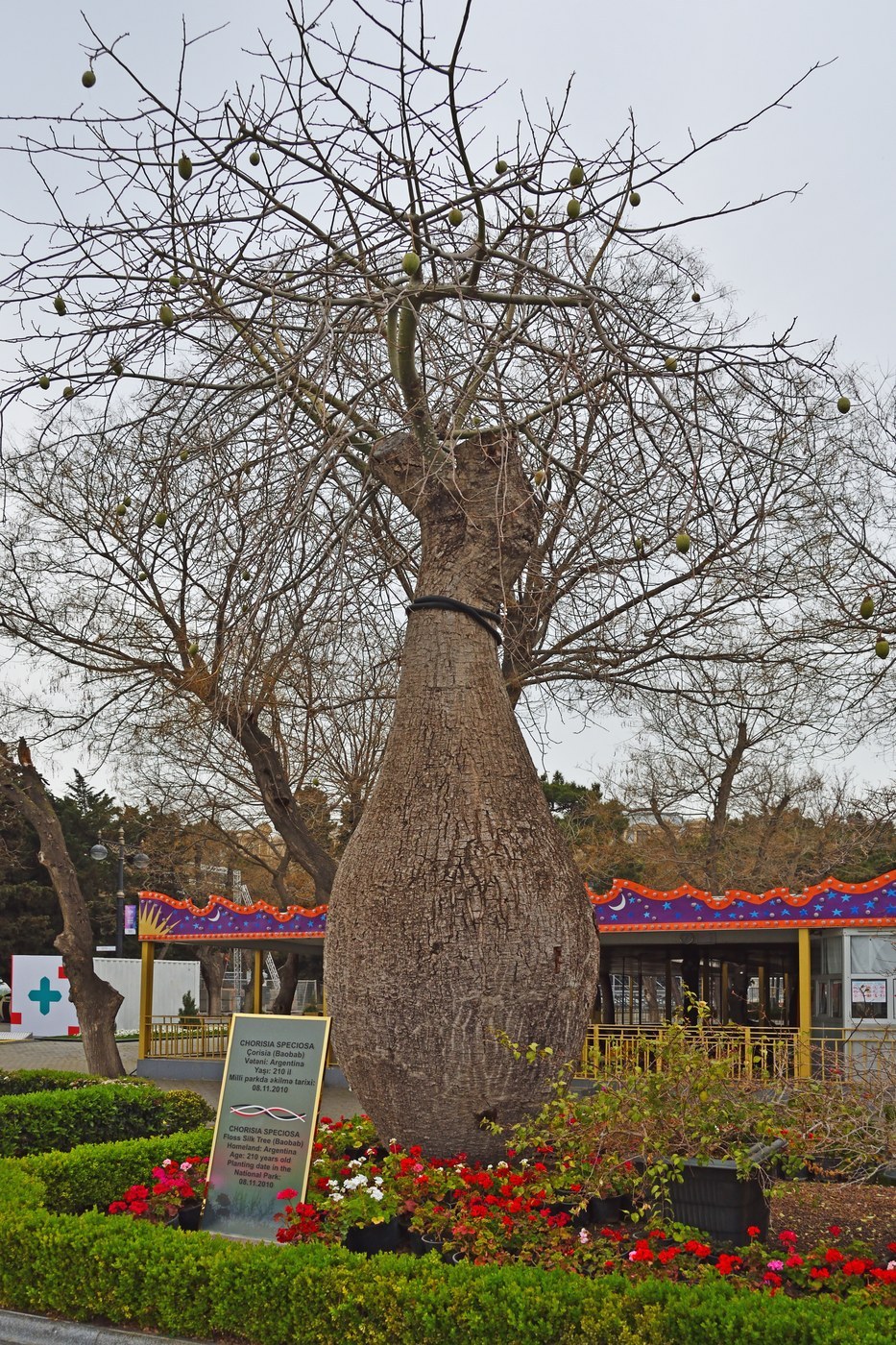
The silk floss tree (Ceiba speciosa) is a spectacular subtropical specimen tree prized for its swollen, green, spine-studded trunk and showers of pink-to-magenta flowers in late summer and autumn. It grows fast, wants full sun, and tolerates drought once established, making it a moderate-care landscape statement for frost-free climates.
Light
Give it full sun, ideally 8 or more hours daily. Silk floss trees are sun worshippers and become sparse, weak, and reluctant to flower in shade. Site them in the brightest, most open part of the garden with room to spread a broad canopy.
Water
Water moderately. Young trees benefit from regular deep watering through their first two or three growing seasons to establish a strong root system. Once mature, the tree is notably drought-tolerant and stores water in its bottle-shaped trunk, so let the soil dry between waterings and avoid constant saturation. Reduce watering sharply in winter dormancy.
Soil & Potting
Plant in deep, well-draining soil. It adapts to sandy, loamy, or even rocky ground as long as water moves through freely; heavy waterlogged clay causes root problems. A neutral to slightly acidic pH suits it. Young trees can be container-grown in a gritty, free-draining mix but need moving to open ground to reach full size.
Humidity & Temperature
This is a warm-climate tree hardy roughly to USDA zone 9b and above. It tolerates brief, light frost when mature but young trees can be damaged or killed by freezing temperatures. It handles both humid and semi-arid heat well. In marginal climates, keep young specimens in pots that can be moved under cover during cold snaps.
Feeding
Feed young trees a balanced, slow-release fertilizer in spring to fuel their rapid growth. Avoid heavy nitrogen close to bloom season, as it can push leafy growth at the expense of flowers. Mature landscape trees generally need little supplemental feeding.
Propagation
Propagate from seed, which germinates readily when fresh and soaked in warm water for a day; seedlings grow quickly. Semi-hardwood cuttings can also root, though seed-grown trees develop the classic bulging trunk more reliably. Seed-grown trees may take several years to first bloom.
Repotting / Pruning
Repot container specimens each spring while young, stepping up gradually. Prune in late winter to shape the canopy, remove crossing or dead limbs, and raise the crown. Wear heavy gloves and long sleeves, as the trunk and branches carry sharp conical thorns. Minimal pruning is needed once a good framework is set.
Common Problems & Pests
Root rot from soggy soil is the main risk, so drainage is everything. Occasional aphids or scale may appear on soft new growth and can be knocked back with a strong water spray or horticultural oil. Chlorotic (yellowing) leaves usually signal poor drainage or nutrient lockout in alkaline soil; correct pH and improve drainage.
Seasonal Care Tips
Spring is for feeding, planting, and pruning. Summer brings vigorous growth; water young trees deeply during heat. Flowering peaks in late summer through autumn, often as leaves drop, for a striking bare-branch display. In winter the tree slows or defoliates; cut back water and protect young specimens from frost.
Frequently asked questions
Why won't my silk floss tree flower?
Most often it is too young; seed-grown trees can take several years to bloom. Insufficient sun and excess nitrogen fertilizer also suppress flowering, so give it full sun and go easy on feeding.
How fast does a silk floss tree grow?
It is a fast grower under good conditions, often adding a few feet of height per year when young, given full sun, warmth, and adequate water during establishment.
Can I grow a silk floss tree in a pot?
Yes, while young. Use a deep, free-draining container and gritty mix, keep it in full sun, and move it under cover in cold weather. It will eventually outgrow any pot and prefers open ground.
Why are the leaves turning yellow?
Yellowing usually points to overly wet or poorly draining soil, or nutrient lockout in alkaline conditions. Improve drainage, let the soil dry between waterings, and check soil pH.
Silk Floss Tree identified by the community
Recent Silk Floss Tree specimens identified with Plant Identifier.