Strawflower Identification Guide
Learn to recognize the strawflower (Xerochrysum bracteatum) by its papery, straw-textured petal-like bracts and dry, crisp blooms that feel like they are already preserved.
Read the full Strawflower encyclopedia entry →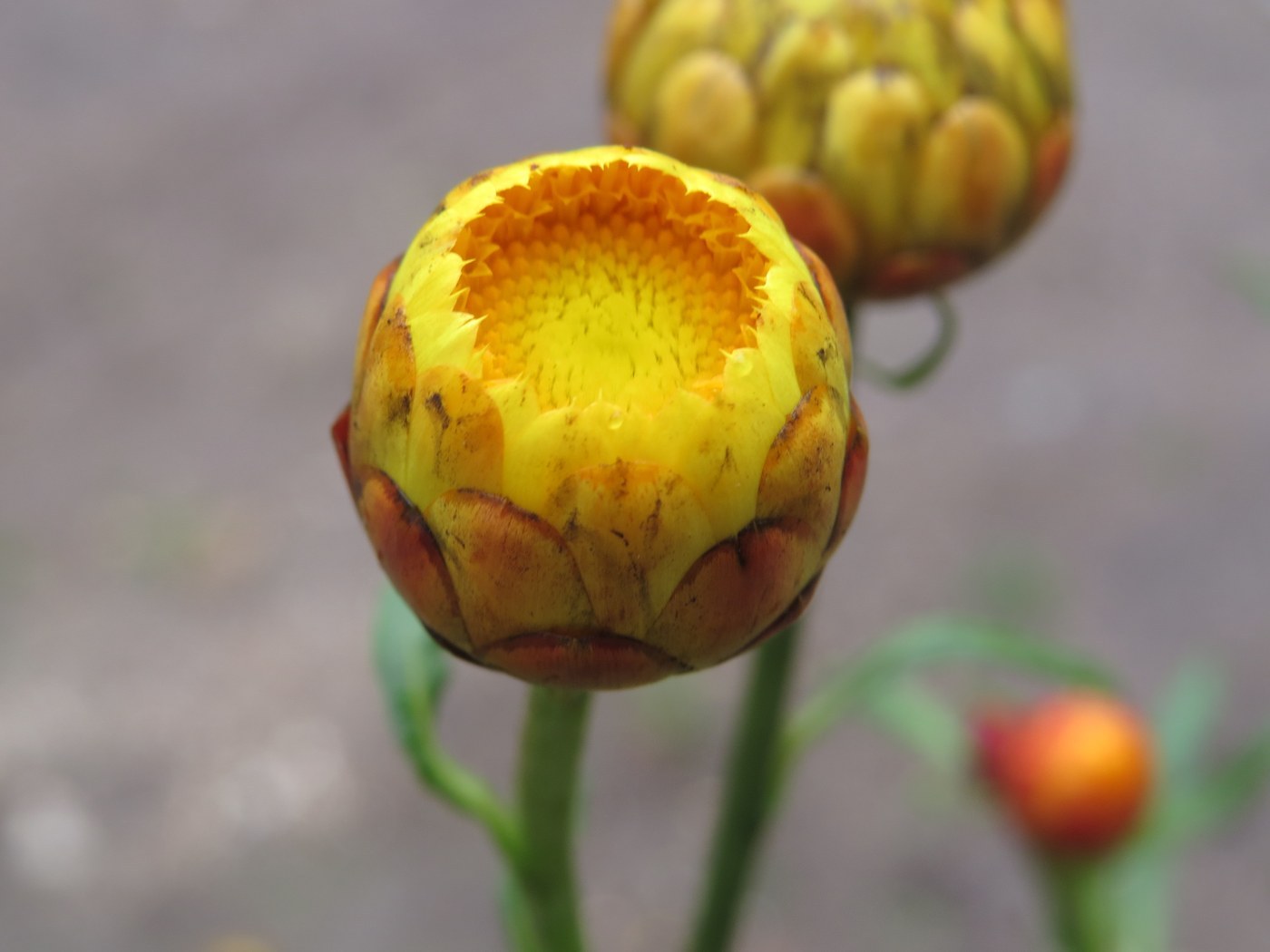
Key Identifying Features
The strawflower (Xerochrysum bracteatum, formerly Helichrysum bracteatum) is unmistakable once you touch it. What look like colorful petals are actually stiff, dry bracts that feel like straw, paper, or thin plastic. Squeeze a flower head gently and it crackles rather than bruises. Colors range across yellow, gold, orange, red, pink, white, and bronze, often with a contrasting darker or yellow central disc.
- Daisy-shaped heads 1–3 inches wide
- Stiff, papery, glossy bracts arranged in overlapping rows
- Flowers that hold their shape and color when dried
- Upright, branching habit, typically 1–3 feet tall
Leaves & Stems
Leaves are lance-shaped to oblong, alternate, and a slightly grayish or dull green. They are often a little rough or sticky to the touch and lack teeth on the margins (entire edges). The foliage can have a faint downy or hairy texture. Stems are upright, somewhat rigid, branching toward the top where each branch ends in a single flower head. The plant is grown as an annual in most climates but is a tender perennial in its native Australia.
Flowers & Fruit
The flower heads are the giveaway. The outer bracts are the showy part — they radiate like petals but are dry and inflexible. In the center sits a cluster of tiny tubular true florets, usually yellow. As the head matures, the center expands and produces small dry seeds (achenes) tipped with a fine pappus of bristles for wind dispersal. Bloom season runs from early summer through frost.
How to Tell It Apart from Look-Alikes
- Other everlastings (Rhodanthe, Helichrysum): Many also have papery bracts, but strawflower bracts are larger, stiffer, and more numerous, and the heads are bigger and more daisy-like.
- Zinnias and dahlias: These have soft, fleshy petals that wilt and bruise — strawflower petals stay crisp and rattle.
- Gomphrena (globe amaranth): Has clover-like rounded clusters, not flat daisy heads.
- The touch test is decisive: real strawflower bracts feel like dry straw and rustle audibly.
Where You'll Find It
Strawflower is a popular garden annual worldwide, grown in beds, borders, containers, and cutting gardens, and especially prized for dried-flower arrangements. It thrives in full sun and well-drained soil and tolerates heat and drought. In Australia it grows wild in open grasslands and disturbed ground. You will most often encounter it in home gardens, farmers' market bouquets, and craft displays of preserved flowers.
Quick ID Checklist
- Daisy-shaped heads with papery, straw-like bracts that crackle
- Bright warm colors with a yellow or dark central disc
- Lance-shaped, dull green, untoothed leaves
- Upright branching plant 1–3 ft tall
- Flowers keep color and shape when dried
Frequently asked questions
Why do strawflower petals feel like paper?
The colorful 'petals' are not true petals but modified leaves called bracts, which contain stiff, dry tissue. This gives them their characteristic papery, straw-like crackle and is why they keep their shape when dried.
What colors do strawflowers come in?
They appear in yellow, gold, orange, red, pink, white, and bronze, usually with a contrasting central disc. The wide warm-toned palette combined with the papery texture helps confirm the plant.
How can I tell a strawflower from a zinnia?
Touch the petals. Zinnia petals are soft, fleshy, and bruise easily, while strawflower bracts are stiff, dry, and crackle audibly. Strawflower also holds its color perfectly when dried.
Is the strawflower an annual or perennial?
In its native Australia it is a tender perennial, but in most temperate gardens it is grown as a warm-season annual that blooms from summer until frost.
Strawflower identified by the community
Recent Strawflower specimens identified with Plant Identifier.