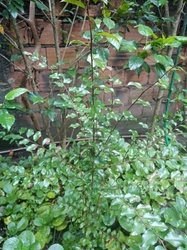
Surinam Cherry Identification Guide
Identify Surinam cherry (Eugenia uniflora) by its aromatic glossy leaves with bronze-red new growth, white powder-puff flowers, and ribbed pumpkin-shaped red to dark-purple fruit.
Read the full Surinam Cherry encyclopedia entry →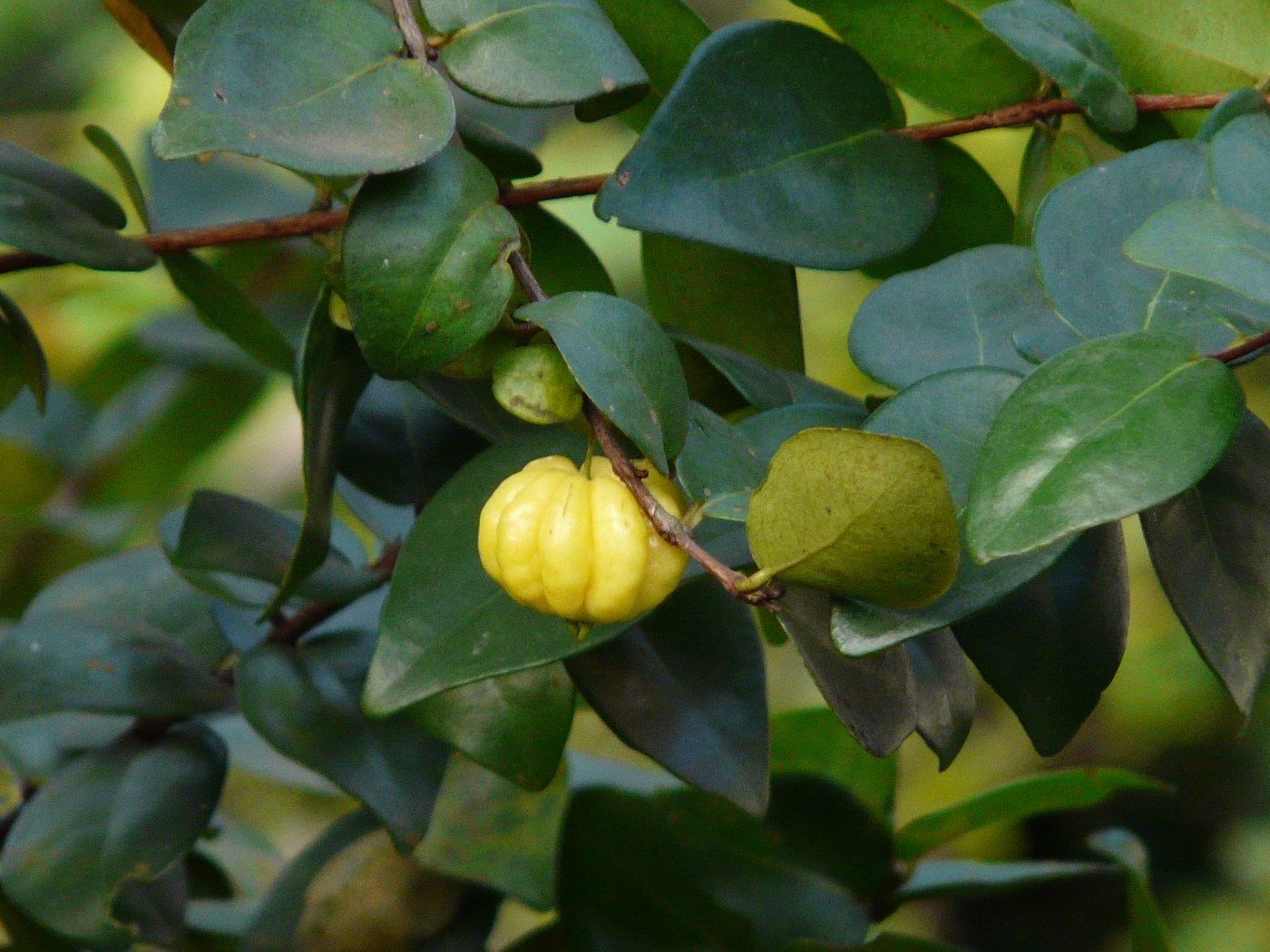
Key Identifying Features
Surinam cherry (Eugenia uniflora), also called pitanga, is an evergreen shrub or small tree in the myrtle family, typically 6–25 feet tall, often grown as a dense hedge. The most distinctive trait is its deeply ribbed, pumpkin-shaped fruit with 7–8 longitudinal grooves, unlike any true cherry. Aromatic foliage and flushes of coppery-red new growth add to its recognizability.
- Ribbed, 7–8 lobed round fruit (looks like a tiny pumpkin)
- Glossy aromatic leaves with bright bronze-red new growth
- Small white powder-puff flowers
Leaves & Stems
Leaves are opposite, simple, ovate to lance-shaped, and 1.5–2 inches long, glossy dark green when mature with a pointed tip. Held to the light they show tiny translucent oil glands, and when crushed they release a resinous, spicy aroma—a key myrtle-family clue. New growth emerges a striking bronze, copper, or wine-red before maturing to green, giving the plant a colorful flush several times a year. Stems are slender and woody; the bark is smooth, pale gray-brown, and may peel in thin flakes on older trunks.
Flowers & Fruit
Flowers are small (about 1/2 inch), white, fragrant, with four petals and a conspicuous brush of many white stamens (the typical Myrtaceae powder-puff). They are borne singly or in small clusters in the leaf axils. The fruit follows quickly: a round, ribbed berry about 1 inch wide with 7 to 8 deep vertical grooves, ripening from green through orange to bright red and finally deep crimson or near-black (a darker, sweeter cultivar exists). The thin skin encloses soft, juicy, orange-red pulp with a sweet-tart, slightly resinous flavor and usually 1–2 round seeds.
How to Tell It Apart from Look-Alikes
- True cherries (Prunus) have smooth, unribbed round fruit, alternate (not opposite) leaves, and no oil glands.
- Barbados cherry / acerola has shallowly lobed soft fruit and showy pink flowers, lacking the deep 7–8 ribs and resinous scent.
- Other Eugenia species are similar, but the deeply 8-ribbed fruit plus spicy-resinous opposite leaves and bronze new growth point specifically to Surinam cherry.
Note: it is considered an invasive weed in parts of Florida, Hawaii, and other warm regions, so it is often found spreading well beyond gardens.
Where You'll Find It
Native to tropical eastern South America (Brazil, Suriname), it is widely grown and naturalized in subtropical and tropical zones worldwide. It tolerates a range of soils and light frost once established. Look for it as a hedge, ornamental, or escaped shrub in gardens, fencerows, and disturbed warm-climate areas.
Quick ID Checklist
- Round, deeply 7–8 ribbed fruit (mini-pumpkin shape)
- Fruit ripens green → orange → bright red → crimson/black
- Opposite glossy leaves with resinous spicy scent and oil glands
- Bronze-red new growth flushes
- White powder-puff flowers
- Warm subtropical/tropical setting, often hedged or naturalized
Frequently asked questions
What makes Surinam cherry fruit easy to identify?
Its small round fruit is deeply grooved with 7 to 8 vertical ribs, giving it a miniature-pumpkin shape unlike any true cherry, and it ripens from green and orange to bright red or crimson.
How can I tell it from a real cherry tree?
Surinam cherry has opposite, aromatic, oil-gland leaves and ribbed fruit, whereas true cherries (Prunus) have alternate leaves and smooth, unribbed round fruit.
Why does the plant smell spicy when I crush a leaf?
As a member of the myrtle family, its leaves contain aromatic oil glands that release a resinous, spicy scent when crushed—a useful identification cue.
Is Surinam cherry invasive?
Yes, in Florida, Hawaii, and other warm regions it readily naturalizes and is considered invasive, so it is often found spreading beyond where it was planted.
Surinam Cherry identified by the community
Recent Surinam Cherry specimens identified with Plant Identifier.