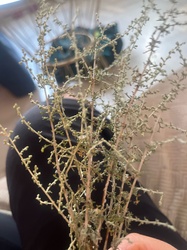
Thyme Identification Guide
Identify thyme by its tiny aromatic leaves, wiry woody stems, low spreading habit and clusters of small pink-purple flowers. This guide covers traits and look-alikes.
Read the full Thyme encyclopedia entry →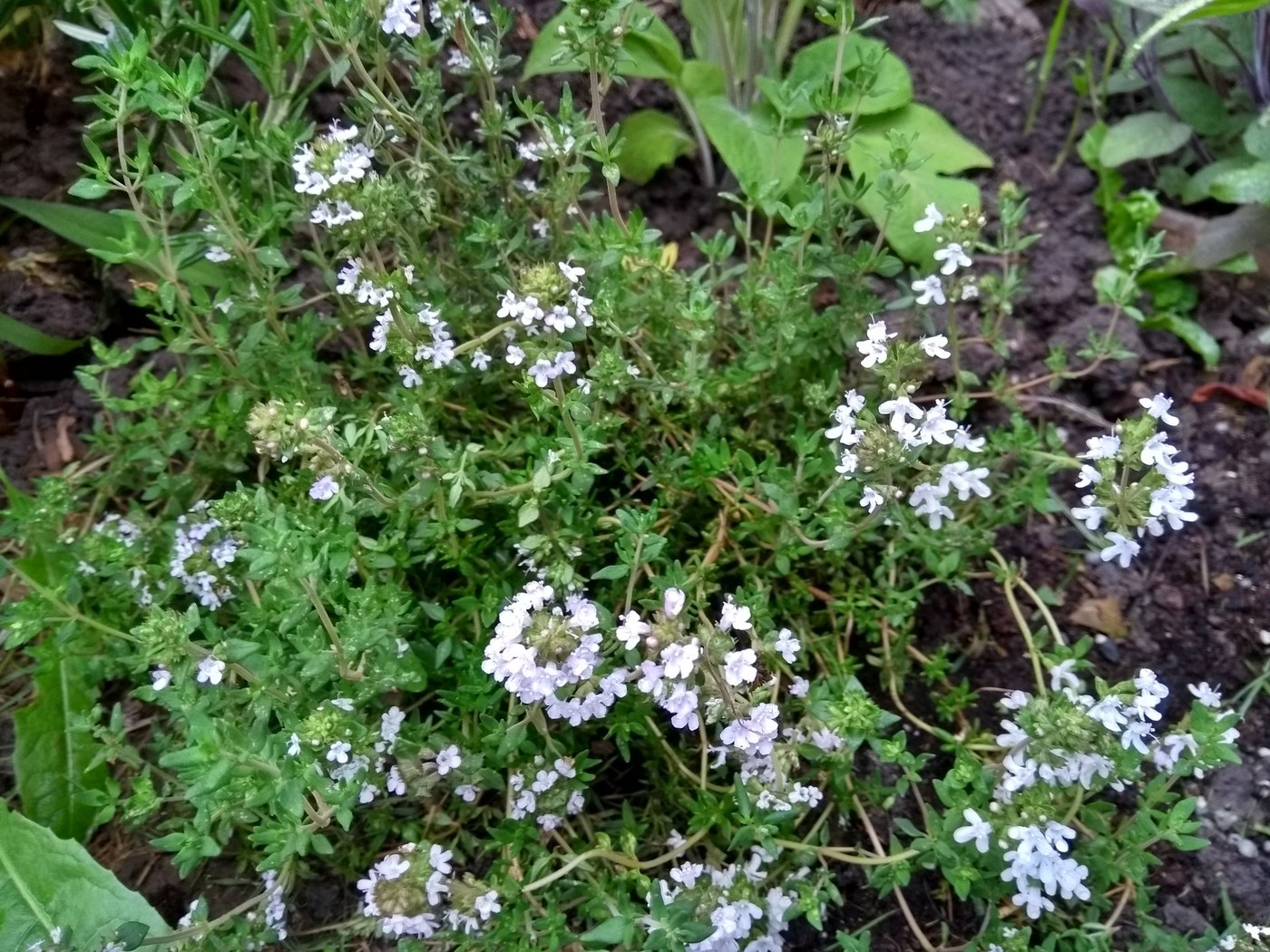
Key Identifying Features
Thyme (Thymus vulgaris and related species) is a low, woody, mat-forming Mediterranean herb in the mint family with a warm, aromatic, herbal scent.
- Leaves: very small (3-8 mm), oval to linear, gray-green, often with margins rolled under
- Aroma: crushing releases a warm, slightly minty-herbal (thymol) scent (key ID trait)
- Stems: wiry, woody at the base, square in young growth, often forming dense low cushions
- Flowers: small two-lipped pink, lilac or white flowers in clusters at the stem tips
- Habit: low subshrub or creeping mat, 5-30 cm tall
Leaves & Stems
Leaves are opposite, tiny, stalkless to very short-stalked, gray-green to deep green, sometimes hairy, with edges often curled under. The plant's woody-based, much-branched wiry stems distinguish it from soft herbs; older stems turn brown and bark-like. Many ornamental thymes (creeping thyme, lemon thyme, woolly thyme) form ground-hugging carpets. Lemon thyme smells distinctly of lemon.
Flowers & Fruit
Flowers are small and two-lipped, in dense rounded or interrupted clusters at the shoot tips, typically pink to purple (sometimes white). They bloom in late spring and summer and are highly attractive to bees. The tubular calyx is hairy and ridged; after flowering it holds four tiny nutlets. The combination of a tiny-leaved aromatic woody mat covered in pink bee-friendly flowers is characteristic.
How to Tell It Apart from Look-Alikes
- Oregano / marjoram (Origanum): related mint-family herbs but with larger leaves and a different pungent scent
- Winter savory (Satureja): similar low habit but narrower, sharper-scented leaves
- Heather / thymelike groundcovers: needle leaves but no thyme aroma and different flowers
- Wild thyme vs garden thyme: wild creeping thyme (Thymus serpyllum) is flatter and more trailing; common thyme (T. vulgaris) is more upright and shrubby
The tiny gray-green aromatic leaves + woody wiry stems + low mat habit + small pink two-lipped flowers + thymol scent confirm thyme.
Where You'll Find It
Native to the Mediterranean, thyme is grown worldwide as a garden herb and ground cover in herb gardens, rockeries, between paving stones, and in containers. It thrives in full sun and dry, well-drained, even poor soil, tolerating drought. Wild thymes carpet dry banks, heaths and rocky slopes.
Quick ID Checklist
- Very small gray-green leaves with rolled-under margins
- Warm herbal thymol aroma when crushed
- Wiry, woody-based, low-branching stems
- Low cushion or creeping mat habit
- Small two-lipped pink/lilac/white flowers, loved by bees
- Dry, sunny, well-drained sites
Frequently asked questions
What is the easiest way to identify thyme?
Look for a low, woody, mat-forming plant with very small gray-green leaves that release a warm, herbal thymol scent when crushed, topped with tiny pink two-lipped flowers.
How do I tell thyme from oregano?
Both are low mint-family herbs, but thyme has much smaller leaves and a warm thymol scent, while oregano has larger leaves and a more pungent, peppery aroma.
What is the difference between creeping and common thyme?
Creeping thyme (Thymus serpyllum) forms a flat trailing carpet often used as ground cover, while common thyme (T. vulgaris) is more upright and shrubby and is the usual garden type.
Do thyme flowers attract pollinators?
Yes, thyme's small pink to purple flowers are highly attractive to bees, and a thyme mat humming with bees in summer is a helpful identification cue.
Thyme identified by the community
Recent Thyme specimens identified with Plant Identifier.