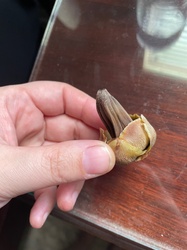
Tulip Tree Identification Guide
How to identify the tulip tree (Liriodendron tulipifera) by its uniquely flat-topped leaves and showy tulip-shaped flowers.
Read the full Tulip Tree encyclopedia entry →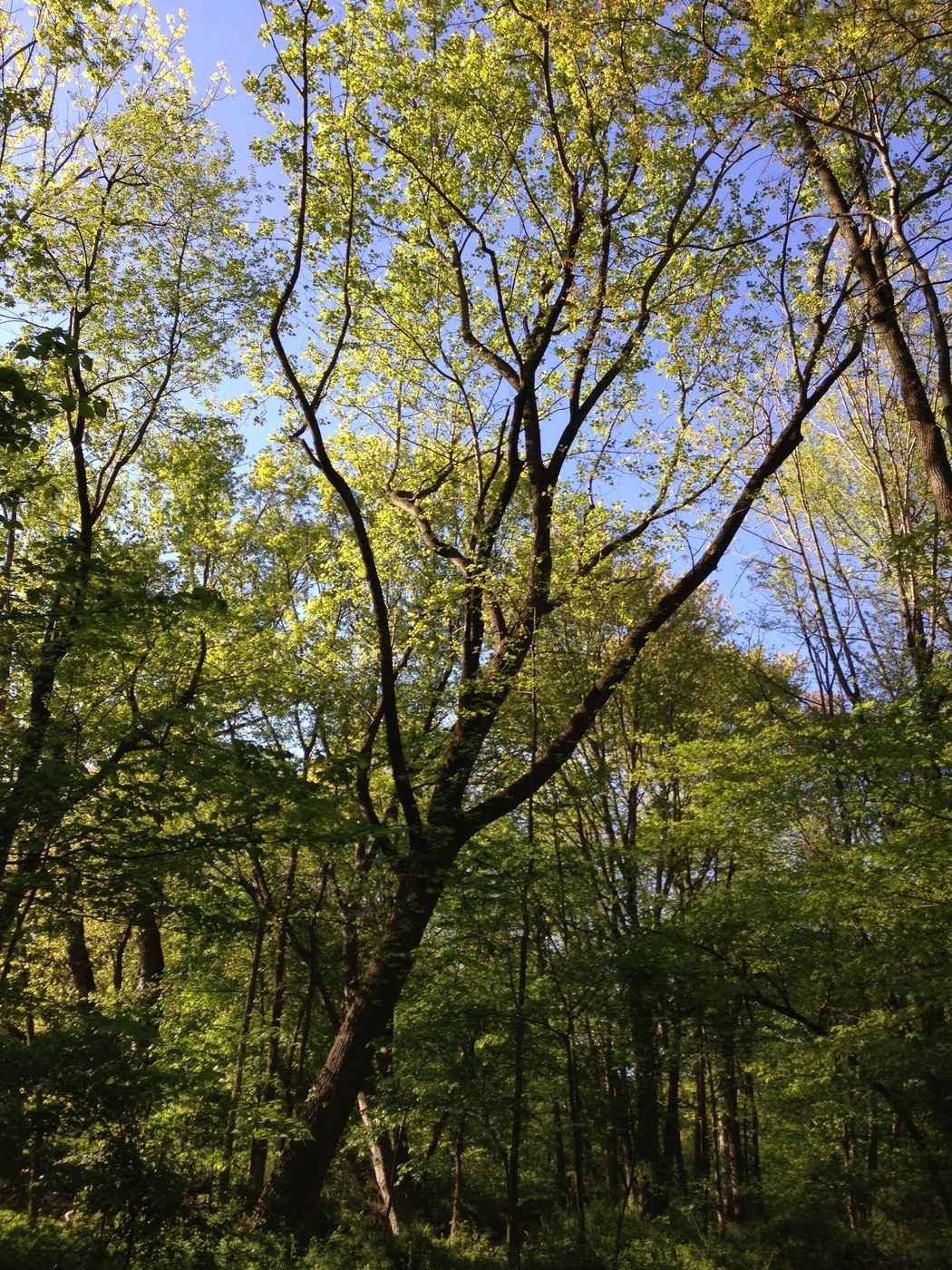
Key Identifying Features
The tulip tree (Liriodendron tulipifera), also called yellow poplar or tulip poplar, is one of the tallest hardwoods in eastern North America, often exceeding 80–120 feet with a straight, columnar trunk free of branches for much of its height. Two features make it unmistakable: its uniquely shaped leaves and its tulip-like flowers.
- Distinctive four-lobed leaves with a flat or notched top, looking as if the tip were cut off
- Large greenish-yellow, tulip-shaped flowers with an orange band at the base
- Tall, straight trunk with a high crown
- Upright, cone-like dry seed clusters that stand on the twigs
Leaves & Stems
The leaf is the single best field mark. It is 4–6 inches long, bright green, glossy, and has 4 (sometimes 6) lobes with a broad, squared or shallowly notched apex — the top looks flat rather than pointed. Leaves are alternate and turn clear golden-yellow in fall. Twigs are smooth and aromatic when scratched, with a circular line (stipule scar) ringing the twig at each node. The bark is gray, becoming deeply furrowed with interlacing ridges on old trunks.
Flowers & Fruit
In May–June the tree produces large, cup-shaped flowers about 2 inches across, with 6 greenish-yellow petals each marked by a bright orange blotch near the base — strongly resembling a tulip. Because they sit high in the crown, they are often noticed first as fallen petals on the ground. The fruit is a dry, upright, cone-like cluster of winged samaras that breaks apart through fall and winter, leaving a persistent central spike.
How to Tell It Apart from Look-Alikes
No other native tree has the flat-topped, four-lobed leaf, so leaves alone usually clinch it. Some mistake it for a maple because of the lobes, but maple leaves are opposite and pointed, while tulip tree leaves are alternate and squared-off. The name "poplar" misleads people — it is not a true poplar (Populus) and lacks their fluttering, simple leaves. It is actually in the magnolia family.
Where You'll Find It
Native to the eastern United States from southern New England to Florida and west to the Mississippi Valley, the tulip tree thrives in rich, moist, well-drained soils of valleys, coves, and lower slopes. It is a fast-growing pioneer of old fields and a valued timber, shade, and street tree.
Quick ID Checklist
- Leaves: 4-lobed with a flat or notched top, alternate, glossy
- Flowers: large, tulip-shaped, greenish-yellow with orange base band
- Twigs: aromatic, with a ring-like stipule scar at each node
- Fruit: upright dry cone of winged seeds, persistent central spike
- Form: very tall, straight trunk; rich moist eastern forests
A tall tree with flat-topped leaves and tulip-shaped flowers is a tulip tree, every time.
Frequently asked questions
Is the tulip tree related to tulips or to poplars?
Neither. Despite its common names, it is a member of the magnolia family. Its flowers merely resemble tulips, and the name yellow poplar refers to the light, soft wood, not a true relationship to poplars.
Why do the leaves look like they were cut off at the tip?
The tulip tree's leaf has a broad, flat or shallowly notched top instead of a pointed apex, giving it a squared-off silhouette unlike any other native tree and making it a reliable identification feature.
Why don't I see the flowers?
The flowers are large but often borne high in the crown of a very tall tree, so they can be hard to spot from the ground. Looking for fallen orange-and-green petals beneath the tree is often the easiest way to detect them.
How tall does a tulip tree get?
It is among the tallest eastern hardwoods, commonly reaching 80 to 120 feet, with exceptional individuals taller, typically with a long, straight, branch-free trunk.
Tulip Tree identified by the community
Recent Tulip Tree specimens identified with Plant Identifier.