Viburnum Identification Guide
How to identify viburnums by their opposite leaves, flat or domed white flower clusters, and colorful berry-like drupes.
Read the full Viburnum encyclopedia entry →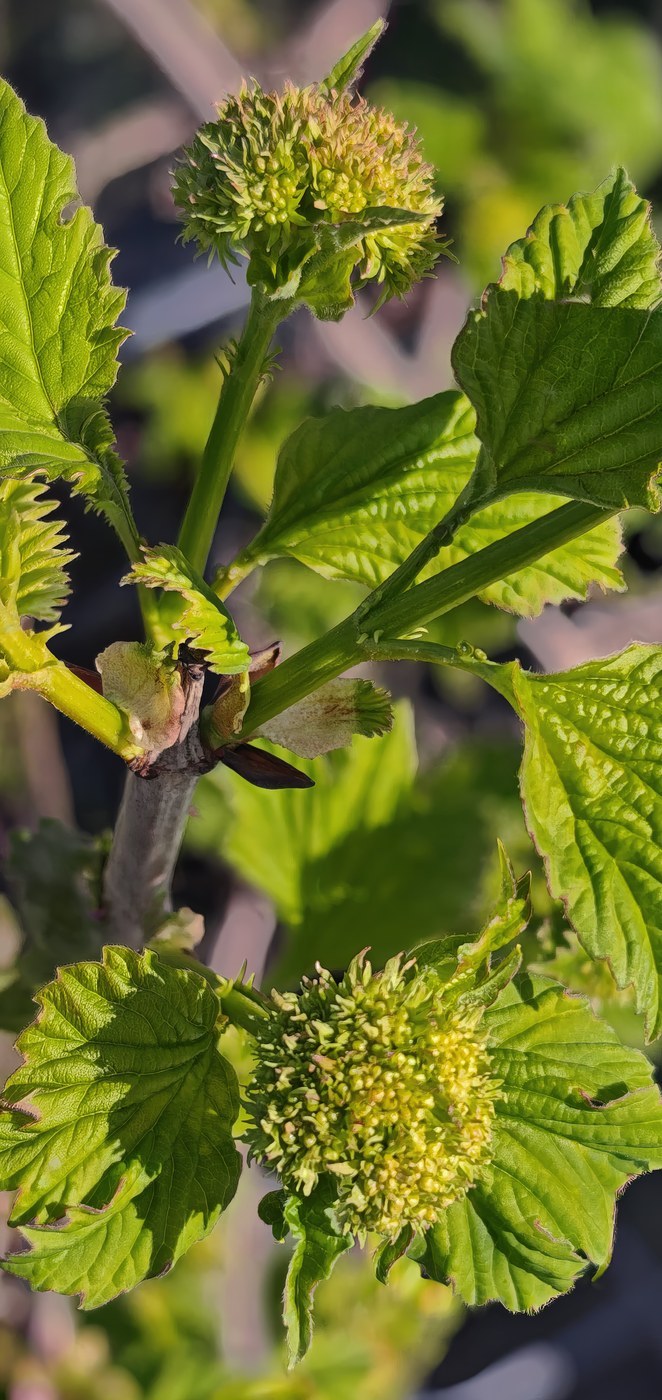
Key Identifying Features
Viburnums (Viburnum spp.) are a large genus of deciduous and evergreen shrubs (a few small trees) known for opposite leaves, showy white-to-pink flower clusters, and bright berry-like fruit. Across the many species, the constant features are opposite leaf and branch arrangement plus clusters of small five-lobed flowers that ripen into single-seeded drupes.
- Opposite leaves and twigs
- Flat-topped or dome-shaped (rounded) flower clusters, usually white
- Berry-like drupes in red, blue, black, or yellow
- No latex threads (separates them from dogwoods)
Leaves & Stems
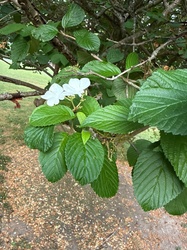
Leaf shape varies a lot by species, but all are opposite. Common forms include toothed oval leaves, maple-like three-lobed leaves (as in cranberrybush viburnums), and glossy, leathery evergreen leaves (as in laurustinus and many evergreen types). Many have prominent, deeply impressed veins giving a quilted or corrugated texture (e.g., V. rhytidophyllum, V. plicatum). Fall color in deciduous species can be brilliant red to purple. Twigs are opposite with often flattened or hairy buds.
Flowers & Fruit
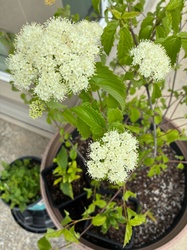
Flowers form dense clusters (cymes) of tiny tubular flowers with five spreading lobes, mostly white (sometimes pink in bud). Some species, like doublefile and snowball viburnums, have showy sterile ring flowers around the cluster or all-sterile pom-pom 'snowballs'. Many are fragrant. Fruits are fleshy drupes containing a single flattened stone, ripening through red to blue-black (or staying red), often persisting into winter and feeding birds.
How to Tell It Apart from Look-Alikes
- Dogwoods (Cornus): also opposite with flat white clusters, but leaves produce stretchy white latex when torn—viburnums do not.
- Elderberry (Sambucus): opposite but compound (pinnate) leaves and tiny seedy berries, not single-stone drupes.
- Hydrangea: opposite leaves and showy clusters, but flowers have papery sepals and fruit is a dry capsule, not a fleshy berry.
- Maple seedlings (for lobed-leaf viburnums): maples have winged samara fruit, not berries.
Where You'll Find It
Viburnums are native across North America, Europe, and Asia in woodland edges, hedgerows, and moist thickets, and are extremely popular in gardens as hedges, foundation shrubs, and wildlife plantings. They tolerate sun to part shade and most soils.
Quick ID Checklist
- Opposite leaves and branches
- White (or pink-budded) flowers in flat or rounded clusters, five lobes
- Single-stone berry-like drupes, red to blue-black
- No latex when leaf is torn
- Simple leaves (sometimes lobed or quilted), never pinnately compound
Frequently asked questions
How do I tell a viburnum from a dogwood shrub?
Both have opposite leaves and flat white flower clusters, but tear a leaf: dogwoods exude fine stretchy white latex threads, while viburnums do not. Viburnum fruit is also a single-stone drupe rather than the dogwood's berry clusters on red stalks.
How can I recognize a viburnum in winter?
Many viburnums hold their berry-like drupes well into winter and show clearly opposite branching with often hairy, flattened buds. The persistent fruit clusters and opposite twigs are useful cold-season ID clues.
What's a 'snowball' viburnum?
Some viburnums (such as Viburnum opulus 'Roseum' and V. macrocephalum) produce rounded balls made entirely of showy sterile flowers, resembling hydrangea snowballs. They typically set little or no fruit because the fertile flowers are absent.
Why do my viburnum's leaves look quilted?
Several species, like leatherleaf and doublefile viburnum, have deeply impressed veins that give the leaf a corrugated, quilted surface. This texture is a useful ID clue for those species.
Viburnum identified by the community
Recent Viburnum specimens identified with Plant Identifier.