Watermelon Identification Guide
How to identify the watermelon plant (Citrullus lanatus) by its deeply lobed leaves, forked tendrils, yellow flowers, and large rind fruit.
Read the full Watermelon encyclopedia entry →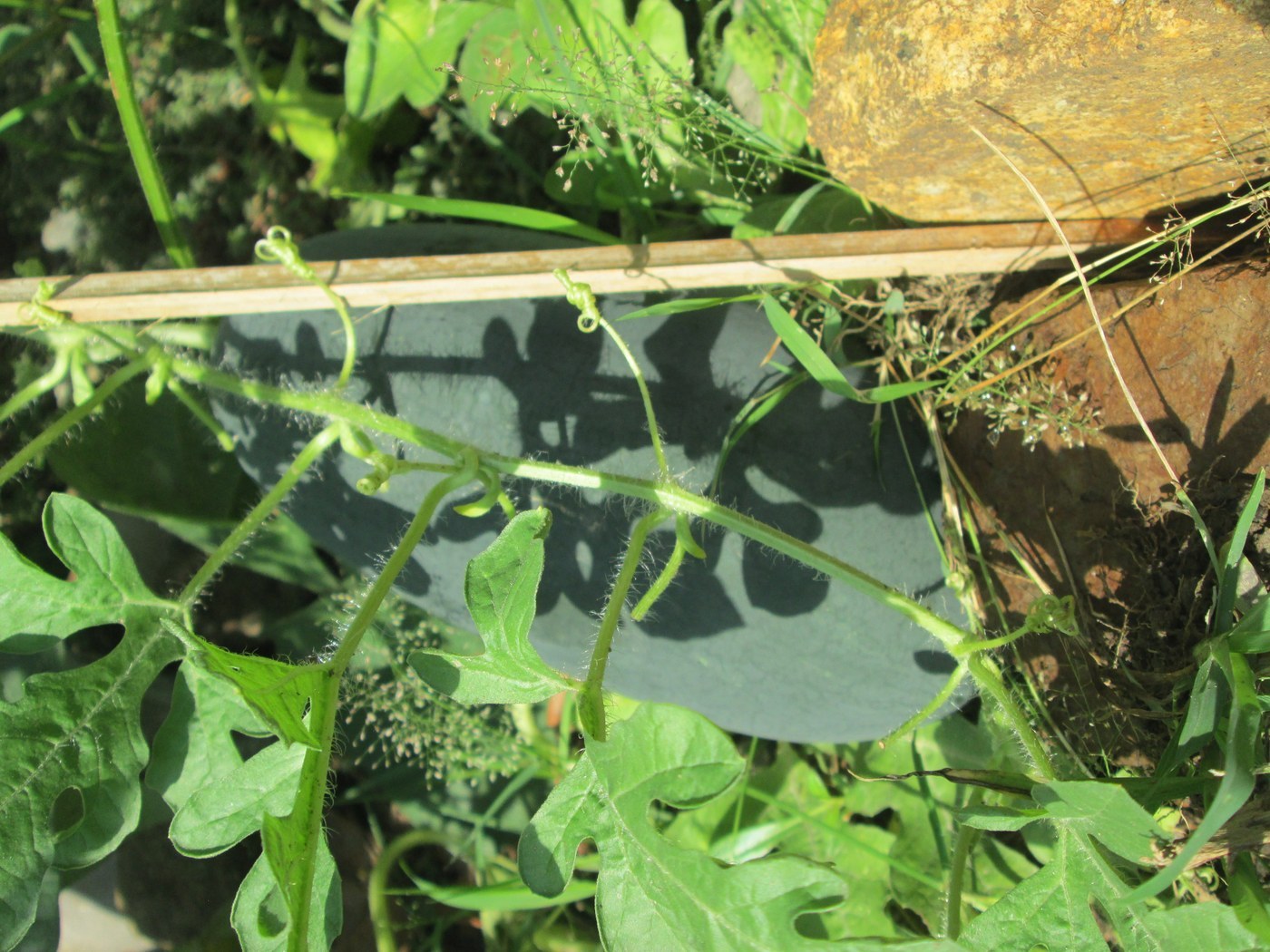
Key Identifying Features
Watermelon (Citrullus lanatus) is a sprawling annual vine in the gourd family (Cucurbitaceae). Identify it by its deeply cut, lacy-lobed leaves (distinct from other melons), branched curling tendrils, pale yellow flowers, and the large, smooth, hard-rinded fruit with juicy red, pink, or yellow interior.
- Trailing hairy vine running along the ground
- Deeply pinnately lobed, gray-green leaves with rounded lobes
- Forked (branched) tendrils at the leaf joints
- Small pale yellow flowers; large smooth rind fruit
Leaves & Stems
Watermelon leaves are the easiest field mark: deeply and pinnately lobed, almost lacy or feathery, with 3-5 main lobes that are themselves rounded and notched, colored a soft gray-green and covered in fine hairs. This deep dissection sets watermelon apart from the shallowly lobed, broader leaves of pumpkin, cucumber, and other melons. Stems are slender, ridged, hairy, and trailing, with branched (forked) tendrils that coil to grip. The vine sprawls several feet across the ground.
Flowers & Fruit
Watermelon is usually monoecious, bearing separate male and female flowers (some plants have perfect flowers). Flowers are small (under 1 in), pale to greenish-yellow, with five lobes, much smaller than pumpkin blooms. Female flowers sit atop a tiny fuzzy ovary that swells into the fruit. The fruit is a large, smooth, hard-rinded pepo, round to oblong, green (often striped or mottled), with juicy red, pink, orange, or yellow flesh and flat seeds (or seedless in some cultivars). The fruit rests on the ground as it grows.
How to Tell It Apart from Look-Alikes
- Muskmelon/cantaloupe: has broad, shallowly lobed, nearly round leaves and a netted or ribbed smaller fruit; watermelon's leaves are far more deeply cut and its fruit larger and smooth.
- Cucumber: triangular, shallowly lobed rough leaves and small cylindrical fruit; not lacy like watermelon.
- Pumpkin/squash: big broad leaves and large yellow bell flowers; watermelon leaves are lacy and flowers small.
- Citron/wild gourds: related, but watermelon's deeply lobed leaves and sweet large fruit distinguish cultivated types.
Where You'll Find It
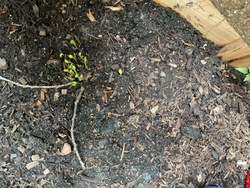
Grown in warm vegetable gardens and farm fields needing full sun, heat, and room to sprawl. Watermelon is a summer crop across warm temperate, subtropical, and tropical regions, and volunteer vines often appear in compost or where fruit was discarded.
Quick ID Checklist
- Trailing hairy ground vine with forked tendrils
- Deeply lobed, lacy gray-green leaves
- Small pale yellow 5-lobed flowers; female on a fuzzy ovary
- Large, smooth, hard-rinded fruit resting on the ground
- Warm-season garden or field, juicy colored flesh inside
Frequently asked questions
How do I tell a watermelon vine from a cantaloupe or cucumber vine?
Look at the leaves. Watermelon has deeply cut, lacy, feathery lobed leaves, while cantaloupe and cucumber have broad, shallowly lobed, more rounded or triangular leaves. The deeply dissected gray-green leaf is the quickest way to spot watermelon.
How can I tell male from female watermelon flowers?
Female flowers have a small fuzzy swelling (the immature fruit) directly beneath the petals, while male flowers sit on a plain thin stalk. Only the female flowers develop into watermelons after pollination.
Are watermelon flowers large like pumpkin flowers?
No. Watermelon flowers are small, under an inch across, and pale yellow. That is a useful contrast with pumpkins and squash, which have large showy yellow bell-shaped flowers on similar vines.
Why is my watermelon vine producing flowers but no fruit?
Early in the season vines often open many male flowers first, before female flowers appear. Fruit also requires successful pollination, usually by bees moving pollen to the female flowers. Without that, the small ovaries shrivel instead of swelling.
Watermelon identified by the community
Recent Watermelon specimens identified with Plant Identifier.