Watermelon
Citrullus lanatus
Watermelon is a sprawling, heat-loving vine in the gourd family grown for its very large fruits. It needs a long, hot season and plenty of room to develop well.
- Light
- Full sun
- Water
- Deep and regular; ease off near harvest
- Difficulty
- Moderate
Got a plant like this?
Identify any plant from a photo, free.
Overview
Watermelon (Citrullus lanatus) is an annual trailing vine in the Cucurbitaceae, the same family as cucumber, melon and squash. It is grown for its very large berry (technically a pepo) with a hard rind.
Native to Africa, watermelon has been cultivated for thousands of years and now comes in countless sizes and types, from huge picnic melons to small icebox varieties.
A true sun-and-heat lover, it needs warm soil, a long growing season and ample space.
How to identify it
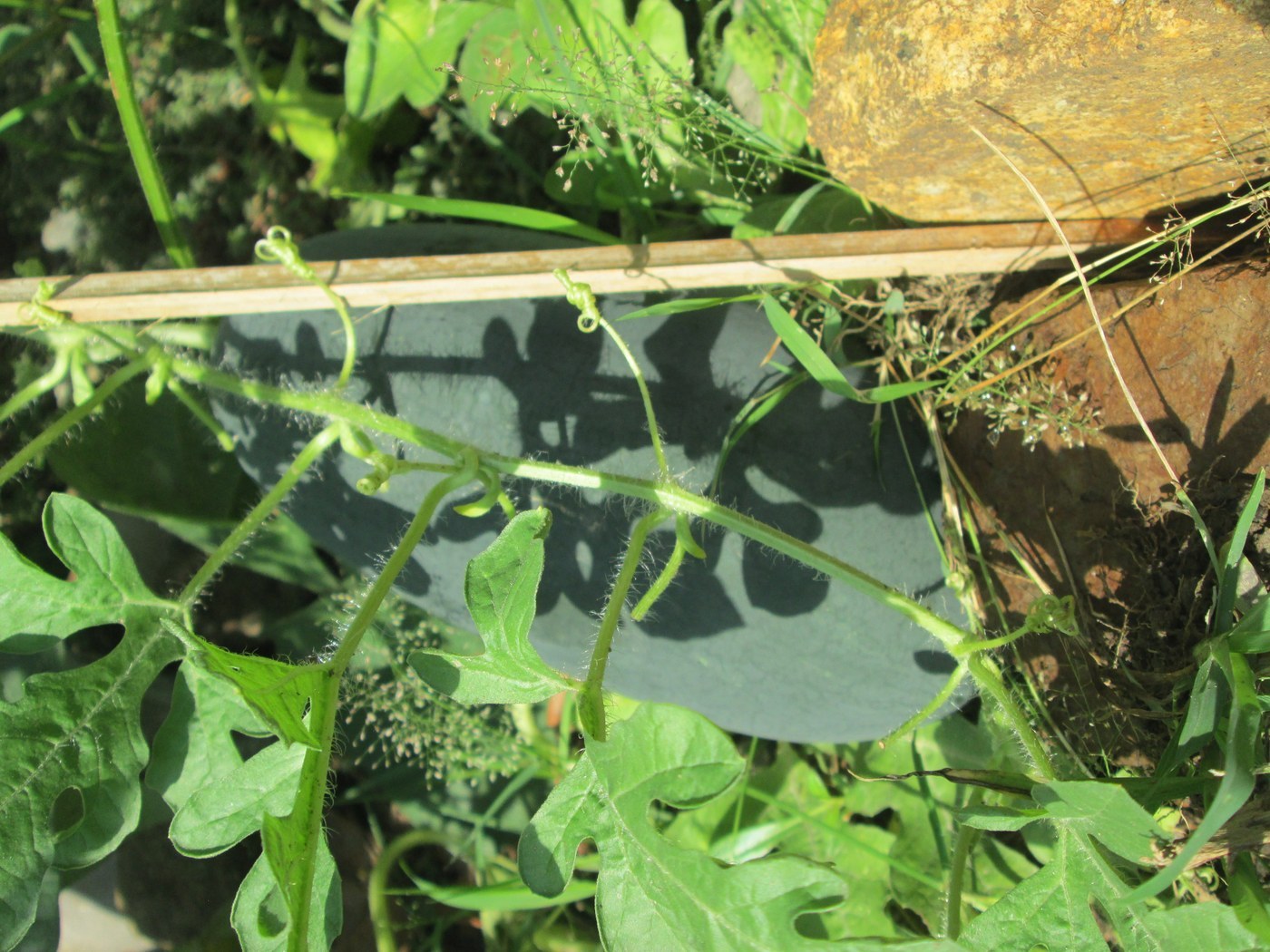
- Habit: Long, trailing or climbing vine, often 2-4 m (6-12 ft), with branching tendrils
- Stems: Hairy, sprawling, with curling tendrils
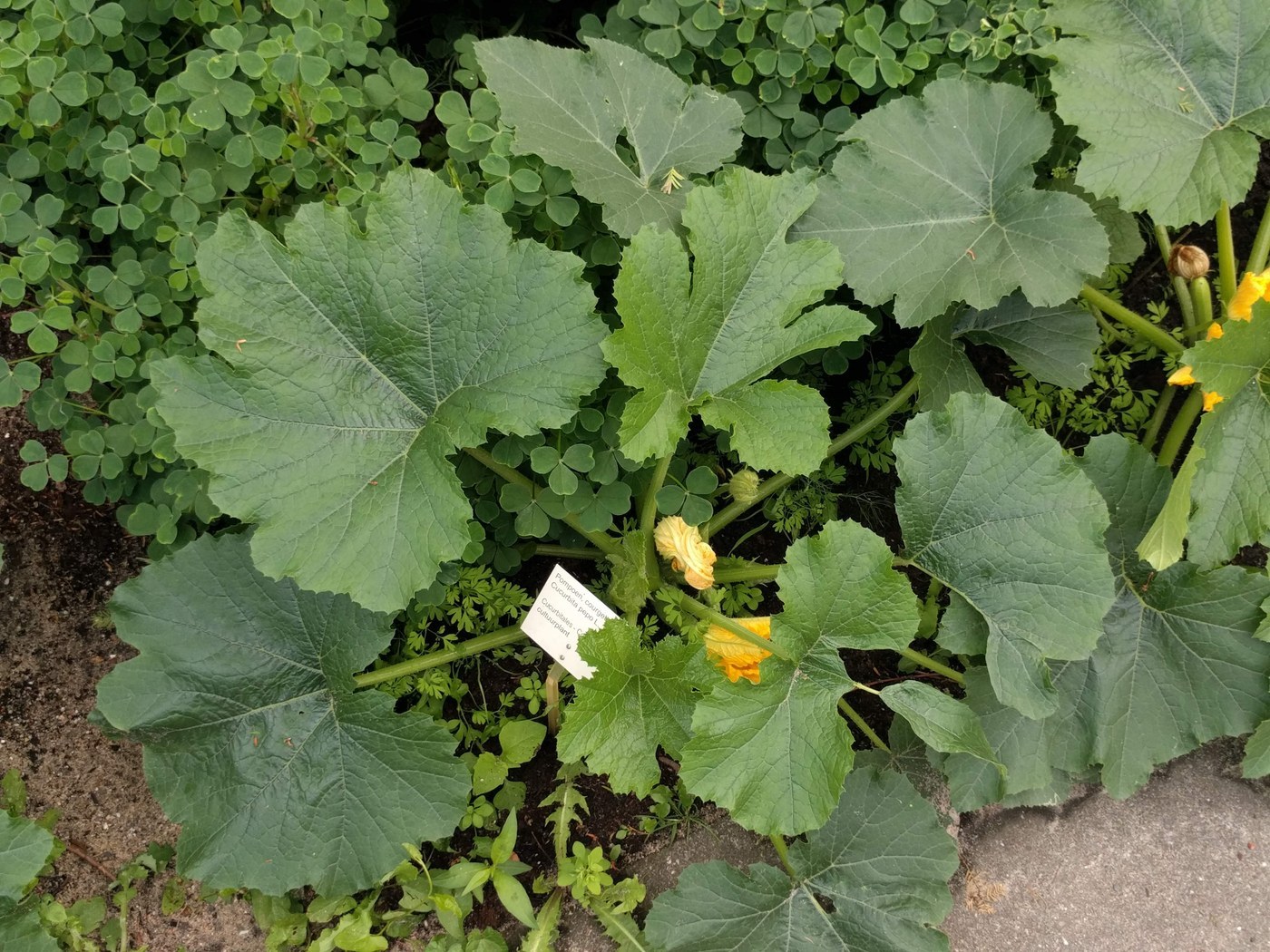
- Leaves: Deeply lobed, gray-green, with rounded lobes (distinct from cucumber's pointed leaves)
- Flowers: Yellow, with separate male and female flowers; females have a tiny swollen fruit at the base
- Fruit: Large, round to oblong, with a smooth green (often striped or mottled) rind and red, pink, orange or yellow flesh dotted with seeds
Care & growing
Light: Full sun and lots of heat.
Water: Water deeply and regularly while vines grow and fruit swells, then reduce watering as melons mature.
Soil: Light, well-drained, fertile sandy loam; pH 6.0-6.8.
Temperature: Very warm-season; sow only when soil is reliably above 21°C (70°F). Needs a long, hot summer.
Feeding: Feed with balanced fertilizer early, shifting to lower nitrogen once fruit sets.
Propagation: Direct-sow or transplant into warm soil on mounds, giving each plant generous space.
Habitat & origin
Watermelon originated in Africa, with wild relatives in the northeastern and southern parts of the continent; it was cultivated in ancient Egypt over 4,000 years ago.
It is now grown throughout warm-temperate, subtropical and tropical regions worldwide. China is by far the largest producer, followed by countries across the Middle East, the Americas and southern Europe.
Frequently asked questions
Why is my watermelon flowering but not fruiting?
Early flowers are male; female flowers (with a small fruit behind the bloom) come later and need bees. Poor pollination leaves fruit unset or misshapen.
Can I grow watermelon in a small garden?
Yes, with compact "icebox" varieties trained up a sturdy trellis, supporting the developing fruit in slings as it grows.
What do watermelon leaves look like?
They are deeply lobed and gray-green with rounded lobes, which distinguishes them from the pointed leaves of cucumber.
How much space does a watermelon vine need?
A lot. The trailing vines can reach 2-4 m (6-12 ft) long, so give each plant generous room or train compact types up a sturdy trellis.
Watermelon guides
In-depth guides for identifying, growing, and caring for Watermelon.
How to Care for Watermelon
Grow Watermelon (Citrullus lanatus), a heat-loving trailing vine that needs full sun, warm soil, and deep, steady watering.
Watermelon Identification Guide
How to identify the watermelon plant (Citrullus lanatus) by its deeply lobed leaves, forked tendrils, yellow flowers, and large rind fruit.
Watermelon identified by the community
Real specimens identified with Plant Identifier.