How to Care for Weeping Cherry
The Weeping Cherry is a graceful ornamental tree with cascading branches smothered in pink or white spring blossom, best in full sun.
Read the full Weeping Cherry encyclopedia entry →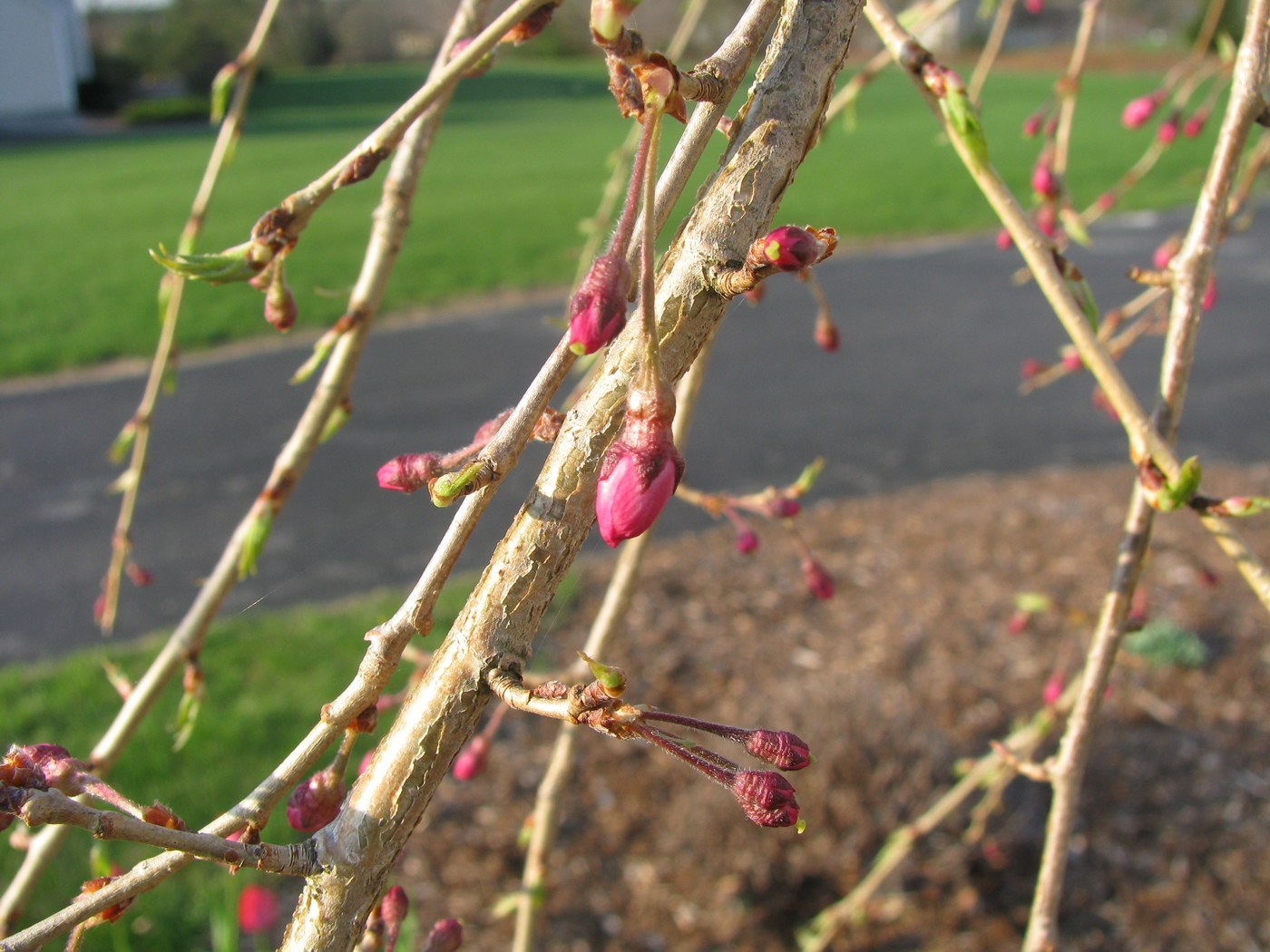
The Weeping Cherry (Prunus subhirtella 'Pendula') is a beloved ornamental tree whose long, cascading branches arch to the ground and erupt in clouds of soft pink or white blossom in early spring. It rewards a little attention to siting, watering, and pruning with one of the most spectacular spring displays of any garden tree.
Light
Weeping cherry blooms most profusely in full sun, needing at least 6 hours of direct light for the best flowering and a strong, healthy canopy. It will grow in light shade but produces fewer flowers and a thinner, weaker weeping form. Give it an open position where its cascading shape can be admired from all sides.
Water
Water weekly while the tree is young to establish a deep, resilient root system, keeping the soil consistently moist but never waterlogged. Once mature it has moderate water needs and should be watered deeply during dry spells, especially in summer, to prevent stress and premature leaf drop. A mulch ring conserves moisture and moderates soil temperature.
Soil & Potting
Weeping cherry prefers a fertile, moist, well-drained soil with a neutral to slightly acidic pH. It dislikes heavy, waterlogged ground, where the roots are prone to rot, so improve drainage on clay sites with organic matter and grit. When planting, keep the graft union above the soil line, since these trees are typically grafted onto an upright rootstock.
Humidity & Temperature
A hardy deciduous tree, weeping cherry withstands cold winters and actually needs a period of winter chill to flower well. It appreciates a sheltered spot, as late frosts can damage early blooms and strong winds can batter the delicate flowers. It grows across temperate climates and is not fussy about humidity.
Feeding
Feed in early spring with a balanced tree fertilizer or one formulated for flowering trees to support strong bud set and growth. Avoid heavy nitrogen, which pushes leafy growth at the expense of flowers, and stop feeding by midsummer so new growth hardens before winter. An annual compost mulch enriches the soil steadily.
Propagation
Weeping cherry is almost always propagated by grafting or budding the weeping cultivar onto an upright cherry rootstock, which gives the characteristic tall trunk with cascading crown. Softwood cuttings can sometimes be rooted under humidity but are slow and unreliable. Home propagation is difficult, so most gardeners buy grafted nursery trees.
Repotting / Pruning
Prune just after flowering in spring, since cherries are prone to disease if cut in the dormant wet season. Remove dead, damaged, or crossing branches and any upright shoots that spoil the weeping form, along with suckers arising from below the graft. Thin congested growth to keep the cascade elegant. Young trees may need a stake and central-leader training early on.
Common Problems & Pests
Weeping cherries are susceptible to aphids on new growth, borers in stressed trunks, and scale insects. Fungal issues are the main concern: brown rot, leaf spot, and silver leaf can affect stressed trees, while bacterial canker causes oozing wounds. Pruning only in dry summer weather, keeping the tree well watered, and clearing fallen leaves greatly reduce disease.
Seasonal Care Tips
Enjoy the flower display in early spring, then prune immediately after the blossom fades. Feed in spring and mulch to retain moisture. Water deeply through summer droughts, particularly for young trees. Rake up fallen leaves in autumn to limit overwintering fungal spores, and shelter the early blooms from late frost and harsh wind.
Frequently asked questions
When should I prune a weeping cherry?
Prune right after flowering in spring. Cherries are vulnerable to fungal and bacterial infection through cuts made in the damp dormant season, so avoid winter pruning.
Why is my weeping cherry not flowering well?
Usually too little sun or over-feeding with nitrogen. Give it at least 6 hours of direct light and use a balanced or flowering-tree fertilizer rather than a high-nitrogen one.
What are the upright shoots growing on my weeping cherry?
These are often suckers from the rootstock below the graft or reverted upright growth. Remove them promptly so they do not overtake and spoil the cascading form.
How often should I water a young weeping cherry?
Water roughly weekly during the first few years to establish deep roots, keeping soil moist but not soggy. Once mature, water deeply mainly during summer dry spells.
Weeping Cherry identified by the community
Recent Weeping Cherry specimens identified with Plant Identifier.