Weeping Cherry
Prunus subhirtella 'Pendula'
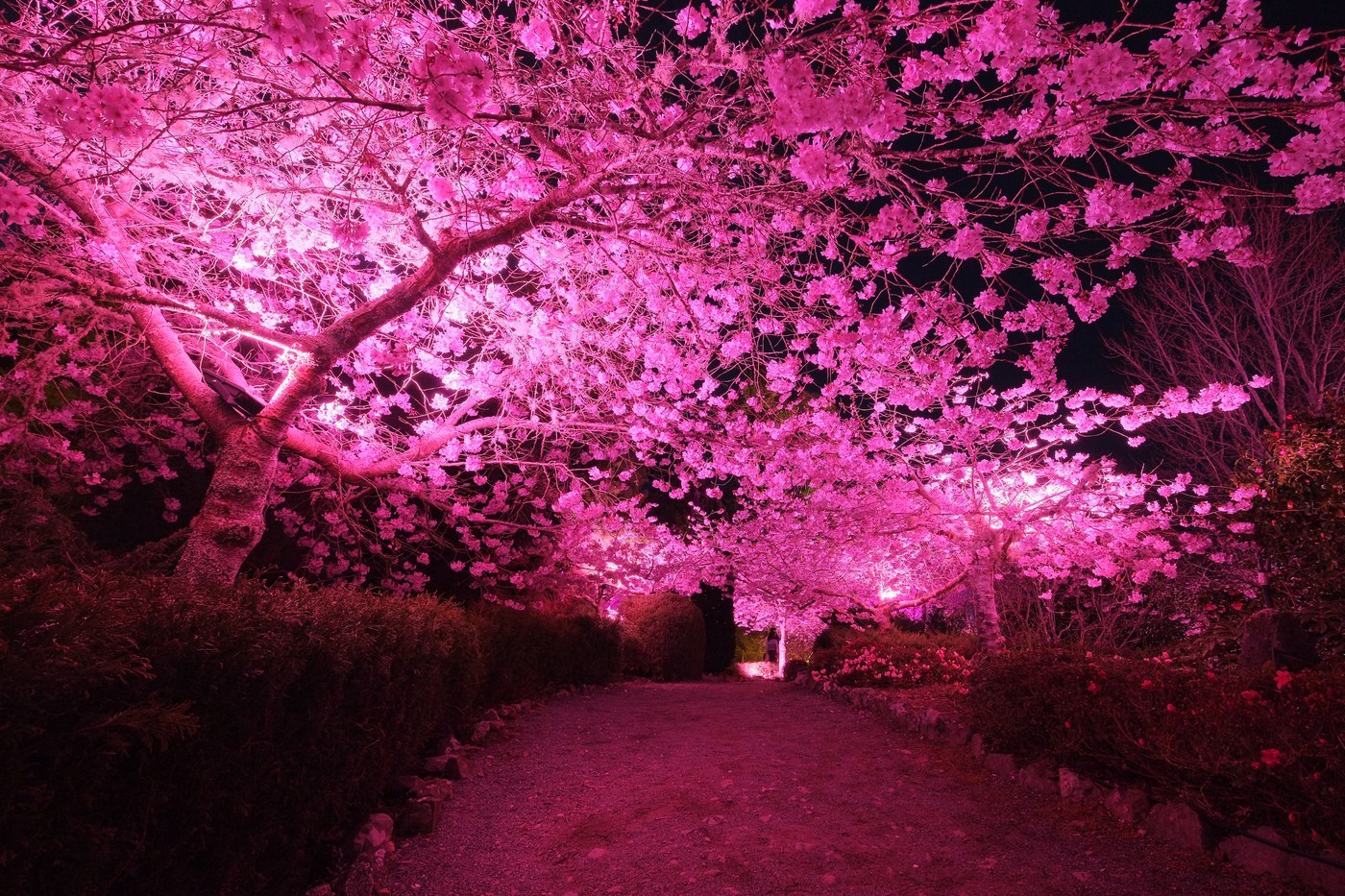
The weeping cherry is an ornamental flowering cherry with gracefully cascading branches smothered in pink or white blossoms each spring. Its waterfall silhouette makes it a popular specimen and lawn focal point.
- Light
- Full sun
- Water
- Weekly when young; moderate once established
- Difficulty
- Moderate
Got a plant like this?
Identify any plant from a photo, free.
Overview
Weeping cherry usually refers to pendulous forms of Prunus subhirtella (Higan cherry) such as 'Pendula' and 'Snow Fountains', though the name is also applied to weeping Prunus serrulata cultivars like 'Cheal's Weeping' (Kiku-shidare-zakura).
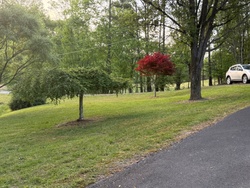
The branches arch up from a grafted standard then cascade toward the ground, creating a domed fountain that erupts into bloom before or as the leaves emerge.
Many are sold as grafted standards, with the weeping crown budded onto a straight upright trunk to fix the height of the cascade.
How to identify it
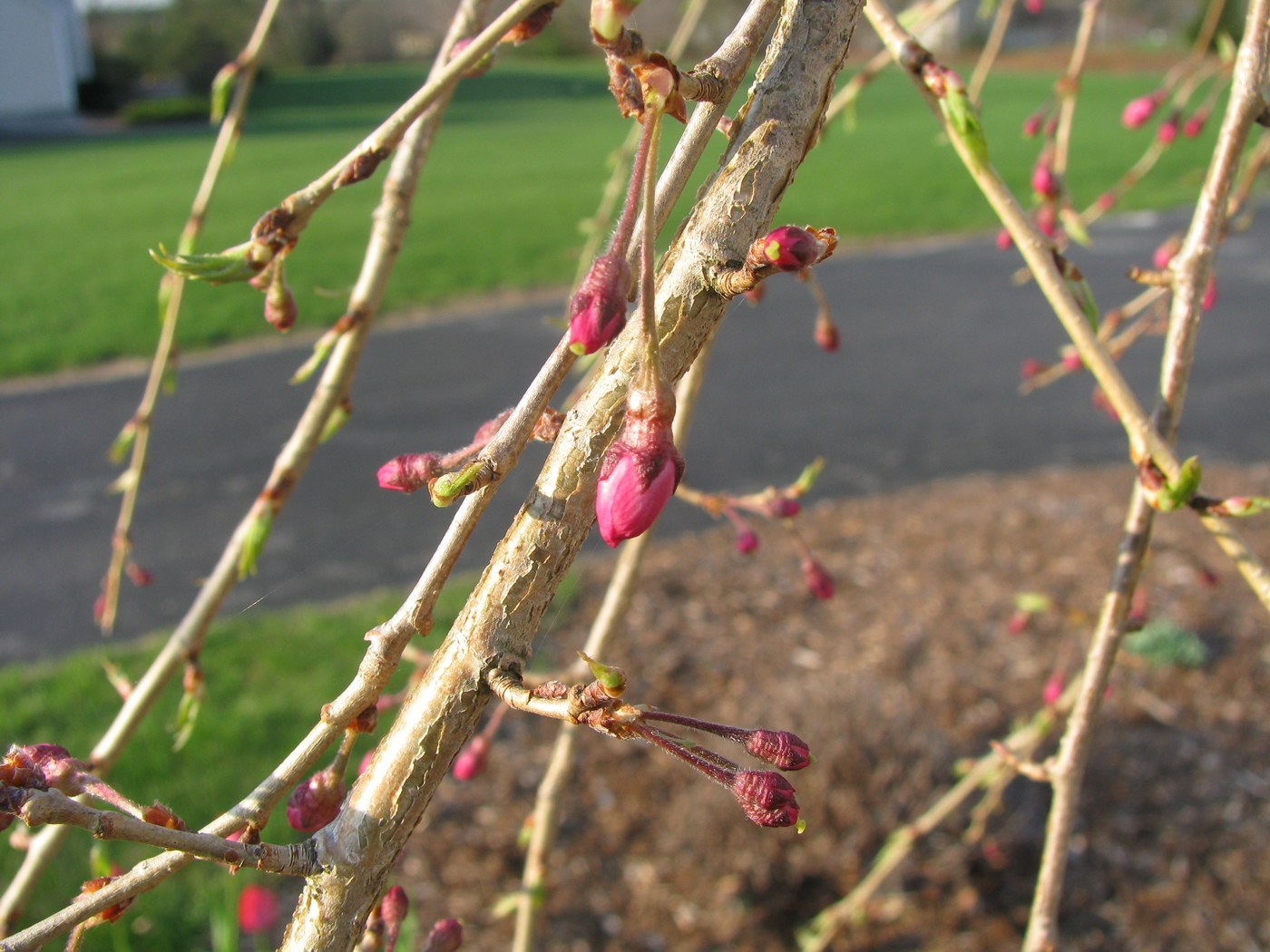
- Flowers: single or double, pale pink to white, borne in profusion along the branches in early to mid spring
- Branches: long, slender and strongly pendulous, hanging from a domed crown to near the ground
- Leaves: alternate, oval with finely toothed edges, dark green turning yellow-bronze in fall
- Size: typically 15-25 ft tall and wide depending on graft height and cultivar
- Bark: smooth, reddish-brown with prominent horizontal lenticels
Care & growing
Light: full sun (at least 6 hours) for the heaviest bloom and good form.
Water: water deeply and regularly during establishment and in summer drought; mature trees tolerate moderate dryness.
Soil: moist, well-drained, slightly acidic loam; avoid soggy sites which invite root rot.
Feeding: a light spring feeding of balanced fertilizer supports growth; avoid heavy nitrogen.
Pruning: prune just after flowering; remove any upright shoots from above the graft and suckers from below it to preserve the weeping form.
Propagation: named cultivars are grafted; they do not come true from seed.
Habitat & origin
The parent species are native to Japan, where flowering cherries have been cultivated and selected for centuries. Higan cherry (Prunus subhirtella) is a long-lived garden cherry of Japanese origin.
Weeping cherries are grown ornamentally throughout temperate regions, hardy in roughly USDA zones 4-8, and are popular in lawns, near patios and beside water features.
Frequently asked questions
Why isn't my weeping cherry blooming?
Common causes are too much shade, late frost damage to buds, or pruning at the wrong time. Give it full sun and prune only just after flowering.
How do I keep its weeping shape?
Remove any vigorous upright shoots above the graft and all suckers below it. These can revert and ruin the cascade if left.
How long do weeping cherries live?
They are relatively short-lived ornamentals, often 20-40 years, and can be prone to borers, cankers and fungal diseases.
Are weeping cherries messy?
The petals drop quickly after bloom, but the trees are mostly non-fruiting or bear only tiny inconspicuous cherries, so cleanup is minimal.
Weeping Cherry guides
In-depth guides for identifying, growing, and caring for Weeping Cherry.
How to Care for Weeping Cherry
The Weeping Cherry is a graceful ornamental tree with cascading branches smothered in pink or white spring blossom, best in full sun.
Weeping Cherry Identification Guide
A practical guide to identifying weeping cherry trees (Prunus species) by their cascading branches, spring pink or white blossoms, and glossy bark.
Weeping Cherry identified by the community
Real specimens identified with Plant Identifier.