White Ash Identification Guide
How to identify white ash (Fraxinus americana) by its opposite compound leaves, diamond-ridged bark, and paddle-shaped winged seeds.
Read the full White Ash encyclopedia entry →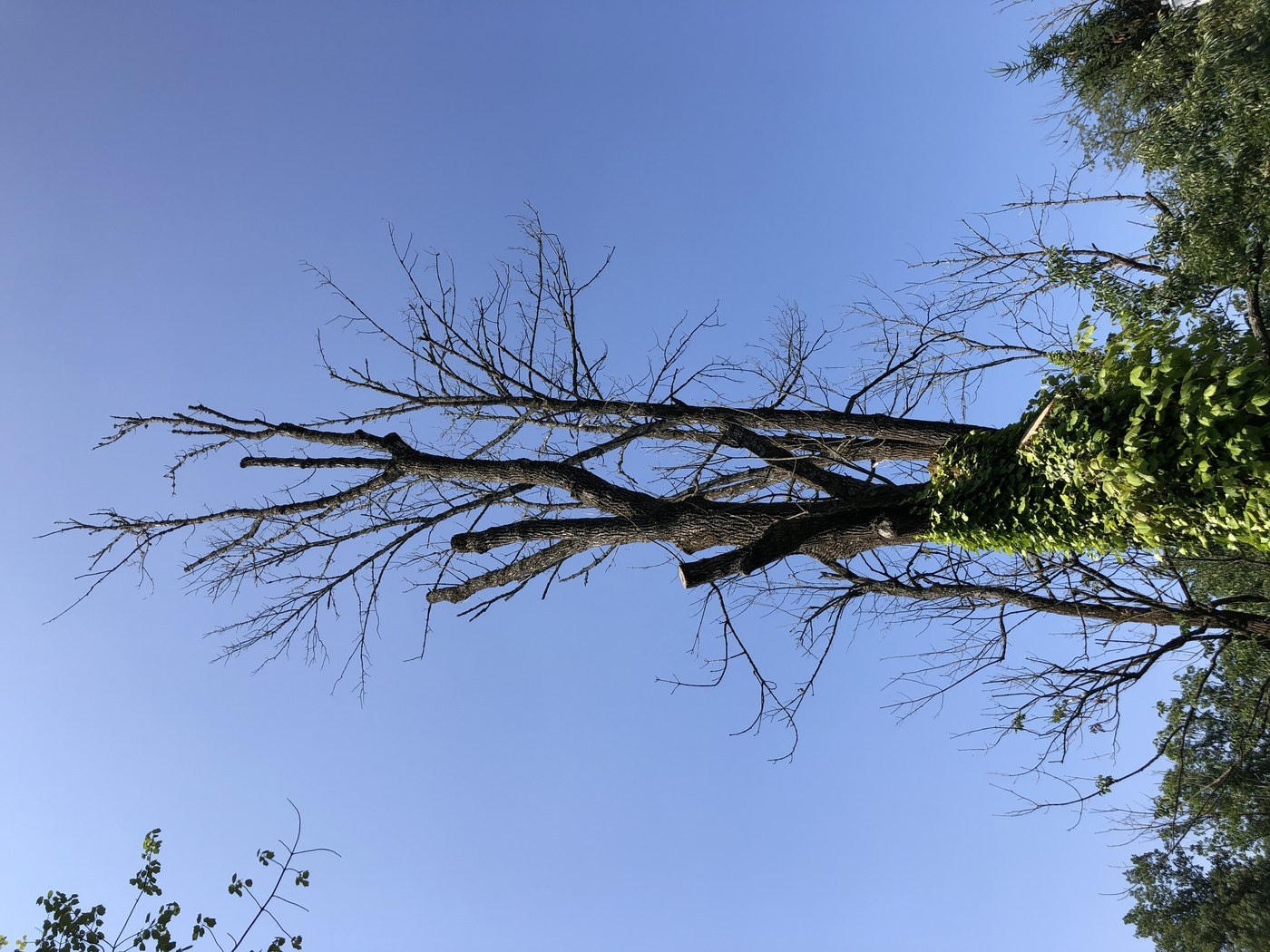
Key Identifying Features
White ash (Fraxinus americana) is a large deciduous tree distinguished by its opposite, pinnately compound leaves, tightly diamond-patterned bark, and single paddle-shaped winged seeds. It grows 50–80 feet tall with a straight trunk and a rounded crown. (Note: across much of its range it is now severely threatened by the emerald ash borer.)
- Opposite branching — leaves, buds, and twigs in matched pairs
- Compound leaves with 5–9 (usually 7) leaflets
- Bark with a tight, regular diamond-shaped (interlacing ridge) pattern
- Single-winged, paddle-shaped seeds (samaras) in dense clusters
Leaves & Stems
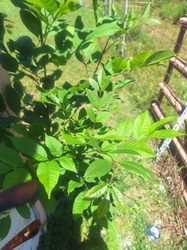
The leaves are 8–12 inches long, pinnately compound, with usually 7 leaflets (sometimes 5–9). Each leaflet is 2–5 inches, oval, pointed, with a smooth or faintly toothed margin, dark green above and notably pale, whitish, and smooth beneath — the trait behind the name "white" ash. Fall color ranges from yellow to deep maroon-purple. Crucially, leaves and twigs are opposite, a key family feature. Twigs are stout with brown, dome-shaped buds; the leaf scars are large and shaped like a smile or shield, with the bud sitting in the notch. Mature bark forms a tight, even diamond lattice of ridges.
Flowers & Fruit
White ash is dioecious (separate male and female trees). In spring, before or with the leaves, clusters of small purplish, petal-less flowers appear. Female trees bear hanging clusters of samaras — single-winged seeds shaped like a canoe paddle, with the seed body in a rounded, cylindrical, non-flattened end and a long wing. These ripen tan in fall.
How to Tell It Apart from Look-Alikes
Few large trees have opposite compound leaves — mainly ash, maple, and a few others (remember the mnemonic MAD: Maple, Ash, Dogwood). Maples have simple lobed leaves, ruling them out. Among ashes, green ash (Fraxinus pennsylvanica) has leaflets that are green (not pale) underneath and a seed wing extending farther down the seed body. Boxelder (a maple) has compound leaves but they are sometimes 3-lobed and it has paired (two-winged) samaras. White ash's pale leaf undersides, smile-shaped leaf scars, and paddle samaras confirm it.
Where You'll Find It
Native to eastern and central North America, white ash grows in rich, moist, well-drained upland soils, woodlands, and along field edges. Historically common and valued for its strong wood (baseball bats, tool handles), it is now declining sharply due to the invasive emerald ash borer.
Quick ID Checklist
- Branching: strictly opposite (twigs, buds, leaves in pairs)
- Leaves: compound, usually 7 leaflets, pale/whitish underneath
- Bark: tight, regular diamond-shaped ridge pattern
- Seeds: single paddle-shaped samaras in dense clusters
- Habitat: rich moist soils of eastern/central North America
A large tree with opposite compound leaves, diamond bark, and paddle-shaped winged seeds is white ash.
Frequently asked questions
How do I distinguish white ash from green ash?
White ash leaflets are distinctly pale or whitish underneath and its samara seed body is rounded with the wing only at the tip, while green ash leaflets are green underneath and the wing extends farther down the seed.
What does opposite branching mean and why does it matter?
It means twigs, buds, and leaves grow in matched pairs directly across from each other. Among large trees this narrows identification to ash, maple, or dogwood, helping rule out many look-alikes.
Why is it called white ash?
The name refers to the pale, whitish, glaucous underside of its leaflets, which contrasts with the darker green upper surface.
Is white ash affected by the emerald ash borer?
Yes. The invasive emerald ash borer has killed vast numbers of white and other ash trees across North America, so many mature white ash are now dead, dying, or treated to survive.
White Ash identified by the community
Recent White Ash specimens identified with Plant Identifier.