Wild Bergamot Identification Guide
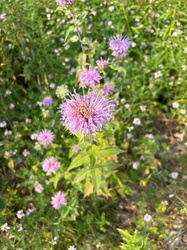
Identify Wild Bergamot by its ragged lavender flower clusters, square stems, and strongly aromatic minty-oregano foliage.
Read the full Wild Bergamot encyclopedia entry →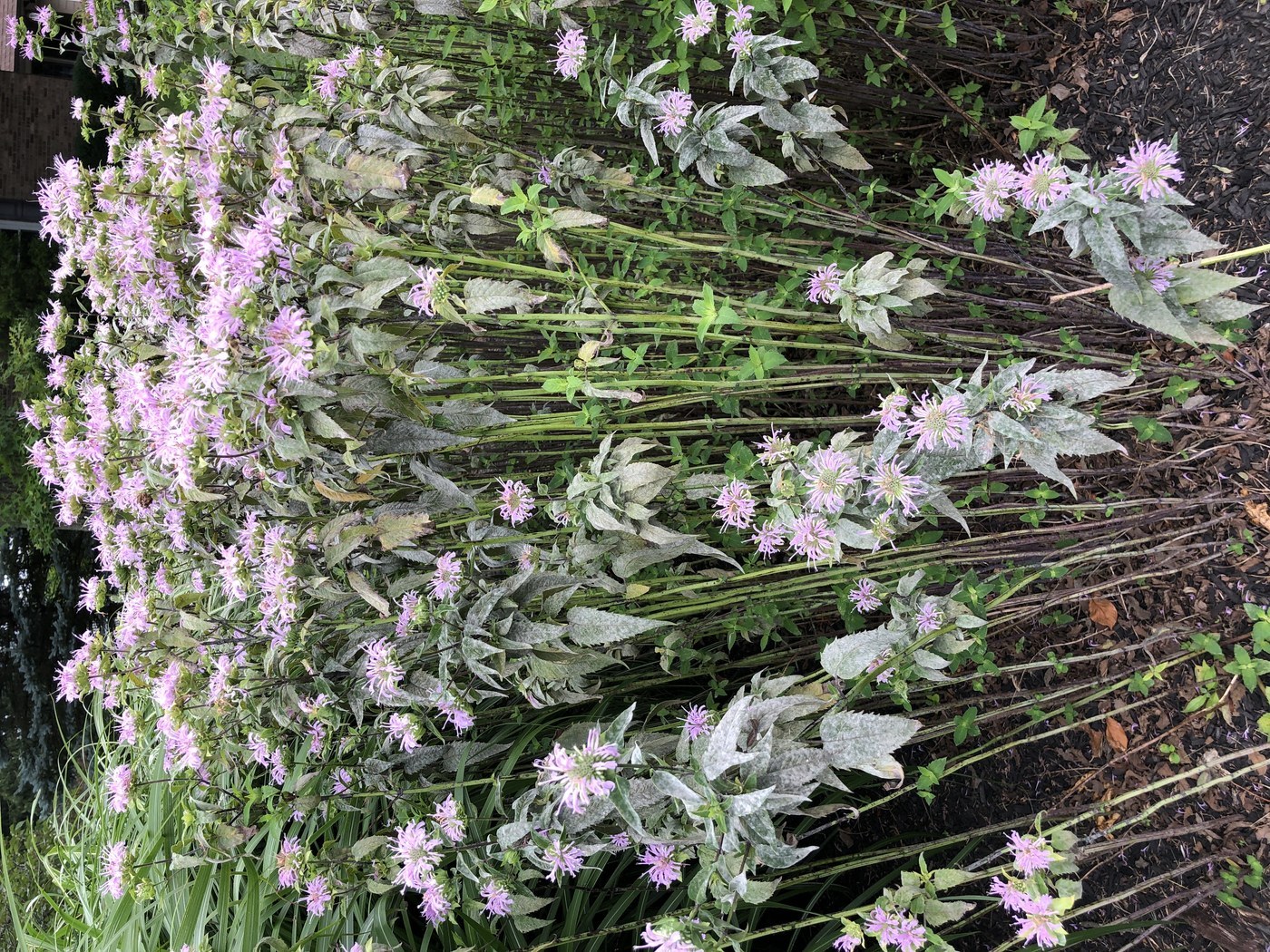
Key Identifying Features
Wild Bergamot (Monarda fistulosa), also called Bee Balm, is an aromatic North American member of the mint family. Reliable signs:
- A single dense, rounded head of ragged, tubular lavender-to-pink flowers at the stem tip.
- Square stems — the classic mint-family giveaway.
- Opposite, aromatic leaves smelling of oregano, mint, and thyme when crushed.
- Upright clumps 0.6–1.2 m (2–4 ft) tall.
Leaves & Stems
Stems are square in cross-section, often branched in the upper part, and somewhat hairy. Leaves are opposite, lance-shaped to triangular, toothed, grey-green, and strongly fragrant when crushed — a key identifier. The aroma is sharp and herbal, reminiscent of the bergamot orange that the plant is named after, with oregano and thyme notes.
Flowers & Fruit
Flowering runs mid to late summer (June–September). Each flowering head is 3–6 cm across and packed with slender, two-lipped tubular flowers in lavender, lilac, or pale pink (never bright red — that distinguishes it from Scarlet Bee Balm). The flowers have a shaggy, tousled look. Beneath the head sit whitish-to-pinkish leafy bracts. After bloom, small dry nutlets form in the persistent calyx tubes.
How to Tell It Apart from Look-Alikes
- Scarlet Bee Balm (Monarda didyma) is nearly identical in form but has bright red flowers and prefers moister ground.
- Spotted Bee Balm / Horsemint (M. punctata) has yellow, purple-spotted flowers in stacked tiers with showy pink bracts.
- Wild Mints (Mentha) have much smaller flower clusters in leaf axils, not one big terminal head.
- Selfheal and other mints lack the single large pompom-like head.
The combination of one ragged lavender pompom head + square stem + oregano-mint scent confirms Wild Bergamot.
Where You'll Find It
Wild Bergamot thrives in dry prairies, open woods, meadows, roadsides, and field edges across most of North America. It tolerates dry to medium soils in full sun to part shade and is a magnet for bees, butterflies, and hummingbirds. It is also a popular native garden and pollinator plant.
Quick ID Checklist
- Single ragged lavender/pink pompom flower head
- Square stem (mint family)
- Opposite, toothed, aromatic leaves (oregano/mint scent)
- Upright clumps, 0.6–1.2 m tall
- Two-lipped tubular flowers
- Dry sunny meadows, prairies, roadsides, mid-late summer
Frequently asked questions
Is Wild Bergamot related to the bergamot in Earl Grey?
No — the bergamot in Earl Grey is the bergamot orange, a citrus. Wild Bergamot got its name because its scent resembles that orange, but it is actually a mint-family herb.
How do I separate it from red Bee Balm?
Wild Bergamot has lavender-to-pink flowers and tolerates dry soil; Scarlet Bee Balm (Monarda didyma) has bright red flowers and prefers moist sites. Otherwise they look very similar.
What does it smell like?
Crushed leaves give off a strong herbal aroma of oregano, thyme, and mint — a quick confirmation when paired with the square stem and pompom flower head.
How tall does Wild Bergamot grow?
It forms upright clumps generally 0.6 to 1.2 m (2 to 4 ft) tall, each topped by a single ragged lavender-to-pink pompom flower head.
Wild Bergamot identified by the community
Recent Wild Bergamot specimens identified with Plant Identifier.