Wild Bergamot
Monarda fistulosa
An aromatic North American mint-family perennial topped with ragged lavender flower heads that are magnets for bees, butterflies, and hummingbirds.
- Light
- Full sun to part shade
- Water
- Moderate; tolerates dry spells
- Difficulty
- Easy
Got a plant like this?
Identify any plant from a photo, free.
Overview
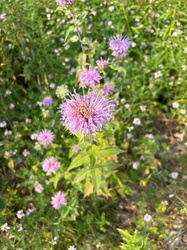
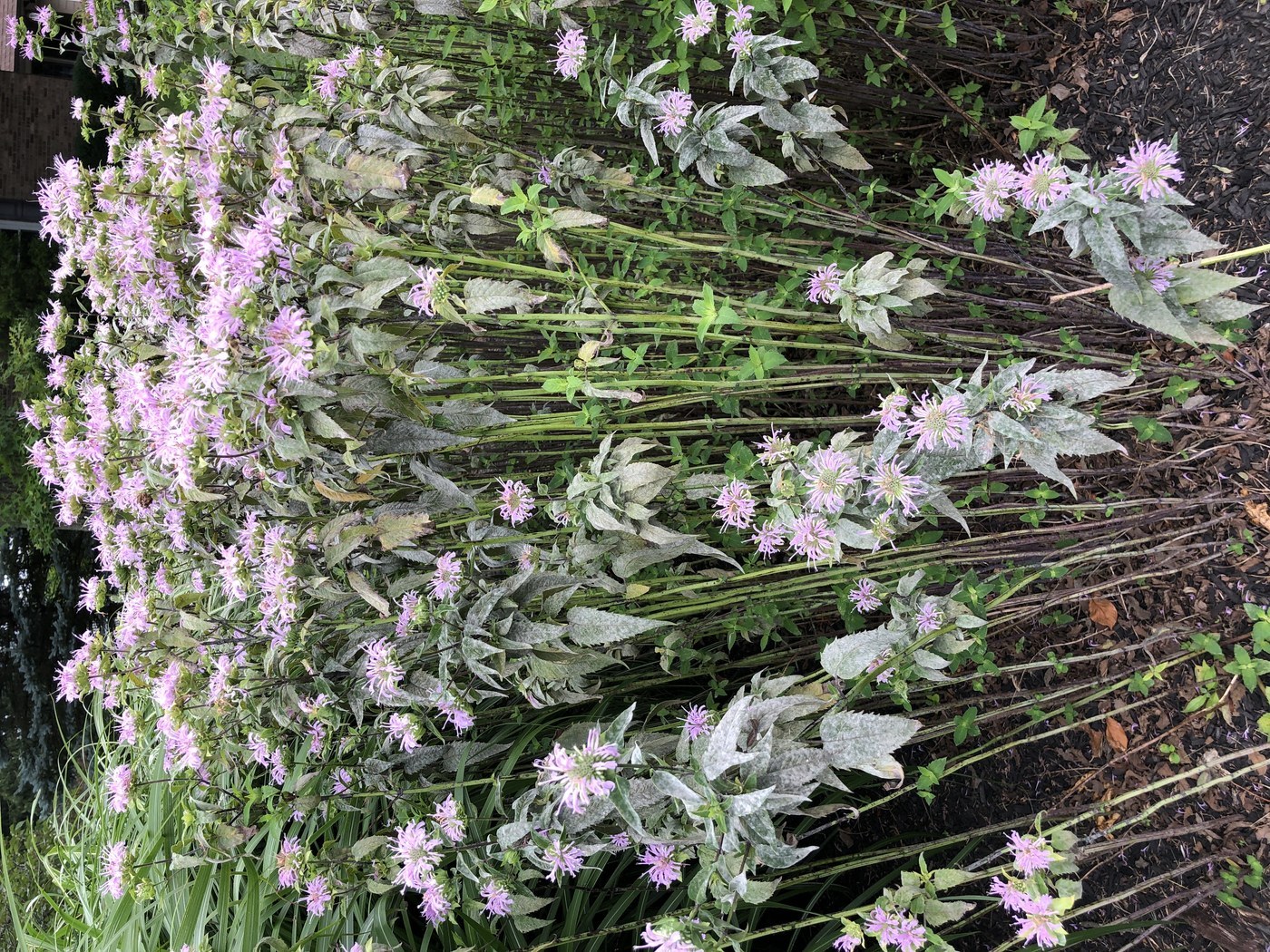
Wild bergamot is a hardy, clump-forming perennial in the mint family, instantly recognizable by its shaggy, pom-pom-like heads of pale lavender to pink flowers in mid to late summer. The whole plant is strongly aromatic, with a fragrance reminiscent of oregano and of bergamot orange, the citrus that lends Earl Grey tea its scent (hence the common name).
A staple of prairie and pollinator gardens, it spreads by rhizomes to form drifts and is exceptionally attractive to native bees, butterflies, and hummingbirds. It is closely related to scarlet bee balm (Monarda didyma).
How to identify it
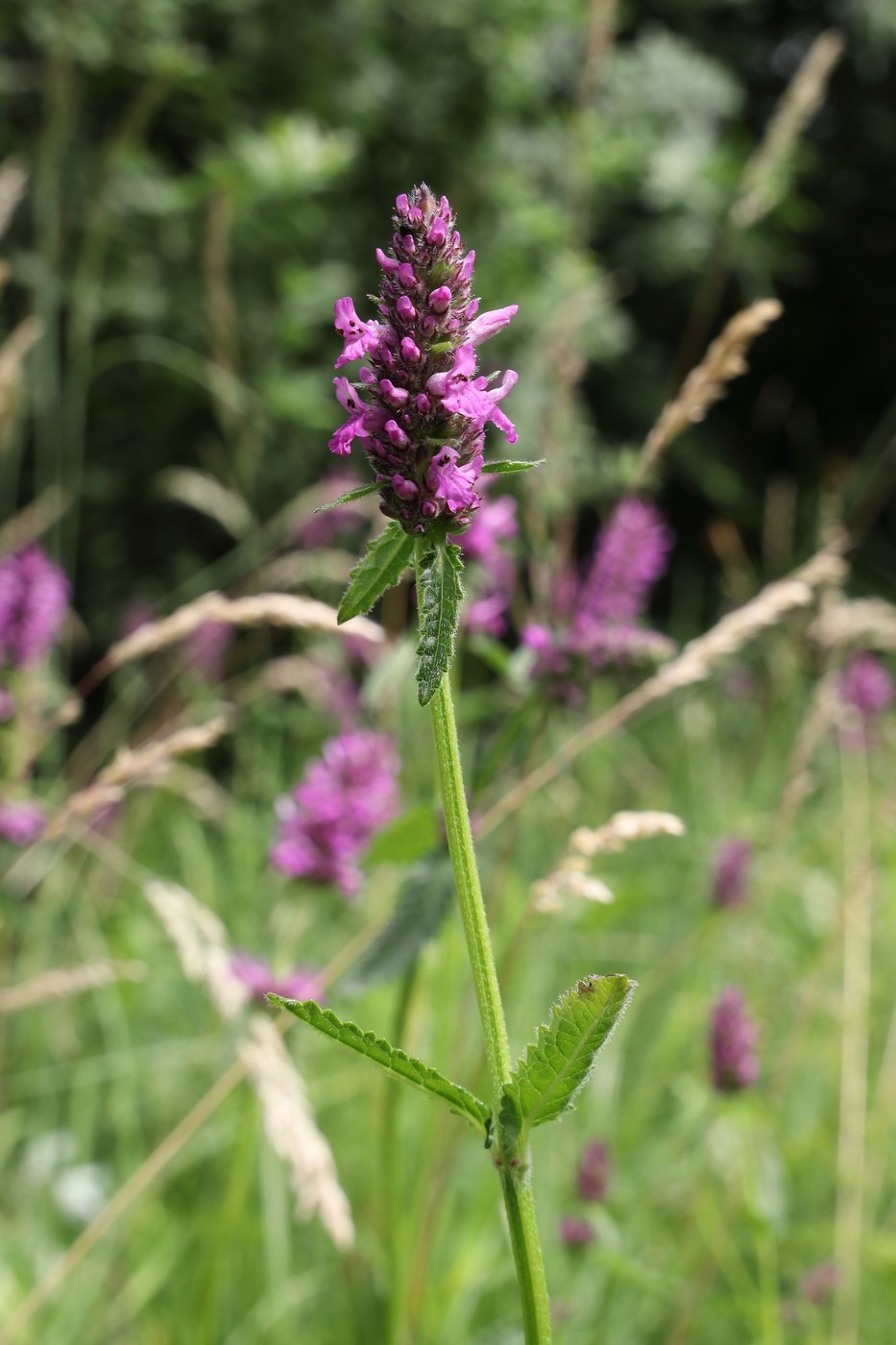
- Flowers: Dense, rounded terminal heads of tubular, two-lipped lavender-pink flowers with a ragged, whiskery appearance.
- Leaves: Opposite, lance-shaped, gray-green, toothed, and aromatic when crushed.
- Stems: Square in cross-section (typical of the mint family).
- Height: Typically 0.6-1.2 m tall.
- Habit: Upright clumps that spread via rhizomes.
Care & growing
Light: Full sun is best; tolerates light shade.
Water: Average moisture; reasonably drought-tolerant once established.
Soil: Adaptable, preferring well-drained soil; tolerates clay.
Temperature: Very hardy across a wide temperate range.
Feeding: Minimal; over-rich soil encourages floppy growth.
Propagation: Divide clumps in spring, take cuttings, or sow seed. Improve airflow to limit powdery mildew, a common issue for the genus.
Habitat & origin
Native across much of North America, from Canada south into Mexico, where it grows in prairies, dry fields, woodland edges, and roadsides. It is highly adaptable to a range of soils.
Widely cultivated in pollinator gardens, herb gardens, and naturalistic plantings throughout temperate regions, where it naturalizes readily.
Frequently asked questions
Is wild bergamot the same as the bergamot in Earl Grey tea?
No. Earl Grey is scented with bergamot orange (Citrus bergamia). Wild bergamot simply shares a similar fragrance, which is how it got its name.
Why do the leaves get a white coating?
Monarda is prone to powdery mildew, especially in humid conditions. Good air circulation, full sun, and resistant varieties help reduce it.
Does it attract pollinators?
Exceptionally so. Its tubular flowers are a favorite of native bees, butterflies, and hummingbirds throughout summer.
Wild Bergamot guides
In-depth guides for identifying, growing, and caring for Wild Bergamot.
How to Care for Wild Bergamot
Grow Monarda fistulosa, wild bergamot, with our care guide: sun, watering, soil, dividing, and managing powdery mildew on this pollinator favorite.
Wild Bergamot Identification Guide
Identify Wild Bergamot by its ragged lavender flower clusters, square stems, and strongly aromatic minty-oregano foliage.
Wild Bergamot identified by the community
Real specimens identified with Plant Identifier.