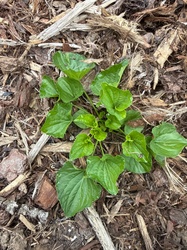
Wild Violet Identification Guide
How to recognize wild violet (Viola species) by its heart-shaped leaves, five-petaled purple flowers, and dense low-growing habit in lawns and woodlands.
Read the full Wild Violet encyclopedia entry →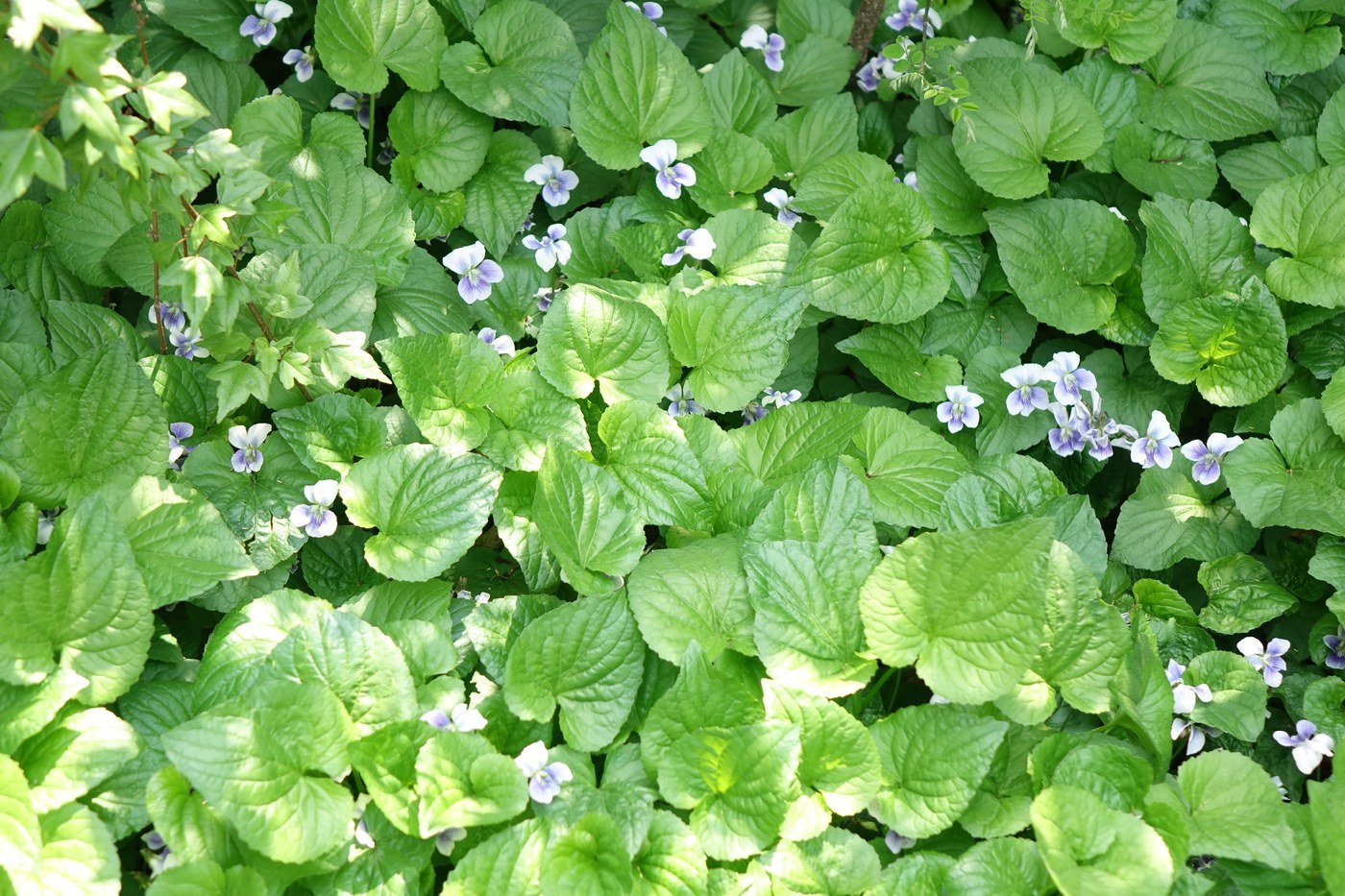
Key Identifying Features
Wild violet (Viola sororia and related species) is a low-growing perennial that forms dense clumps or spreading patches. Look for:
- Heart-shaped (cordate) leaves with scalloped or rounded-toothed margins
- Five-petaled flowers, typically deep purple to blue-violet, sometimes white or bicolored
- A basal rosette habit — leaves and flower stalks rise individually from the ground, not from an upright stem
- A waxy leaf surface that makes the plant resistant to many herbicides
The whole plant rarely exceeds 4-6 inches tall.
Leaves & Stems
Leaves are smooth or slightly hairy, glossy green, and held on long leafstalks (petioles) that emerge directly from the crown. Each leaf is distinctly heart-shaped with a pointed tip and scalloped edges. There is no true above-ground stem; instead the plant spreads by fleshy underground rhizomes, which is why it persists and forms colonies. In spring and summer the foliage is dense enough to crowd out grass.
Flowers & Fruit
The showy spring flowers sit on slender, leafless stalks roughly level with or just above the leaves. Each bloom has five petals: two upper, two lateral (often bearded with fine hairs at the throat), and one lower petal with darker veining acting as a nectar guide. Color ranges from violet-purple to blue, lavender, white, or speckled (the "Confederate violet" form). Interestingly, violets also produce closed, self-pollinating (cleistogamous) flowers near ground level later in the season; these never open but produce most of the seed. Seed capsules split into three sections and can fling seeds several feet.
How to Tell It Apart from Look-Alikes
- Ground ivy (creeping Charlie): has square stems, opposite scalloped leaves, and trailing runners — violets have no square stem and grow from a basal crown.
- Garlic mustard rosettes: smell of garlic when crushed; violet leaves have no odor.
- Common blue violet vs. cultivated pansies/violas: wild violet flowers are smaller and the plant spreads aggressively by rhizome.
- Henbit/dead-nettle: have square stems and tubular pink flowers, unlike the open five-petaled violet bloom.
The combination of heart-shaped basal leaves plus a five-petaled spurred flower is diagnostic for Viola.
Where You'll Find It
Wild violet thrives in moist, shaded to partly sunny areas: lawns, garden beds, woodland edges, ditches, and along foundations. It tolerates a wide range of soils but favors damp, fertile ground. It is native across much of eastern North America and is considered both a beloved wildflower and a tenacious lawn weed.
Quick ID Checklist
- Low rosette, under 6 inches tall
- Heart-shaped, scalloped, glossy leaves on long petioles
- Five-petaled purple/blue (or white) flowers with a lower spurred petal
- Lateral petals often bearded at the throat
- Spreads by underground rhizomes in moist shade
- No square stem and no garlic odor
If you see a spreading patch of heart-shaped leaves dotted with small purple five-petaled blooms in spring, you are almost certainly looking at wild violet.
Frequently asked questions
How can I tell wild violet from creeping Charlie?
Creeping Charlie (ground ivy) has square stems and trailing runners that root at nodes, while wild violet has no above-ground stem and grows as a basal rosette from underground rhizomes. Crushed ground ivy also has a minty odor that violet lacks.
Why is wild violet so hard to remove from lawns?
Its waxy leaves shed many herbicides and its fleshy rhizomes regenerate from fragments left in the soil, so it persists and re-sprouts even after the tops are killed or pulled.
What color are wild violet flowers?
Most commonly deep purple to blue-violet, but they can also be white, lavender, or speckled white-and-blue (the Confederate violet form). All forms have the same characteristic five-petaled, lower-spurred flower shape.
What shape are wild violet leaves?
They are heart-shaped (cordate) with a pointed tip and scalloped or rounded-toothed margins, glossy green, and held on long petioles rising directly from the basal crown.
Wild Violet identified by the community
Recent Wild Violet specimens identified with Plant Identifier.