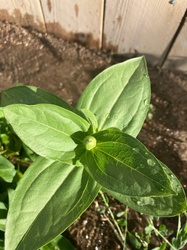
Zinnia Identification Guide
Identify zinnias by their bright daisy-like flower heads on stiff upright stems, opposite rough leaves that clasp the stem, and long summer bloom.
Read the full Zinnia encyclopedia entry →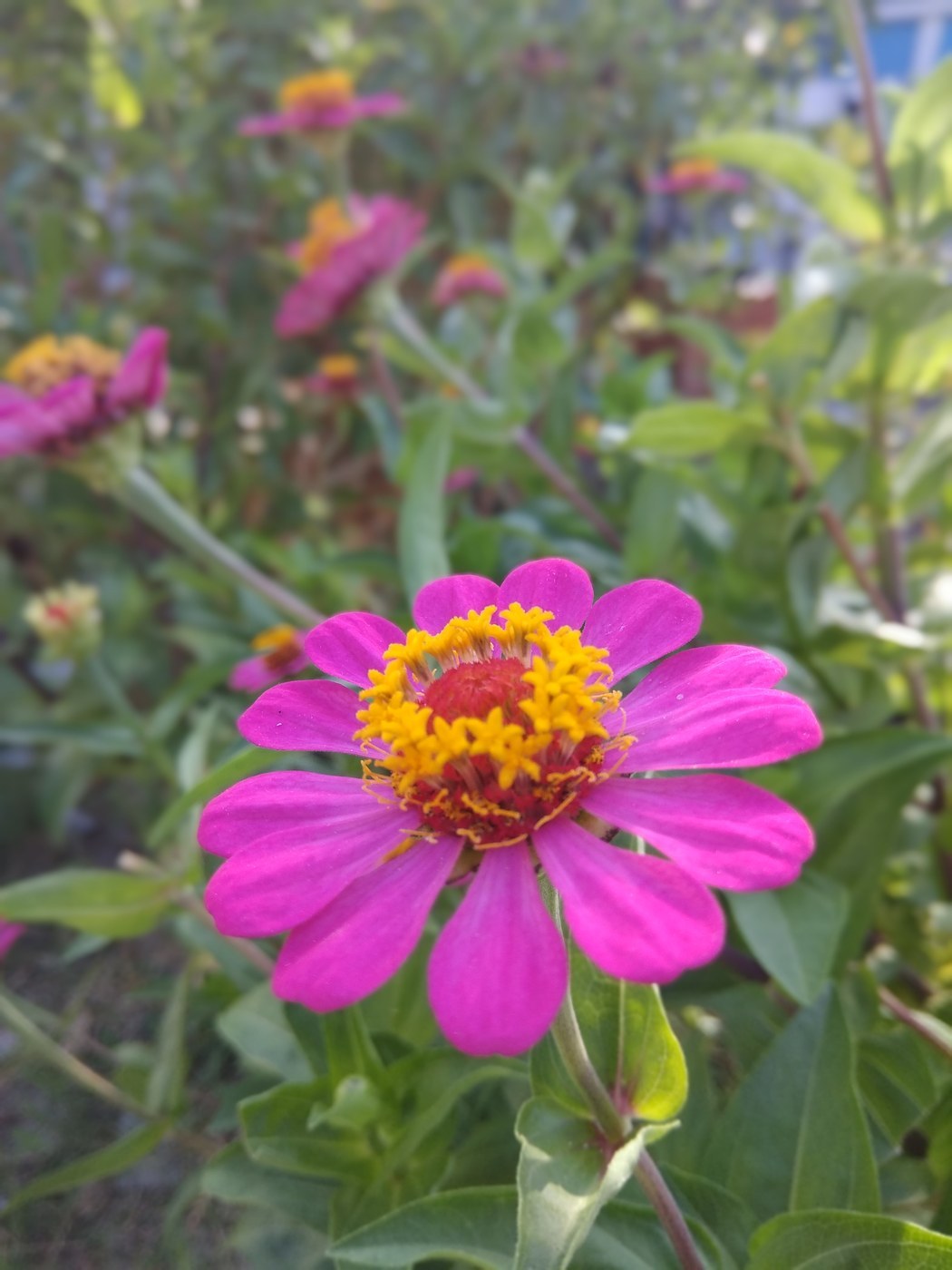
Key Identifying Features
Zinnias (Zinnia elegans and relatives) are warm-season annuals in the daisy family (Asteraceae), beloved for bold, long-lasting color. Identify them by:
- Daisy-like flower heads in vivid colors on stiff, upright single stems.
- Opposite, rough-textured leaves that clasp the stem with no leaf stalk.
- A continuous, prolific summer-to-frost bloom.
Leaves & Stems
Leaves are opposite, simple, lance- to oval-shaped (ovate) with smooth margins and a distinctly rough, sandpapery, hairy texture. They are stalkless (sessile) and often clasp the stem at the base — a useful zinnia trait. Stems are stiff, upright, hairy, and somewhat brittle, branching to hold each flower on its own sturdy stalk. Plants range from dwarf 6-inch types to 3–4 foot cutting varieties. The rigid, self-supporting stems make zinnias excellent cut flowers.
Flowers & Fruit
Each "flower" is a composite head typical of the daisy family: an outer ring of broad, often overlapping ray florets (the colorful "petals") around a center of small disc florets. Forms range from single (one row of rays) to fully double, dahlia-like, or cactus-flowered heads, 1–6 inches across. Colors are exceptionally bright — red, orange, pink, yellow, white, purple, green, and bicolors — but no true blue. The central disc often shows tiny yellow star-shaped florets opening in a ring. Bloom is continuous from early summer until frost. Seeds are flat, arrowhead-shaped achenes.
How to Tell It Apart from Look-Alikes
- Dahlia: Larger tuberous-rooted plants with divided, smooth leaves and hollow stems, blooming similarly but not rough-leaved annuals from seed.
- Cosmos: Daisy-like too, but with feathery, finely divided foliage and slender wiry stems — very different leaves.
- Marigold: Aromatic, deeply cut pinnate leaves and a strong scent; zinnia leaves are simple, rough, and unscented.
- Gerbera daisy: Single large heads on leafless stalks rising from a basal rosette, not leafy branching stems.
The rough, opposite, stem-clasping simple leaves on stiff stems topped with bright daisy heads identify zinnias.
Where You'll Find It
Zinnias are staple summer annuals for borders, cutting gardens, and pollinator plantings, thriving in full sun, heat, and well-drained soil. They are easy from seed and bloom abundantly in hot weather, attracting butterflies. Look for them in home flower beds, community gardens, and cut-flower rows through summer and early fall.
Quick ID Checklist
- Bright daisy-like composite flower heads
- Opposite, rough, stem-clasping simple leaves
- Stiff upright hairy stems, one flower per stalk
- Tiny star-shaped yellow disc florets in the center
- Wide color range but no true blue
- Continuous bloom summer to frost
Frequently asked questions
How can I tell a zinnia from a dahlia?
Zinnias are seed-grown annuals with rough, sandpapery opposite leaves that clasp stiff hairy stems. Dahlias grow from tubers, have smooth divided leaves and hollow stems, and are typically larger plants.
How do I distinguish zinnia from cosmos?
Both have daisy-like flowers, but zinnia leaves are broad, simple, and rough-textured, while cosmos has feathery, finely divided foliage on slender wiry stems.
What are the little yellow stars in the center of a zinnia?
Those are the disc florets, the true small flowers at the center of the composite head, which open in a ring as tiny yellow stars. Seeing them confirms the flower is a member of the daisy family.
When do zinnias bloom?
Zinnias are warm-season annuals that bloom continuously from early summer until the first frost, flowering most heavily in hot, sunny weather.
Zinnia identified by the community
Recent Zinnia specimens identified with Plant Identifier.