Air Plant Identification Guide
Recognize Air Plants (Tillandsia) by their rootless, soil-free habit and silvery, scale-covered leaves that absorb water from the air.
Read the full Air Plant encyclopedia entry →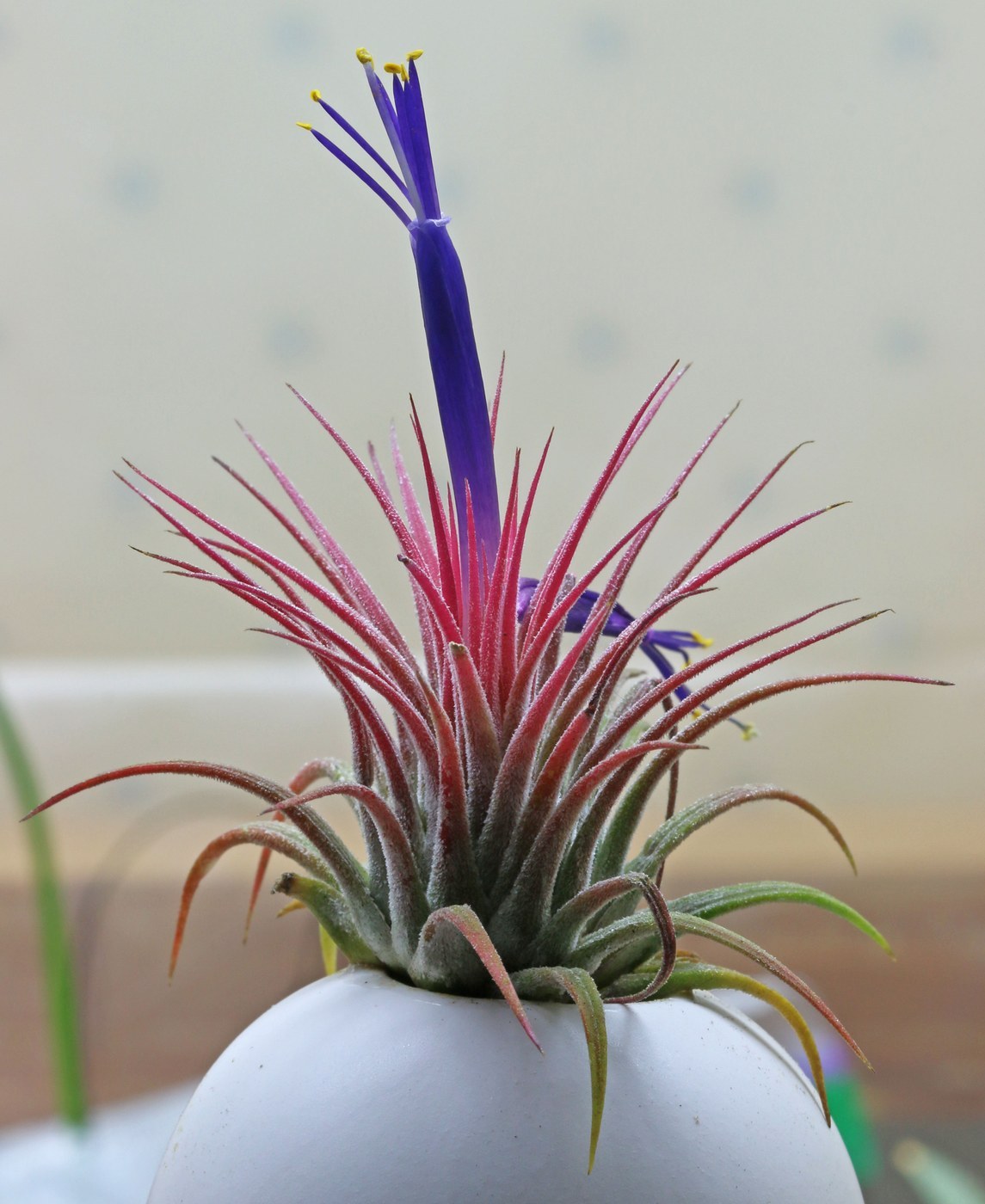
Key Identifying Features
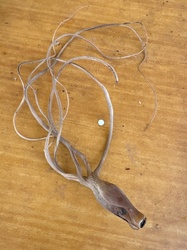
Air Plants (Tillandsia) are epiphytic bromeliads that grow without soil, absorbing moisture and nutrients through specialized scales on their leaves. The defining trait is exactly that: a plant that lives mounted on bark, wire, or a shell with no roots in soil.
- No functional root system for feeding — roots, if present, only anchor
- Leaves often coated in silvery-gray scales (trichomes)
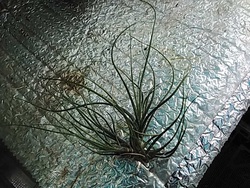
- Forms a rosette or tufted clump of narrow, arching leaves
Leaves & Stems
Air plants are essentially all leaves, with little or no stem:
- Leaves are narrow, strap- or needle-like, and arching, forming a rosette
- Many species are silvery-gray and fuzzy due to dense trichomes (xeric types); others are greener and smoother (mesic types)
- Some, like T. xerographica, form a large curling silver ball; others, like T. usneoides (Spanish moss), form long hanging threads
- Texture ranges from stiff and spiky to soft and grassy
Flowers & Fruit
Flowering is a once-in-a-lifetime event per rosette:
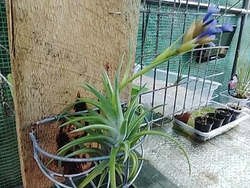
- The plant pushes up a colorful flower spike, often bright pink, red, or purple bracts
- Tubular flowers in violet, blue, red, or yellow emerge from the bracts
- After blooming, the rosette produces offsets (pups) and slowly dies
- Fruit is a capsule releasing seeds with feathery parachutes
How to Tell It Apart from Look-Alikes
- Succulents (Echeveria, Aloe): also form rosettes but have thick water-storing leaves and grow in soil with roots; air plants are dry-feeling and soilless.
- Other bromeliads: form a central water-holding tank and grow potted; most Tillandsia lack a tank and need no pot.
- The unmistakable clue is a plant happily alive while mounted on driftwood or hanging with no soil at all.
Where You'll Find It
Sold mounted, in glass globes, or loose as trendy decor plants, air plants are popular low-maintenance houseplants. In the wild they grow across the southern US, Mexico, Central and South America, perched on tree branches, cacti, cliffs, and even telephone wires throughout warm humid regions.
Quick ID Checklist
- Grows without soil, mounted or hanging
- No functional feeding roots
- Silvery or green narrow leaves in a rosette or tuft
- Leaf surface often fuzzy/scaly (trichomes)
- Bright bract + tubular flower when blooming
If a plant thrives stuck to a wall or shell with no dirt, you are looking at a Tillandsia air plant.
Frequently asked questions
How can an Air Plant live without soil?
Tillandsia absorbs water and nutrients through tiny scales called trichomes on its leaves rather than through roots. Any roots it has are used only to anchor it to bark or rock, which is why it survives mounted with no soil.
Why do some Air Plants look silver and others green?
Silvery, fuzzy species (xeric types like T. xerographica) are densely covered in trichomes for dry, sunny habitats, while greener, smoother species (mesic types) come from wetter forests. Both are Tillandsia.
Do Air Plants flower?
Yes, each rosette blooms once in its life, sending up a colorful spike with pink, red, or purple bracts and tubular flowers, after which it produces offset pups and gradually dies.
How is an Air Plant different from a succulent rosette?
Succulents like Echeveria have thick, water-filled leaves and grow in soil with active roots. Air Plants have thinner, often scaly leaves and need no soil at all, growing mounted or hanging.
Air Plant identified by the community
Recent Air Plant specimens identified with Plant Identifier.