Air Plant
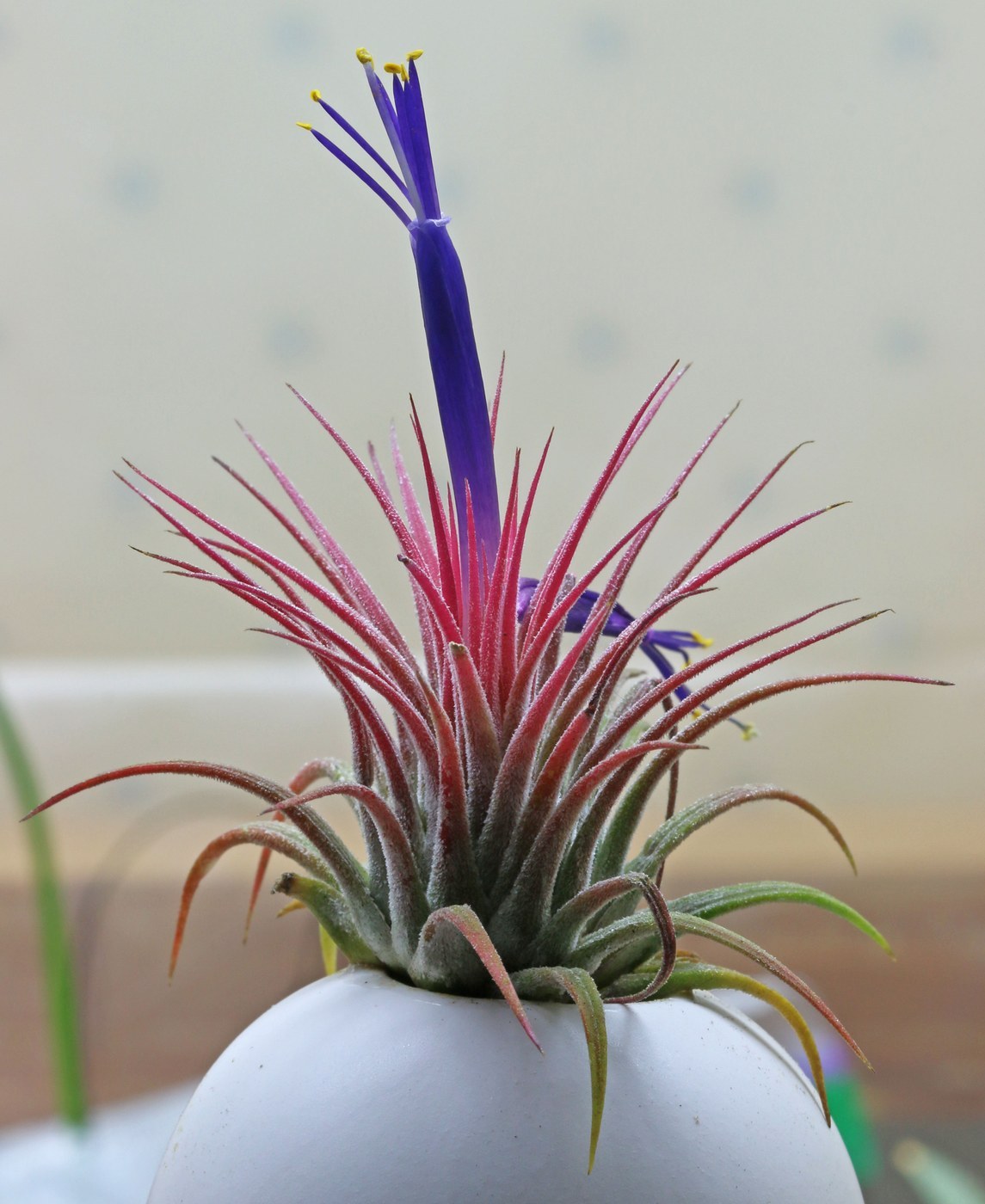
Tillandsia ionantha
Air plants are rootless epiphytes that absorb water and nutrients through their leaves, so they can grow mounted on wood, in shells, or simply set on a shelf without any soil.
- Light
- Bright indirect light
- Water
- Soak or mist 1-3 times weekly
- Difficulty
- Easy
Got a plant like this?
Identify any plant from a photo, free.
Overview
Air plants are members of the genus Tillandsia, a large group of epiphytic bromeliads from the Americas. They grow without soil, anchoring to trees and rocks and pulling moisture and nutrients from the air through specialized scales on their leaves.
This soil-free habit makes them extremely versatile for display, whether mounted, hung, or nestled in glass globes. Many species blush red or pink and send up colorful flower spikes before producing offsets called pups.
Tillandsia ionantha is one of the most common and easy-to-grow species.
How to identify it
Recognize air plants by:
- No roots in soil: any roots present are small holdfasts used only for anchoring
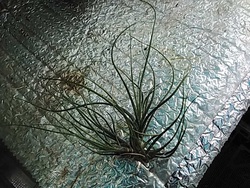
- Leaves: narrow, often silvery-green and covered in fine fuzzy scales (trichomes)
- Form: rosette or wispy clump, frequently blushing red or pink before bloom
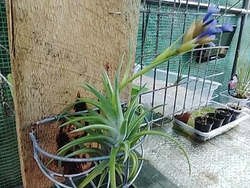
- Flowers: tubular blooms, often purple, emerging from a bright bract
- Pups: small offsets that form at the base after flowering
Care & growing
- Light: bright, indirect light; some morning sun is fine
- Water: soak in water 20-30 minutes about once a week (more in dry heat), or mist several times weekly; shake off excess and dry within a few hours
- Humidity: moderate to high; misting supplements soaking
- Air: good air circulation is essential to prevent rot
- Temperature: 50-90 degrees F; protect from frost
- Feeding: occasional diluted bromeliad fertilizer in the soak water
- Propagation: separate pups once they reach about a third of the parent's size
Habitat & origin
Air plants are native to forests, mountains, and deserts across the southern United States, Mexico, Central America, and South America, where they grow attached to tree branches, cliffs, and even telephone wires.
They thrive as epiphytes in humid and arid environments alike, and are grown worldwide as low-maintenance, soil-free decorative plants.
Frequently asked questions
How do I water an air plant?
Soak it in water for 20-30 minutes about once a week, then shake off excess and let it dry fully within a few hours, ideally upside down so water does not collect in the center.
Do air plants really need no soil?
Correct. They absorb all their water and nutrients through their leaves, so they should never be potted in soil, which can rot them.
Why is my air plant rotting in the middle?
Trapped water and poor air circulation cause crown rot. Always dry the plant thoroughly after watering and give it good airflow.
Do air plants flower more than once?
Each plant blooms only once in its life, then produces offsets (pups). The pups grow into new plants that will eventually bloom themselves.
Air Plant guides
In-depth guides for identifying, growing, and caring for Air Plant.
Air Plant identified by the community
Real specimens identified with Plant Identifier.