American Elm Identification Guide
Identify American elm by its vase-shaped crown, doubly serrated asymmetrical leaves, and flat papery winged seeds.
Read the full American Elm encyclopedia entry →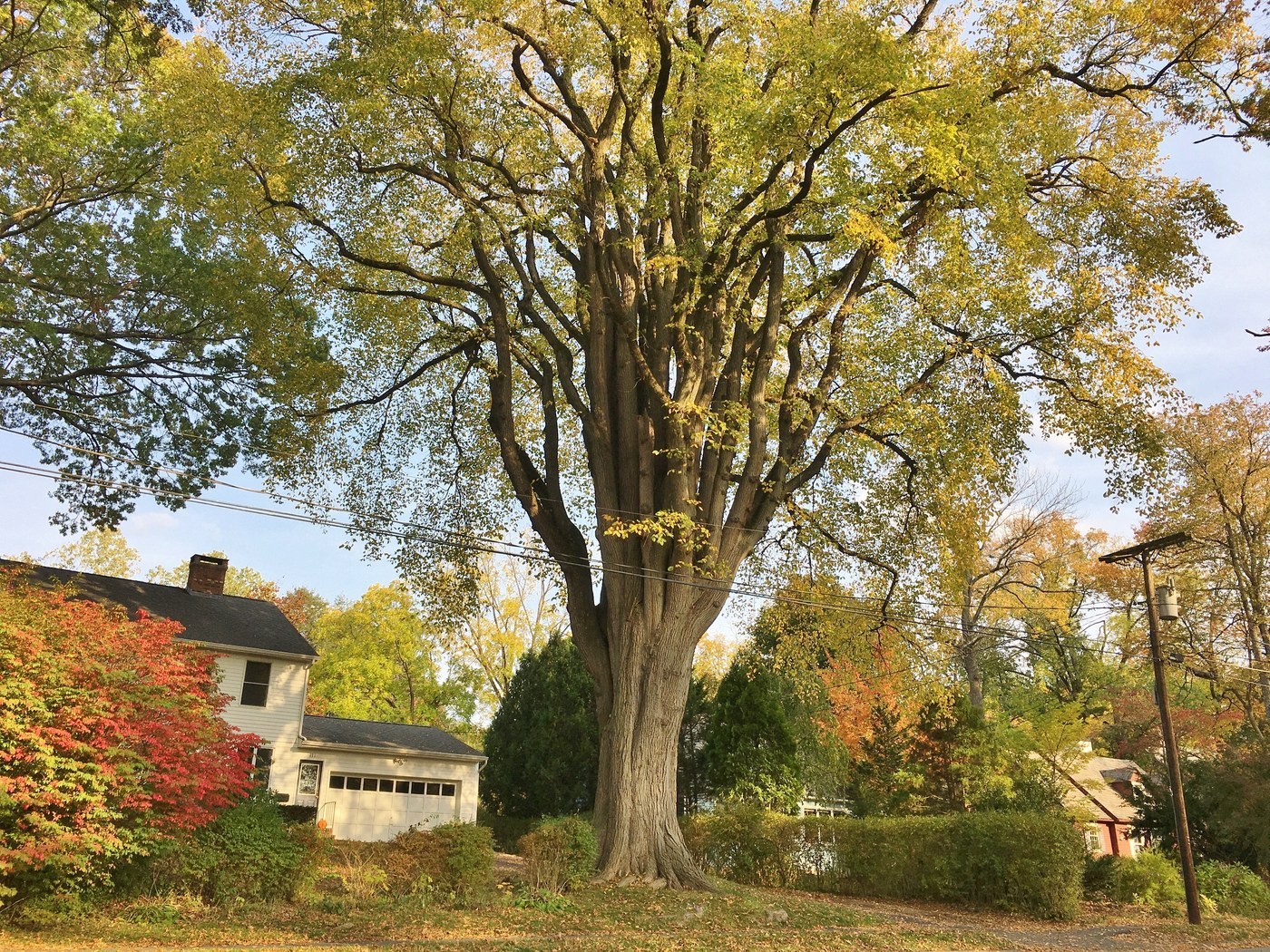
Key Identifying Features
American elm (Ulmus americana) is a classic shade tree once lining countless main streets before Dutch elm disease decimated it. Its graceful vase shape remains unmistakable where mature trees survive.
- Tall, vase-shaped or umbrella-like crown with arching branches
- Leaves with asymmetrical (uneven) bases and doubly serrated edges
- Rough, sandpapery upper leaf surface
- Flat, papery winged seeds (samaras) notched at the tip, ripening in spring
Leaves & Stems
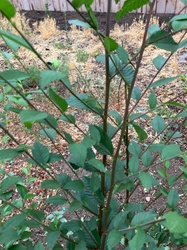
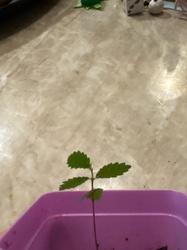
Leaves are 7-15 cm long, oval to elliptical, with a sharply pointed tip and a strikingly lopsided base where one side meets the stalk lower than the other. Margins are doubly serrated (large teeth bearing smaller teeth). The leaf surface is dark green and feels rough like fine sandpaper on top, with prominent straight parallel veins running to each tooth. Fall color is a clear yellow.
Twigs are slender, zigzagging slightly, with reddish-brown pointed buds. Mature bark is gray, deeply furrowed into broad, flat-topped, intersecting ridges; a cut cross-section of the inner bark shows alternating light and brown layers.
Flowers & Fruit
American elm flowers very early, producing small, inconspicuous reddish-green flowers in drooping clusters before the leaves emerge. The fruit is a flat, oval, papery samara about 1 cm long, with a single seed in the center surrounded by a wing that is hairy-fringed on the margin and deeply notched at the tip. Seeds ripen and disperse in spring.
How to Tell It Apart from Look-Alikes
- Slippery elm: Leaves are larger and even rougher on both surfaces; samara wing is not hairy-fringed on the margin (hairy only over the seed).
- Hackberry: Leaves also lopsided but with warty bark and round berries, not papery samaras.
- Zelkova: A common elm substitute with singly toothed leaves and no winged seeds.
The combination of vase form, doubly serrated lopsided leaves, and fringed notched samaras confirms American elm.
Where You'll Find It
Native across eastern and central North America in floodplains, bottomlands, and moist woods, and historically planted on streets for its arching canopy. Disease-resistant cultivars are now replanted in urban settings.
Quick ID Checklist
- Graceful vase-shaped crown
- Lopsided leaf base, doubly serrated margins
- Sandpapery upper leaf surface
- Flat papery samaras with hairy fringe and notched tip
- Gray bark with broad intersecting ridges
Frequently asked questions
What is the most recognizable trait of American elm?
Its tall vase-shaped crown with branches that arch outward like a fountain, combined with lopsided doubly serrated leaves.
How do I tell American elm from slippery elm?
American elm leaves are rough only on top and its samaras have a hairy-fringed margin and notched tip, while slippery elm leaves are rough on both sides and its samaras are hairy only over the seed.
When does American elm produce seeds?
It flowers in very early spring and its flat papery samaras ripen and fall in mid-to-late spring, before many other trees leaf out fully.
Are American elms still common?
Dutch elm disease killed most mature trees in the 20th century, but disease-resistant cultivars are being replanted and some large survivors remain.
American Elm identified by the community
Recent American Elm specimens identified with Plant Identifier.