Bell Pepper Identification Guide
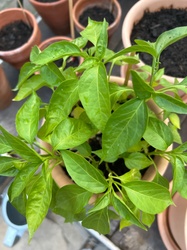
Identify the bell pepper plant (Capsicum annuum) by its bushy form, glossy leaves, white star flowers, and blocky, lobed, hollow fruit.
Read the full Bell Pepper encyclopedia entry →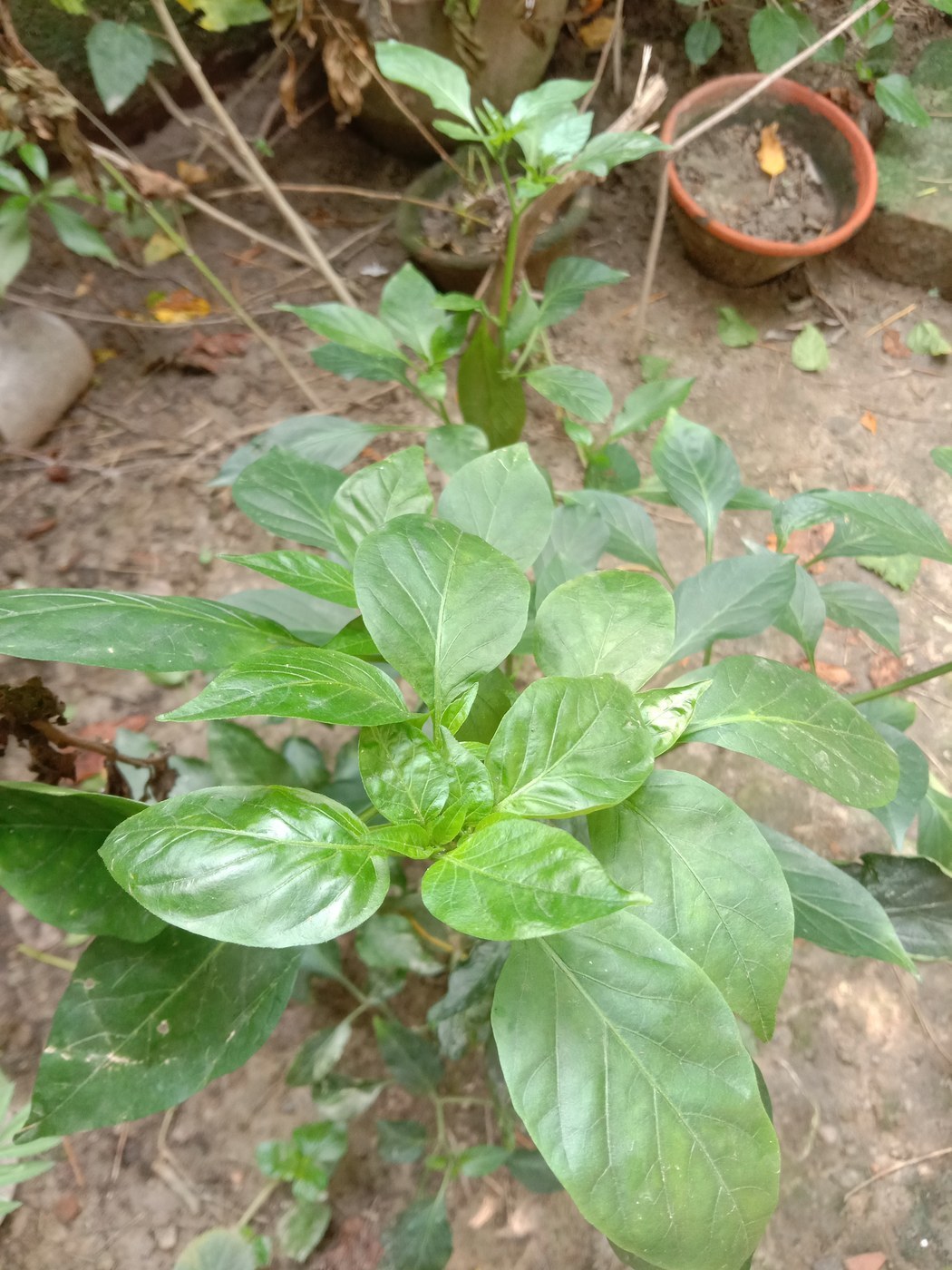
Key Identifying Features
The bell pepper (Capsicum annuum) is a bushy, tender perennial usually grown as an annual in the nightshade family (Solanaceae). Hallmarks are a branching upright bush, smooth glossy leaves, small white star-shaped flowers, and blocky, lobed, hollow fruit that ripens green to red, yellow, orange, or purple. Unlike chili peppers, bell fruit is sweet and lacks heat.
Leaves & Stems
- Plants form a compact woody-based bush typically 40–90 cm (1.5–3 ft) tall.
- Stems are green, smooth, and slightly angular, becoming woody at the base.
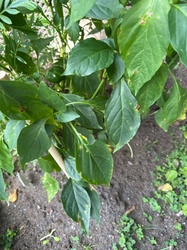
- Leaves are oval to lance-shaped with smooth margins and a pointed tip, glossy medium-green, and arranged alternately.
- The plant branches in a forking (dichotomous) pattern, with flowers and fruit forming in the forks.
Flowers & Fruit
- Flowers are small (1.5–2.5 cm), white (occasionally greenish or purple-tinged), with five to six pointed star-shaped petals and yellow anthers; they usually hang downward.
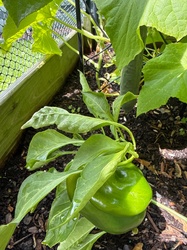
- Fruit is a hollow, blocky berry with thick, crisp walls and a hollow seed cavity bearing flat, cream-colored seeds on a central placenta.
- Distinct 2–4 shallow lobes give the bottom its bumpy, squared appearance.
- Ripening shifts from green to red, yellow, orange, chocolate, or purple depending on variety.
How to Tell It Apart from Look-Alikes
- Chili/hot peppers (also Capsicum annuum): nearly identical plants, but fruit is slender, tapering, and pungent; bell fruit is blocky and sweet. Taste a tiny piece — bells have no burn.
- Tomato (Solanum lycopersicum): similar nightshade leaves but tomato foliage is deeply cut/compound and hairy with a strong scent, and fruit is soft and juicy, not hollow.
- Eggplant: fuzzy, often purple-tinged leaves and star-shaped purple flowers; fruit is solid, not hollow.
Where You'll Find It
Bell peppers are a warm-season vegetable grown in gardens, raised beds, greenhouses, and large containers in full sun. They favor warm soil and steady moisture. In the garden, look for knee-high bushes hung with upright blocky fruit changing color among the forked branches.
Quick ID Checklist
- Compact branching bush, woody at base
- Glossy, smooth-edged oval leaves
- Small white star-shaped, downward-facing flowers
- Blocky, lobed, hollow fruit with central seed core
- Sweet flesh with no heat
- Fruit ripens green to red/yellow/orange/purple
Frequently asked questions
How do I tell a bell pepper from a hot pepper plant?
The plants look almost identical, so judge by the fruit: bell peppers are blocky, lobed, and hollow with sweet, crisp flesh, while hot peppers are usually slim and tapering. A tiny taste settles it — bells have no heat.
Why are my bell peppers green when I expected red?
Green is simply the unripe stage. Most bell peppers turn red, yellow, orange, or purple as they fully ripen on the plant, so green and colored fruit can appear on the same bush.
Is the bell pepper plant related to the tomato?
Yes, both are nightshades (Solanaceae). You can tell them apart by leaves and fruit: pepper leaves are simple and glossy with a hollow blocky fruit, while tomato leaves are compound and aromatic with soft, juicy fruit.
What do bell pepper flowers look like?
They are small, white, five- to six-pointed stars about 1.5–2.5 cm across with yellow centers, usually nodding downward from the forks where branches split.
Bell Pepper identified by the community
Recent Bell Pepper specimens identified with Plant Identifier.