Bell Pepper
Capsicum annuum
Bell pepper is a blocky-fruited variety of Capsicum annuum grown as a warm-season garden crop, bearing glossy fruit in shades of green, red, yellow, and orange. It is a colorful, productive plant for sunny beds and containers.
- Light
- Full sun
- Water
- Even moisture; avoid soggy soil
- Difficulty
- Moderate
Got a plant like this?
Identify any plant from a photo, free.
Overview
Bell pepper (Capsicum annuum) is a cultivar group of the same species that includes chili peppers, and belongs to the nightshade family, Solanaceae.
Native to Central and South America, peppers were domesticated thousands of years ago and carried worldwide after European contact. The plant is a tender perennial usually grown as a warm-season annual.
Fruits start green and ripen to red, yellow, orange, or purple depending on the variety.
How to identify it
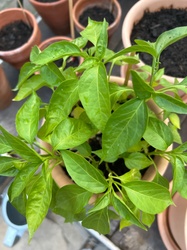
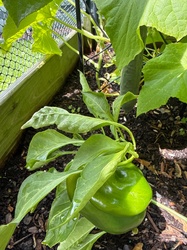
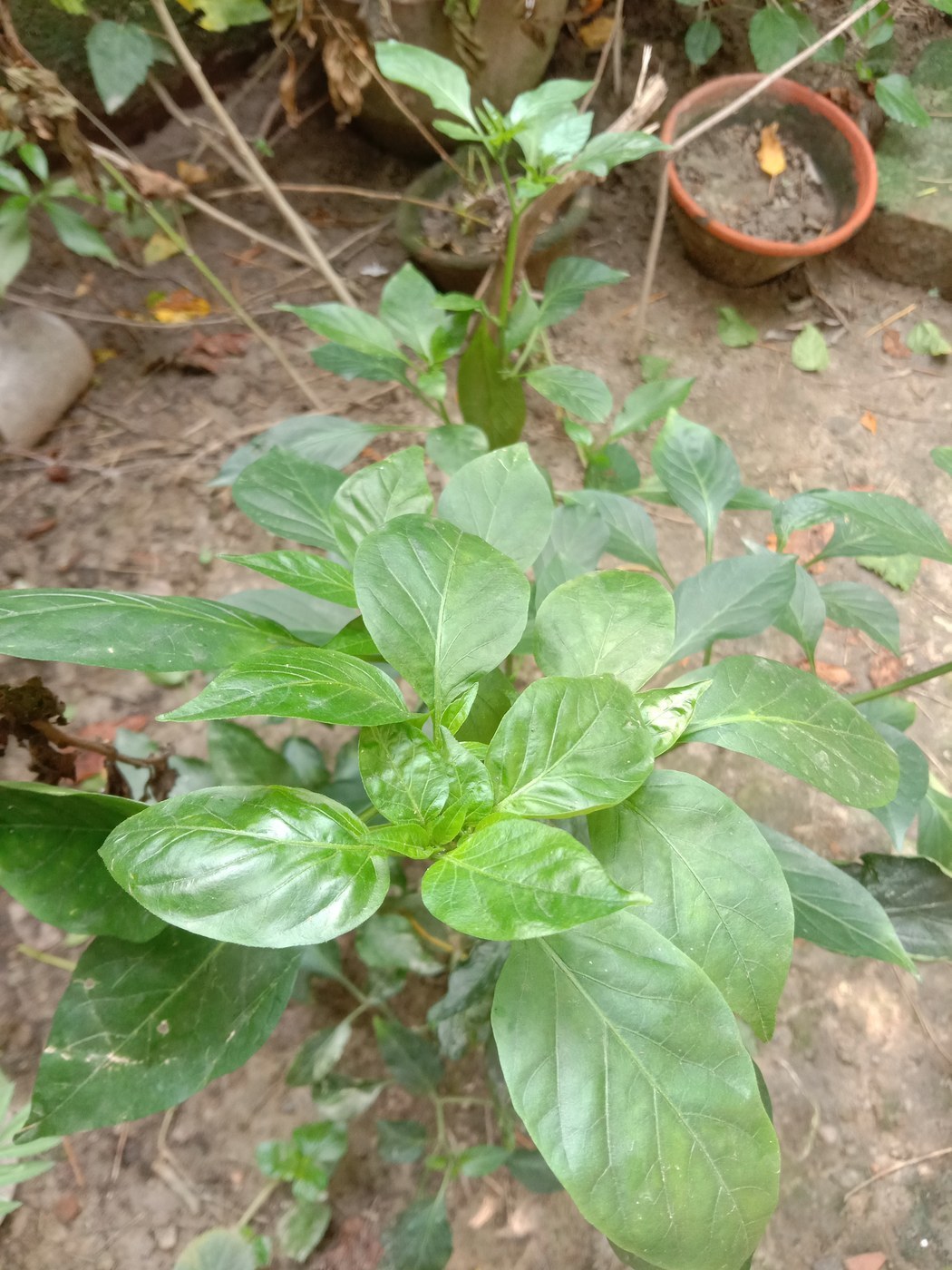
Bell pepper is a bushy, upright plant with glossy leaves and hollow, lobed fruit.
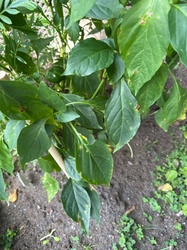
- Leaves: Smooth, oval, pointed, deep green, on a branching stem
- Habit: Compact bush, 1.5 to 3 feet tall, sometimes needing support when heavy with fruit
- Flowers: Small, white, star-shaped with five to six petals
- Fruit: Blocky, hollow, three- or four-lobed, with a firm wall and a cluster of flat seeds inside
- Color: Ripens from green through red, yellow, orange, or purple
Care & growing
Peppers need warmth and a long season, making them slightly more demanding than some vegetables.
- Light: Full sun, 6 to 8 hours minimum
- Water: Keep soil evenly moist; inconsistent watering causes blossom-end rot
- Soil: Fertile, well-draining loam; pH 6.0 to 6.8
- Temperature: Loves 70 to 85 F; growth stalls below 60 F and flowers drop in extreme heat
- Feeding: Balanced feed early, then lower nitrogen and more phosphorus/potassium once flowering
- Propagation: Start seed indoors 8 to 10 weeks before the last frost; transplant after the soil warms.
Habitat & origin
Peppers are native to Mexico, Central America, and northern South America, where wild Capsicum species still grow. They were among the first plants domesticated in the Americas.
After the Columbian Exchange they spread rapidly across Europe, Africa, and Asia. Today bell peppers are grown in gardens and on farms throughout temperate and tropical regions, often in greenhouses where summers are short.
Frequently asked questions
Why are my peppers staying small?
Cool temperatures, insufficient sun, crowding, or low fertility limit fruit size. Peppers need consistent warmth and steady feeding to size up.
What causes the dark sunken spot on the bottom of my peppers?
That is blossom-end rot, caused by calcium not reaching the fruit, usually due to uneven watering. Mulch and water consistently to prevent it.
Are green and red bell peppers different plants?
No. Green peppers are simply unripe; left on the plant they ripen to red, yellow, or orange depending on the variety.
Why are my pepper flowers falling off?
Flower drop is common when nights are too cold (below 60 F) or days too hot (above 90 F), or with drought stress. Stable warm conditions improve fruit set.
Bell Pepper guides
In-depth guides for identifying, growing, and caring for Bell Pepper.
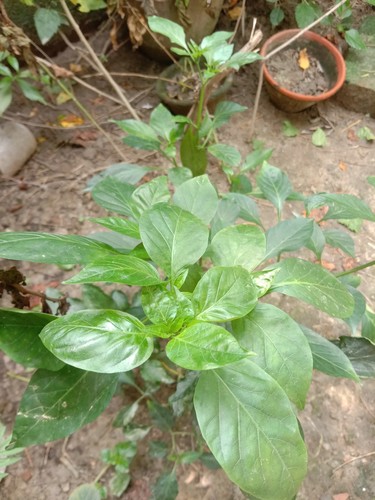
How to Care for Bell Pepper
Grow lush, productive bell pepper plants with full sun, even moisture, warm temperatures, and steady feeding all season long.
Bell Pepper Identification Guide
Identify the bell pepper plant (Capsicum annuum) by its bushy form, glossy leaves, white star flowers, and blocky, lobed, hollow fruit.
Bell Pepper identified by the community
Real specimens identified with Plant Identifier.