Bougainvillea Identification Guide
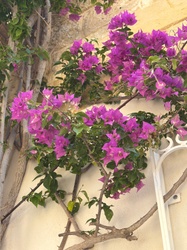
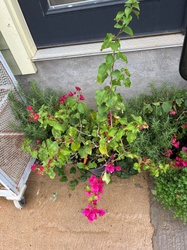
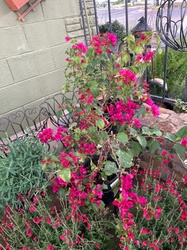
Recognize bougainvillea by its papery colorful bracts surrounding tiny white flowers, thorny climbing stems, and oval pointed leaves.
Read the full Bougainvillea encyclopedia entry →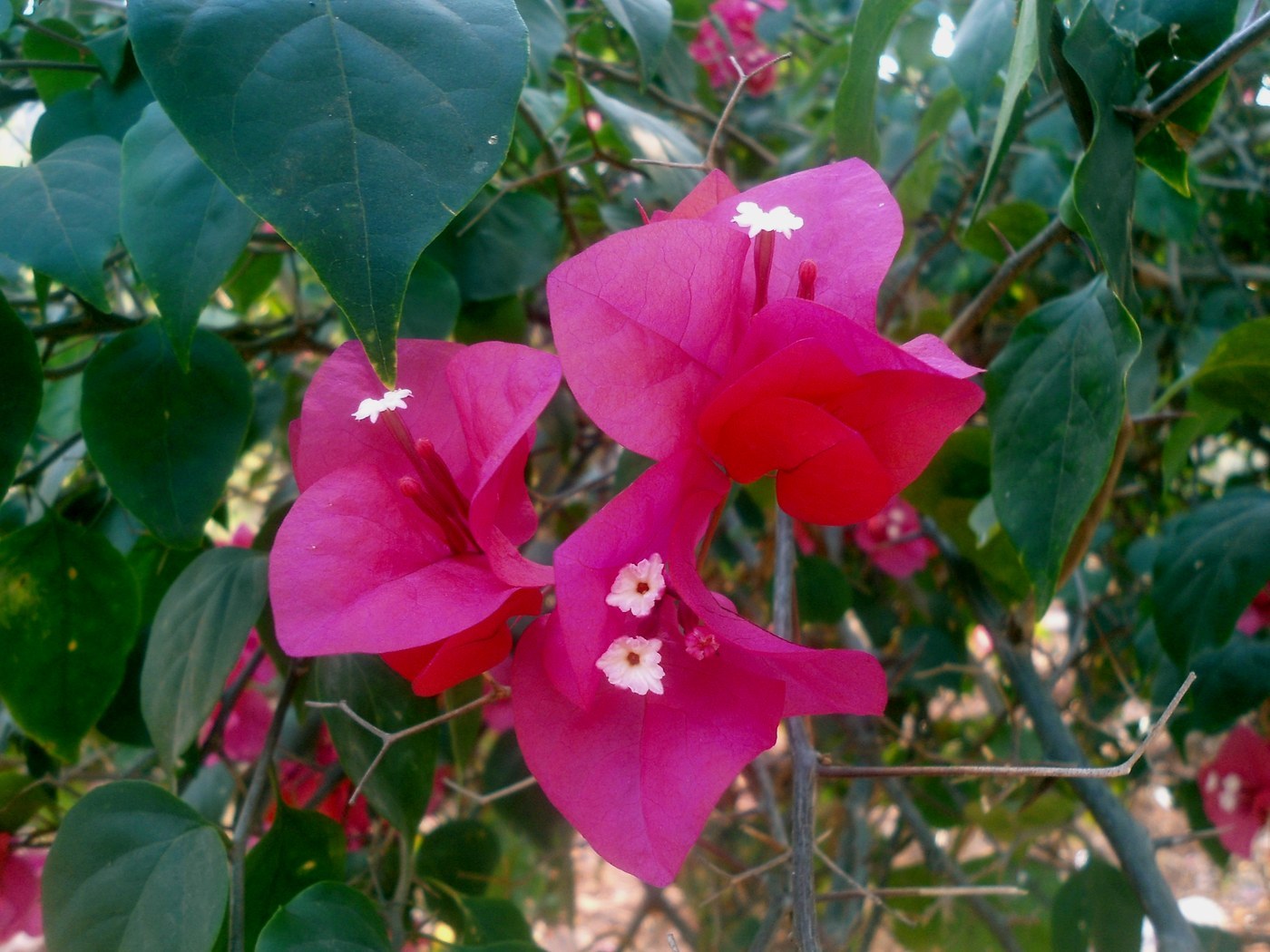
Key Identifying Features
Bougainvillea (Bougainvillea species) is a thorny tropical woody climber in the four o'clock family (Nyctaginaceae). Its color comes not from petals but from leaf-like bracts. Identify it by:
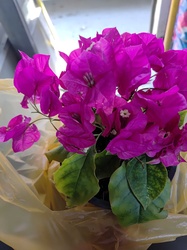
- Clusters of three papery, brightly colored bracts (magenta, purple, red, orange, pink, white) surrounding tiny tubular flowers.
- Sharp thorns along arching woody stems.
- A scrambling, climbing or sprawling habit that can cover walls and fences.
Leaves & Stems
Leaves are simple, alternate, oval to heart-shaped with a pointed tip (acuminate), 1.5–4 inches long, mid-green and slightly hairy on the underside. They have smooth margins and a single main vein. Stems are woody, flexible, and arching, armed with stiff, curved thorns at the leaf axils that help the plant hook onto supports — it does not twine but scrambles. Older stems become thick and bark-covered; the plant has no tendrils.
Flowers & Fruit
The famous color display is from three large, thin, papery bracts (modified leaves) arranged in a triangle. Nestled within each trio are the true flowers: small, slender, creamy-white or yellow tubes with a flared mouth — usually three per bract cluster. Bract colors range across the warm spectrum and some cultivars show two colors or aging shifts. In hot climates bougainvillea blooms in flushes much of the year, peaking in dry seasons. Fruit is an inconspicuous small five-ribbed achene, rarely noticed.
How to Tell It Apart from Look-Alikes
- Mandevilla / Dipladenia: Showy trumpet flowers with true colorful petals and no thorns; twines rather than scrambles.
- Climbing roses: Also thorny climbers, but with true multi-petaled flowers and compound serrated leaves.
- Hibiscus: Large single trumpet flowers, no papery bracts, shrubby not scrambling.
The papery three-bract clusters with tiny white tube flowers inside, plus axillary thorns, are unmistakable bougainvillea.
Where You'll Find It
Bougainvillea is a signature plant of warm and tropical climates, draped over walls, pergolas, fences, and rooftops, or trained as a shrub or hedge. It loves full sun, heat, and well-drained soil and tolerates drought once established. In cooler regions it's grown in containers and overwintered indoors. You'll see it brightening Mediterranean, subtropical, and tropical streetscapes.
Quick ID Checklist
- Three papery colored bracts per cluster
- Tiny white/cream tubular true flowers inside the bracts
- Curved thorns at leaf axils
- Oval, pointed, smooth-edged green leaves
- Scrambling/climbing woody habit (no twining or tendrils)
- Long bloom season in warm climates
Frequently asked questions
Are the colorful parts of bougainvillea flowers?
No. The bright magenta, purple, or orange parts are papery modified leaves called bracts. The true flowers are the small white or cream tubes nestled inside each cluster of three bracts.
How does bougainvillea climb?
It does not twine or use tendrils. Instead it scrambles, using stiff curved thorns at its leaf axils to hook onto supports as the woody stems arch over walls and fences.
Why does my bougainvillea have few flowers but lots of leaves?
Bougainvillea blooms best with full sun, heat, and some dryness. Excess water, shade, or too much nitrogen fertilizer encourages leafy growth at the expense of the colorful bracts.
How do I tell bougainvillea from mandevilla?
Mandevilla has true trumpet-shaped petaled flowers and twines without thorns, while bougainvillea has papery bracts with tiny white inner flowers and is armed with thorns.
Bougainvillea identified by the community
Recent Bougainvillea specimens identified with Plant Identifier.