Canna Lily Identification Guide
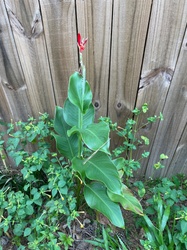
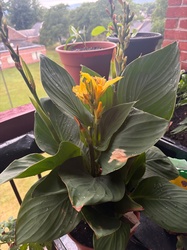
Identify canna lily by its large paddle-shaped tropical leaves and tall spikes of bold, asymmetric iris-like flowers.
Read the full Canna Lily encyclopedia entry →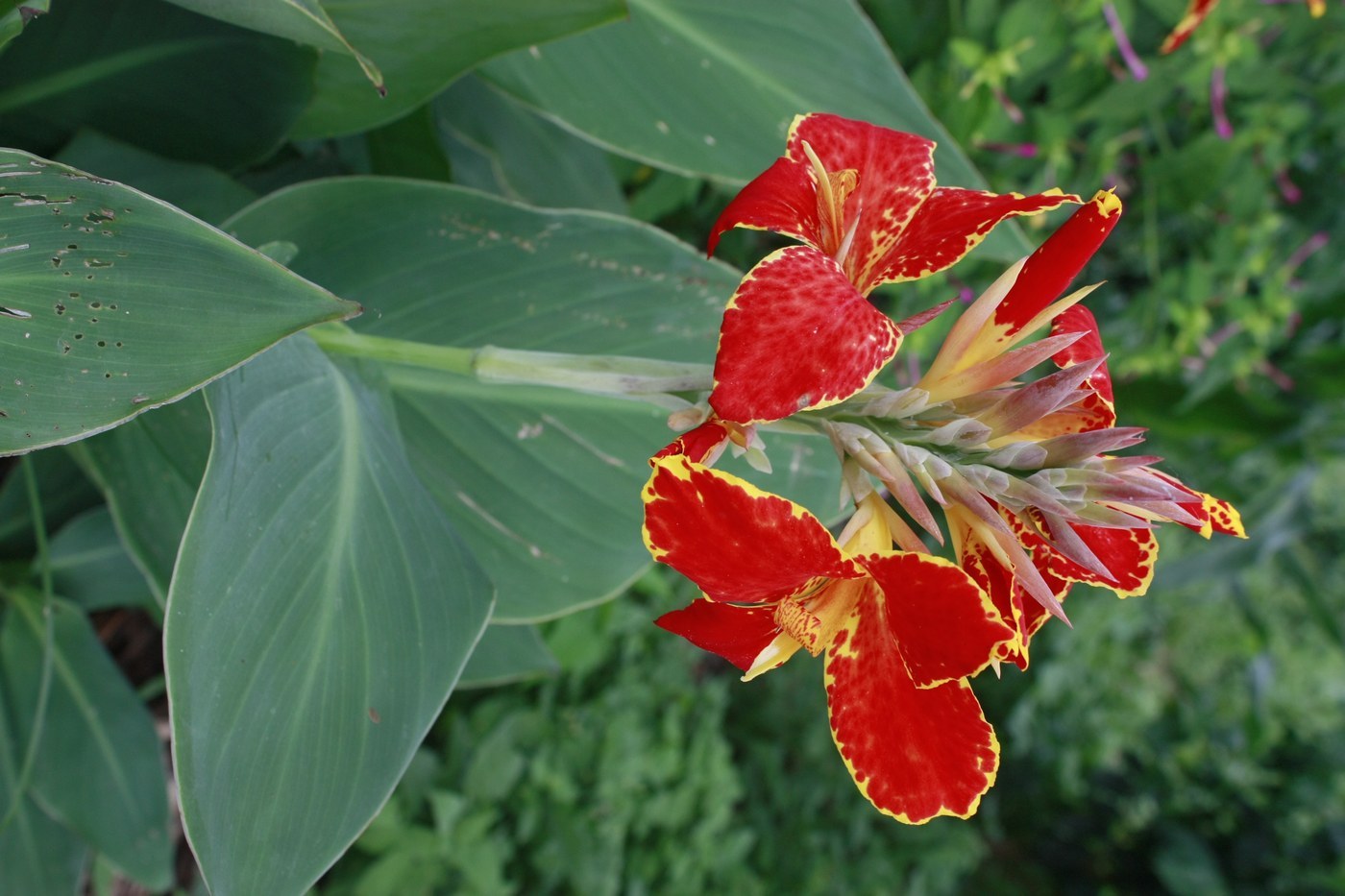
Key Identifying Features
Canna lily (Canna) is recognized by its large, broad, banana-like paddle leaves and tall stalks of big, vividly colored, asymmetric flowers. Despite the name, it is not a true lily; its flowers are made showy by petal-like sterile stamens (staminodes) rather than ordinary petals.
- Large, broad, paddle/banana-shaped leaves
- Tall flower spikes of bold red, orange, yellow, or pink blooms
- Asymmetric, iris-like flowers with petal-like staminodes
- Tropical, upright, clump-forming habit
Leaves & Stems
Leaves are very large (30–60 cm), oblong to elliptic, with a strong central midrib and smooth parallel veins, much like a banana or ti plant. They emerge rolled and unfurl, arranged alternately and clasping a thick, fleshy stem. Foliage color ranges from bright green to bronze, deep purple, or boldly striped/variegated — itself a strong ornamental ID clue. Stems are stout, succulent, and unbranched, rising 0.5–2.5 m from a knobby underground rhizome. Plants form expanding clumps.
Flowers & Fruit
Flowers cluster at the top of the stem in a terminal spike or raceme. Each bloom is large and irregular (asymmetric), the showy parts being broad, petal-like staminodes in flame colors — scarlet, orange, gold, yellow, pink, and bicolors, often spotted or streaked. The true petals and sepals are smaller and less conspicuous. Bloom is summer into autumn in warm climates. The fruit is a distinctive warty, three-chambered round capsule containing hard, round black seeds (so hard they're called "Indian shot").
How to Tell It Apart from Look-Alikes
- Banana plant: Similar huge paddle leaves, but banana has a single massive pseudostem and pendant flower/fruit, while canna is multi-stemmed with upright colorful flower spikes.
- Ginger lilies (Hedychium): Also tropical with spikes, but flowers are more symmetric with long thin petals and a strong fragrance; canna flowers are broad and asymmetric.
- True lilies / iris: Canna's petal-like staminodes and warty capsule distinguish it.
The banana-like paddle leaves + upright spike of bold asymmetric staminode flowers + warty seed capsule confirm canna.
Where You'll Find It
Canna is grown worldwide in warm-climate borders, bedding schemes, pond margins, and large containers for a tropical look. It thrives in full sun, heat, and rich, moist soil, and many cultivars tolerate boggy ground. In cold climates the rhizomes are lifted and stored over winter. It naturalizes along ditches and waterways in subtropical regions.
Quick ID Checklist
- Large paddle/banana-shaped leaves with central midrib
- Foliage often bronze, purple, or striped
- Tall spike of big, bold, asymmetric flowers
- Showy parts are petal-like staminodes
- Stout fleshy stems from a rhizome
- Warty, round three-part seed capsule with hard black seeds
Frequently asked questions
Is the canna lily a true lily?
No. Despite the name, canna is not a true lily. Its showy flower parts are actually modified petal-like stamens (staminodes), and it belongs to its own family, Cannaceae, related to gingers and bananas.
How do I tell a canna from a banana plant?
Both have large paddle leaves, but banana forms a single tall pseudostem with pendant flowers and fruit, while canna grows as a multi-stemmed clump topped by upright spikes of bold, colorful flowers.
What's the warty round seedpod?
Canna produces a distinctive warty, three-chambered capsule holding hard, round black seeds known as 'Indian shot' because they are dense enough to resemble buckshot. The capsule is a reliable ID feature.
Why are some canna leaves purple or striped?
Many canna cultivars are selected for dramatically colored foliage — bronze, deep purple, or boldly striped and variegated — which, combined with the paddle shape, makes the plant easy to recognize even out of bloom.
Canna Lily identified by the community
Recent Canna Lily specimens identified with Plant Identifier.