Echinacea Identification Guide
Identify echinacea (purple coneflower) by its drooping pink-purple petals, raised spiky orange-brown central cone, coarse hairy leaves, and tall sturdy stems. Includes how to separate it from rudbeckia.
Read the full Echinacea encyclopedia entry →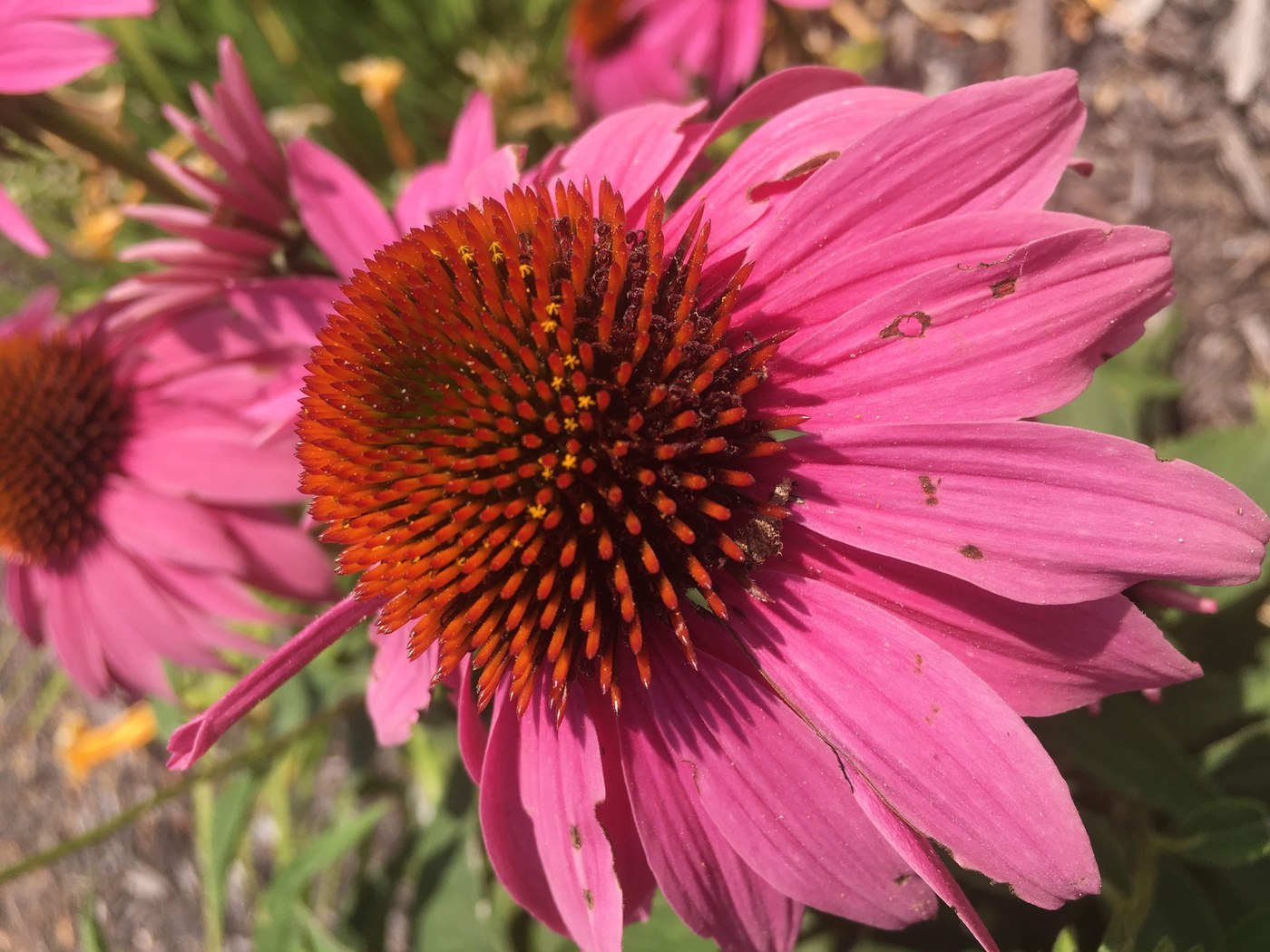
Key Identifying Features
Echinacea, the purple coneflower (Echinacea purpurea and relatives), is a perennial in the daisy family (Asteraceae). Its unmistakable features are the large daisy-like flowers with drooping pink-to-purple ray petals around a raised, spiky, dome-shaped orange-brown central cone. The plant is upright, coarse, and rough-hairy, reaching 60-120 cm.
Leaves & Stems
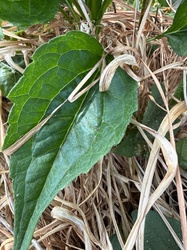
- Leaves are lance-shaped to broadly oval (ovate-lanceolate), coarsely toothed or smooth, with a rough, bristly-hairy surface.
- Lower leaves are stalked and larger; upper leaves are smaller and stalkless.
- Leaves are dark green with prominent veins, alternate on the stem.
- Stems are stiff, erect, rough-hairy, and often reddish-tinged.
Flowers & Fruit
- Flower heads are large (8-12 cm) with ray florets that droop downward in shades of pink, rose, or purple (cultivars include white, orange, red).
- The central disc forms a prominent stiff, spiny cone that is orange-brown to coppery; "echino" means hedgehog.
- Bloom time is mid to late summer.
- Fruits are hard, four-angled seeds (achenes) held in the spiny cone, attractive to finches.
How to Tell It Apart from Look-Alikes
- Black-eyed Susan / rudbeckia (Rudbeckia) has yellow-gold petals and a flatter to rounded dark brown-black center, not a tall spiny pink-petaled cone.
- Pale purple coneflower (Echinacea pallida) has narrower, more strongly drooping, thinner petals.
- Asters and daisies lack the raised spiny cone.
- The combination of drooping pink-purple petals plus a spiky raised cone confirms echinacea.
Where You'll Find It
Native to central and eastern North American prairies, echinacea is widely grown in gardens, borders, and pollinator plantings, and persists in meadows and roadsides. It thrives in full sun and well-drained soil and tolerates drought once established.
Quick ID Checklist
- Drooping pink-purple ray petals
- Raised, spiky orange-brown central cone
- Rough, bristly-hairy lance-shaped leaves
- Stiff erect stems 60-120 cm
- Blooms mid-to-late summer in sunny sites
Frequently asked questions
How do I tell echinacea from black-eyed Susan?
Echinacea has drooping pink-purple petals and a raised spiky orange-brown cone, while black-eyed Susan (Rudbeckia) has yellow petals and a flatter dark brown-black center.
Why is the center of echinacea so spiky?
The genus name comes from the Greek for hedgehog, referring to the stiff, pointed bracts in the raised central cone that give it a bristly, spiny texture.
Are all coneflowers purple?
Wild Echinacea purpurea and E. pallida are pink to purple, but garden cultivars come in white, orange, red, and yellow. The drooping petals and spiny raised cone remain the identifying traits.
What do echinacea leaves feel like?
They are coarse and rough to the touch, covered in stiff bristly hairs, lance-shaped to oval, and often coarsely toothed with prominent veins.
Echinacea identified by the community
Recent Echinacea specimens identified with Plant Identifier.