Echinacea
Echinacea purpurea
Echinacea, or purple coneflower, is a hardy North American perennial with daisy-like pink-purple blooms, popular in prairie and pollinator gardens.
- Light
- Full sun
- Water
- Low to moderate; drought tolerant once established
- Difficulty
- Easy
Got a plant like this?
Identify any plant from a photo, free.
Overview
Echinacea, commonly called purple coneflower, is a robust herbaceous perennial native to the North American prairies. It is grown as a long-blooming ornamental.
Its large daisy-like flowers feature drooping pink-purple petals around a prominent, spiny orange-brown central cone. Blooming from midsummer into autumn, the flowers are magnets for butterflies and bees, and the seed heads feed birds in winter.
Tough, drought-tolerant and easy to grow, echinacea is a mainstay of prairie-style and pollinator plantings.
How to identify it
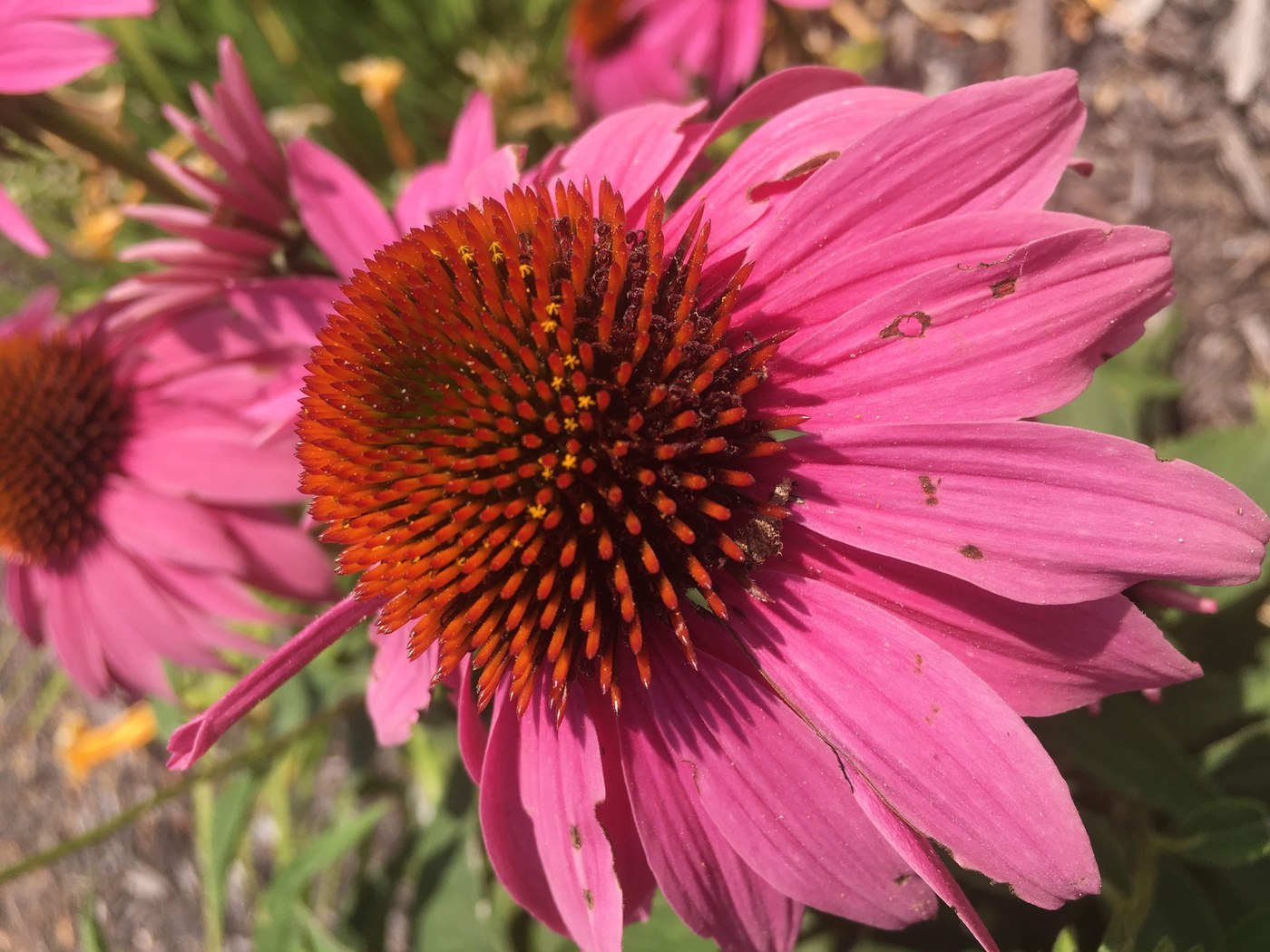
Echinacea is recognized by its drooping petals and spiky central cone.
- Flowers: Large (8-12 cm), daisy-like, with downward-sloping pink-purple ray petals around a raised, bristly orange-brown cone
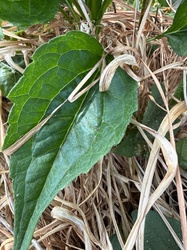
- Leaves: Coarse, lance-shaped, dark green, rough-textured, mostly toward the base
- Stems: Stiff, upright and hairy
- Height: Typically 60-120 cm (2-4 ft) tall
- Seed head: Persistent spiky cone that darkens and feeds birds in autumn
Care & growing
Echinacea is a tough, low-maintenance prairie perennial.
- Light: Full sun for the best flowering; tolerates light shade
- Water: Low to moderate; drought tolerant once established
- Soil: Average, well-drained soil; tolerates poor and dry conditions
- Temperature: Very cold-hardy; dies back in winter and returns in spring
- Feeding: Minimal; overly rich soil leads to floppy growth
- Propagation: From seed (cold stratification helps), division of clumps every few years, or root cuttings. Deadhead for more blooms, or leave seed heads for birds and winter interest.
Habitat & origin
Purple coneflower is native to the central and eastern United States, where it grows naturally in prairies, open woodlands, and dry meadows. Several related Echinacea species share this prairie range.
It is now planted in gardens worldwide for its ornamental value. Its toughness makes it ideal for naturalistic, low-water and pollinator gardens.
Frequently asked questions
Is echinacea easy to grow?
Yes. It is a hardy, drought-tolerant perennial that thrives in full sun and average soil, needs little care, and returns reliably each year.
Should I deadhead coneflowers?
Deadheading encourages more blooms, but leaving some spent flowers lets the spiky seed heads feed birds and provide winter interest, so many gardeners do both.
Will echinacea attract pollinators?
Very much so. The flowers are a favorite of bees and butterflies, making it an excellent choice for pollinator and wildlife gardens.
How tall does echinacea grow?
It typically reaches 60-120 cm (2-4 ft) on stiff, upright stems, with the flowers held above the basal foliage.
Echinacea guides
In-depth guides for identifying, growing, and caring for Echinacea.
How to Care for Echinacea
Grow Echinacea (purple coneflower) in full sun with lean, well-drained soil for a tough, drought-tolerant perennial loaded with daisy blooms.
Echinacea Identification Guide
Identify echinacea (purple coneflower) by its drooping pink-purple petals, raised spiky orange-brown central cone, coarse hairy leaves, and tall sturdy stems. Includes how to separate it from rudbeckia.
Echinacea identified by the community
Real specimens identified with Plant Identifier.