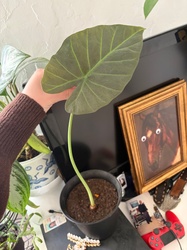
Elephant Ear Identification Guide
Identify Elephant Ear plants (Colocasia, Alocasia, and Caladium) by their massive heart- or arrow-shaped leaves, and learn how to distinguish the three look-alike genera.
Read the full Elephant Ear encyclopedia entry →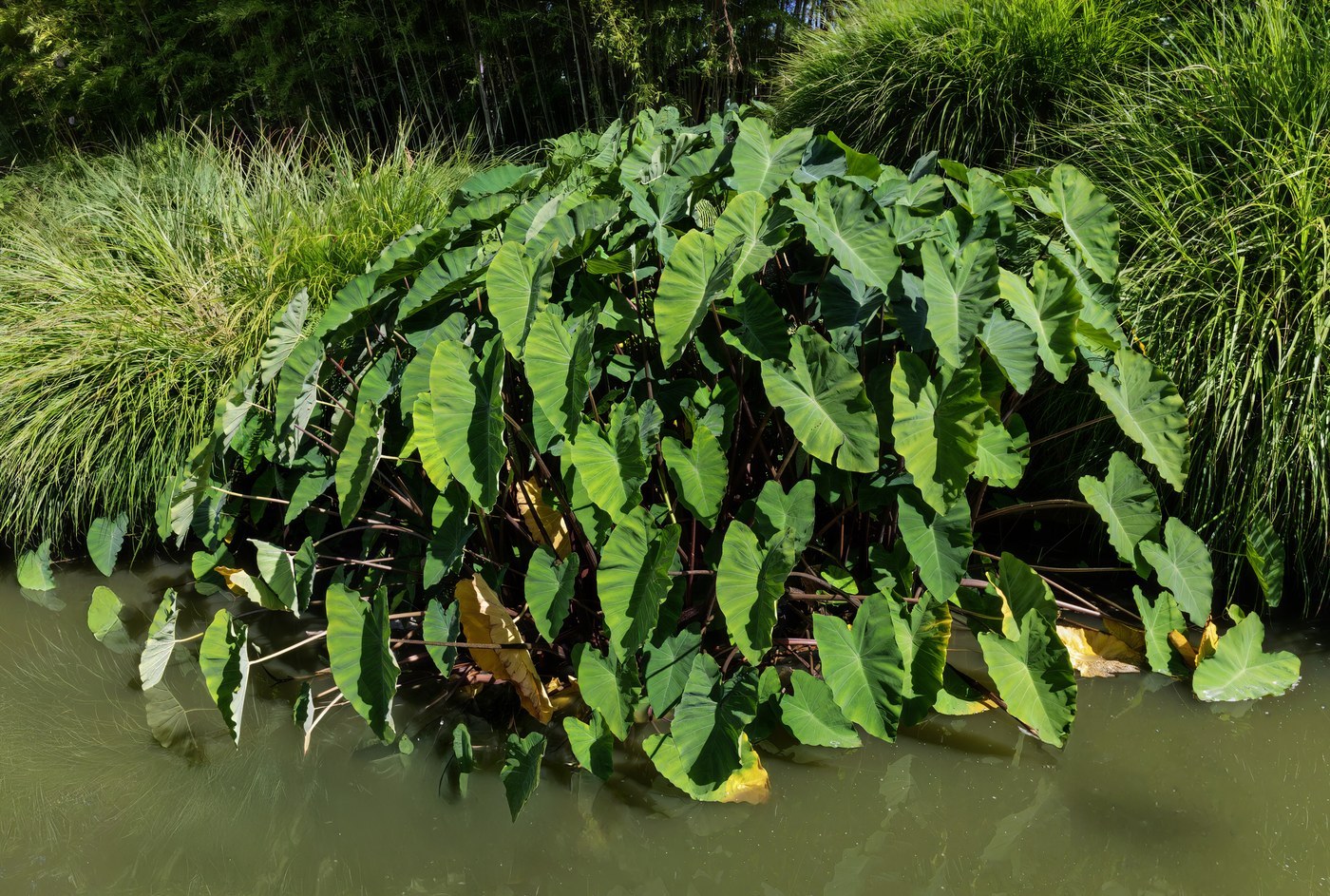
Key Identifying Features
"Elephant Ear" is a common name for several tropical aroids with enormous heart- or arrow-shaped leaves — chiefly Colocasia, Alocasia, and Caladium. The shared identifier is huge, broad leaves on long stalks that genuinely resemble an elephant's ear.
- Very large heart- or arrow-shaped leaves, often 30 cm to over 90 cm
- Long, sturdy petioles (stalks) rising from a central base or corm
- Prominent veins and sometimes dramatic color or patterning
- Grows from a tuber/corm; lush, fast tropical growth
Leaves & Stems
The leaf is everything. Telling the three genera apart comes down to how the leaf points and attaches:
- Colocasia (Taro): leaves typically point downward, are matte, and the petiole attaches a little inside the leaf margin (peltate). Often the largest, most "ear-like."
- Alocasia: leaves usually point upward or outward, are stiffer, often glossy, with bold, contrasting whitish veins; the petiole attaches at the leaf notch.
- Caladium: smaller, thin, papery leaves in vivid pink, red, white, and green patterns; grown for color, dies back in winter.
Stalks are thick and fleshy, sometimes dark, ridged, or mottled.
Flowers & Fruit
All are aroids and produce the family's typical spathe-and-spadix flower — a finger-like spadix wrapped in a pale green, white, or yellow hood. Blooms are uncommon indoors and modest compared to the foliage, so identify by the leaves.
How to Tell It Apart from Look-Alikes
- Colocasia vs Alocasia: the classic test is leaf orientation — Colocasia leaf tips droop down, Alocasia leaf tips hold up; Alocasia veins are usually more sharply contrasting.
- Caladium: the colorful, thin-leaved, more delicate member, going dormant in cold months.
- Xanthosoma: another elephant-ear genus with arrow leaves whose lobes are clearly separated.
- The giant ear-shaped leaf on a fleshy stalk from a tuber marks the elephant-ear group; orientation and texture pin down the genus.
Where You'll Find It
Native to tropical Asia (Alocasia, Colocasia) and tropical America (Caladium, Xanthosoma). Grown worldwide as bold landscape and container plants in warm seasons and as houseplants.
Quick ID Checklist
- Giant heart- or arrow-shaped leaves on long fleshy stalks
- Grows from a tuber or corm
- Colocasia leaves droop down; Alocasia leaves point up with bold veins
- Caladium leaves thin and brightly colored
- Aroid spathe-and-spadix flower
Frequently asked questions
How do I tell Colocasia from Alocasia?
Look at leaf orientation: Colocasia leaves generally droop downward and are matte, while Alocasia leaves point upward or outward, are stiffer and glossier, and have more sharply contrasting veins.
Are all Elephant Ears the same plant?
No. 'Elephant Ear' is a shared common name for several genera, mainly Colocasia, Alocasia, and Caladium, plus Xanthosoma. They look similar but differ in leaf orientation, texture, and color.
Why are my Elephant Ear's leaves dripping water?
That is guttation, where the plant releases excess water from leaf edges, common in well-watered aroids. It is normal and not a sign of disease.
Elephant Ear identified by the community
Recent Elephant Ear specimens identified with Plant Identifier.