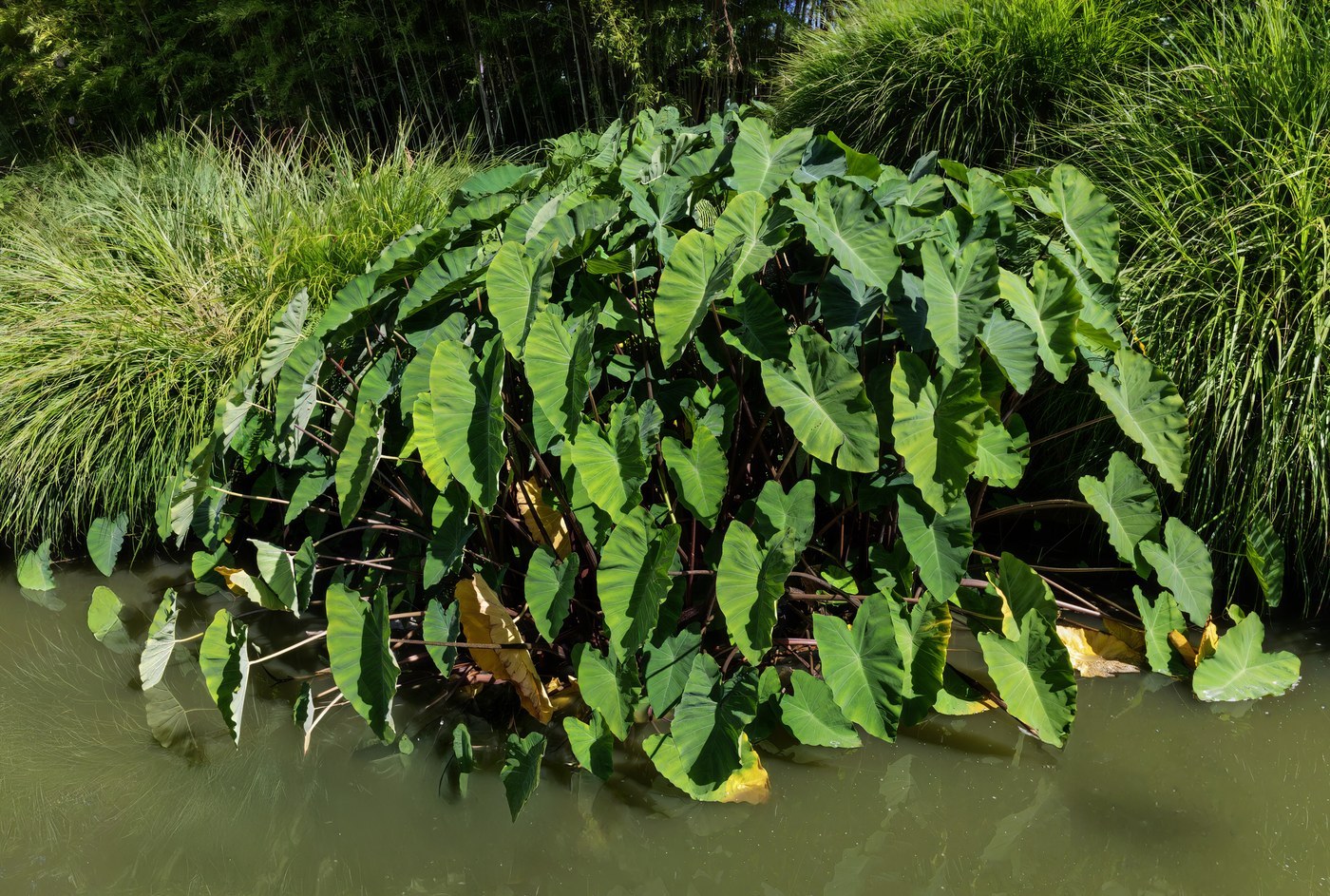
Elephant Ear
Colocasia esculenta
A dramatic tropical plant grown for its huge, heart- or arrowhead-shaped leaves resembling elephant ears.
- Light
- Bright indirect to partial sun
- Water
- Keep consistently moist
- Difficulty
- Moderate
Got a plant like this?
Identify any plant from a photo, free.
Overview
Elephant Ear is the common name for several large-leaved tropical plants in the arum family, most often Colocasia esculenta (taro), along with related Alocasia and Xanthosoma. They are grown for spectacular oversized leaves, sometimes more than a meter long, that bring a bold tropical look to gardens and interiors.
Colocasia esculenta is also one of the world's oldest cultivated crop plants, grown across the tropics for its underground corms and foliage. As ornamentals, elephant ears are valued purely for their dramatic form.
How to identify it
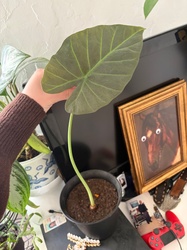
Recognize it by very large, heart- or arrowhead-shaped leaves on long, upright stalks.
- Leaves: huge, heart- to arrowhead-shaped, often 30 cm to over 1 m long; Colocasia leaves typically point downward
- Stalks: long, fleshy petioles rising from an underground corm
- Habit: clumping; can reach 1 to 2 m or more
- Underground: thick starchy corms
- Flowers: an arum-type spathe and spadix, uncommon indoors
Care & growing
Give bright indirect light to partial sun; many tolerate full sun outdoors with ample water.
- Water: keep consistently moist; Colocasia is a bog plant and loves wet conditions, while Alocasia prefers moist but well-drained soil
- Soil: rich, moisture-retentive soil
- Temperature: warm, 18 to 30 C; tubers can be lifted and stored over winter in cold climates
- Humidity: high
- Feeding: feed regularly during active growth, as they are heavy feeders
- Propagation: by dividing corms or offsets
Habitat & origin
Colocasia esculenta originates in Southeast Asia and the Indian subcontinent, while related elephant ears come from tropical Asia and the Americas. They grow naturally in warm, wet habitats such as swamp margins and riverbanks. Taro has been cultivated for thousands of years across Asia, Africa, the Pacific and the Caribbean.
Frequently asked questions
What is the difference between Colocasia and Alocasia?
Colocasia leaves usually point downward and love boggy, wet soil; Alocasia leaves point upward or outward and prefer moist but well-drained soil.
How much water does it need?
A lot. Elephant ears, especially Colocasia, thrive in consistently moist to wet soil and will wilt quickly if allowed to dry out.
How big do the leaves get?
Very large — the heart- to arrowhead-shaped leaves often span 30 cm to over 1 m long, and clumps can reach 1 to 2 m or more.
How do I propagate elephant ear?
Divide the underground corms or remove offsets during active growth and replant them in rich, moisture-retentive soil.
Elephant Ear guides
In-depth guides for identifying, growing, and caring for Elephant Ear.
How to Care for Elephant Ear
Grow lush, tropical Elephant Ear (Colocasia esculenta) with bright light, constant moisture, warmth, and rich, humus-heavy soil.
Elephant Ear Identification Guide
Identify Elephant Ear plants (Colocasia, Alocasia, and Caladium) by their massive heart- or arrow-shaped leaves, and learn how to distinguish the three look-alike genera.
Elephant Ear identified by the community
Real specimens identified with Plant Identifier.