Foxglove Identification Guide
Identify foxglove by its tall one-sided spike of tubular thimble-shaped flowers with spotted throats above a basal rosette of soft toothed leaves.
Read the full Foxglove encyclopedia entry →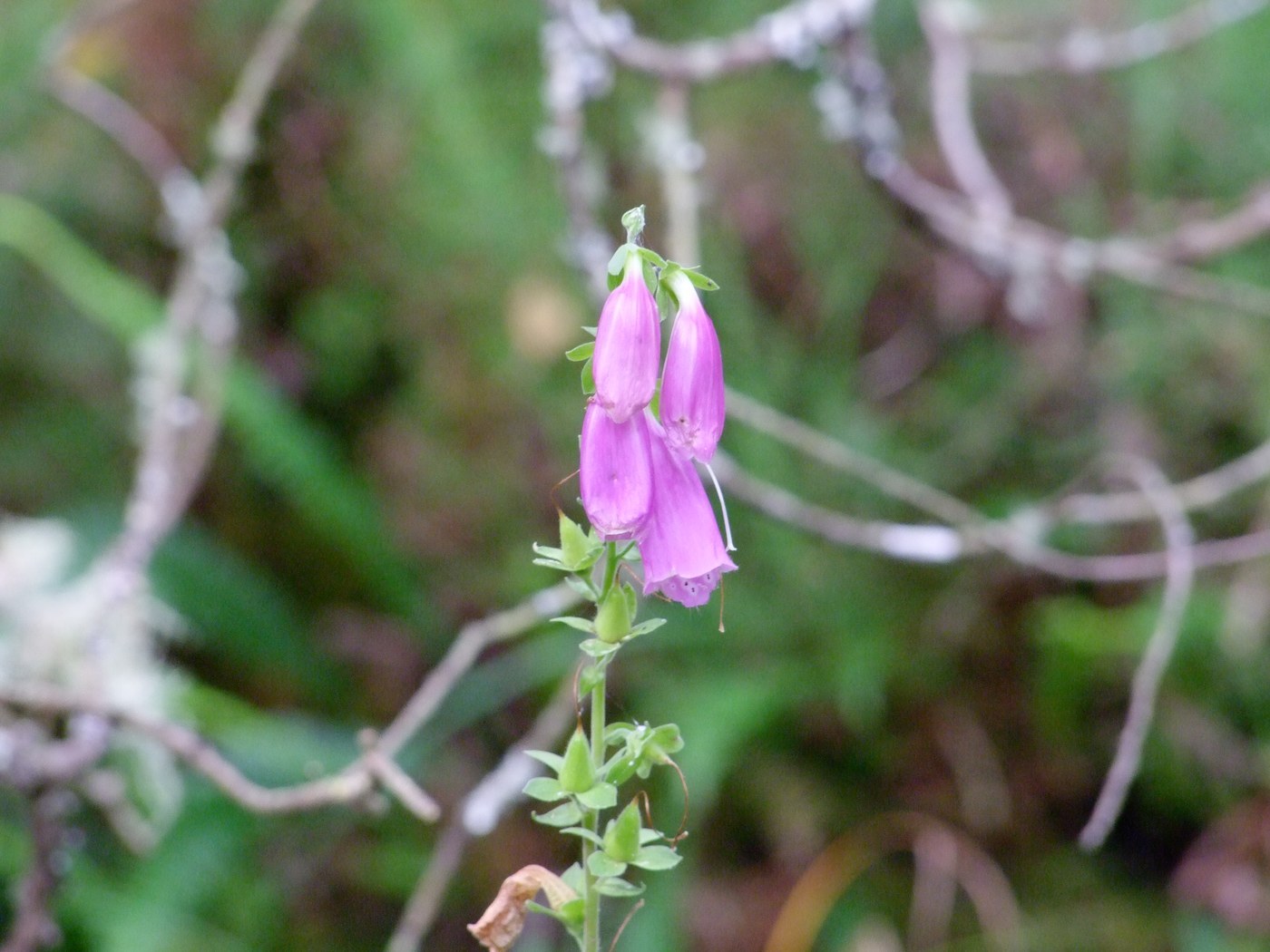
Key Identifying Features
Foxglove (Digitalis purpurea and relatives) is a tall biennial or short-lived perennial in the plantain family (Plantaginaceae). It is recognized by a tall, often one-sided flower spike lined with pendant, tubular, thimble- or finger-shaped flowers whose throats are freckled with dark spots, rising above a rosette of soft, wrinkled leaves.
- A single dramatic spike of hanging tubular flowers, often facing one way
- Bell/thimble flowers, usually pink-purple, with spotted inner throats
- Soft, fuzzy, gray-green leaves in a basal rosette the first year
- Tall unbranched flowering stem in the second year
Leaves & Stems
First-year plants form a low rosette of large, oval to lance-shaped leaves that are soft, downy, deeply veined and wrinkled, with scalloped or finely toothed edges, tapering into winged stalks. In the second year a single stout, hairy, mostly unbranched stem shoots up 2-6 feet, bearing smaller alternate leaves and topped by the flower spike. The whole plant has a slightly grayish, hairy look.
Flowers & Fruit
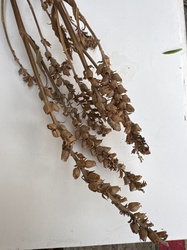
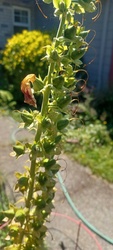
Flowers hang in a long terminal raceme, frequently crowded on one side of the stem. Each is a tubular, two-lipped bell about 1.5-2.5 inches long, flaring at the mouth, in shades of pink, purple, magenta, white, or pale yellow. The diagnostic feature is the interior of the lower throat, spotted with dark purple or maroon blotches ringed in white, which guide bumblebees inside. Bloom progresses bottom to top up the spike. Fruit is a small dry egg-shaped capsule packed with abundant tiny seeds.
How to Tell It Apart from Look-Alikes
- Comfrey (Symphytum): has similar fuzzy leaves but small drooping bell flowers in coiled clusters, not a tall spike of spotted thimbles.
- Mullein (Verbascum): also tall with woolly leaves, but flowers are flat, five-petaled, and usually yellow, not tubular.
- Penstemon: tubular flowers too, but smaller, on branched stems, with smoother leaves and no spotted thimble shape.
- Snapdragon: tubular two-lipped flowers but a closed "mouth" and bushier habit.
The combination of a one-sided spike of pendant spotted thimble flowers over a downy rosette is diagnostic for foxglove.
Where You'll Find It
Native to western Europe, foxglove is widely grown and naturalized in temperate gardens, woodland edges, clearings, roadside banks, and disturbed ground. It favors partial shade and moist, acidic soil and often appears after logging or soil disturbance. It is a classic cottage-garden and pollinator plant.
Quick ID Checklist
- Tall, usually one-sided spike of hanging tubular flowers
- Thimble-shaped blooms with dark-spotted throats
- Soft, downy, wrinkled, toothed leaves in a basal rosette
- Single stout hairy flowering stem 2-6 feet tall
- Blooms open from the bottom of the spike upward
Frequently asked questions
Why do foxglove flowers have spots inside?
The dark spots and white rings on the lower lip act as nectar guides, directing bumblebees into the tube to pollinate the flower.
How can I tell foxglove from mullein?
Both are tall with fuzzy leaves, but foxglove has pendant tubular thimble-shaped flowers with spotted throats, while mullein has flat, five-petaled, usually yellow flowers.
Why didn't my foxglove flower the first year?
Foxglove is typically biennial: it makes only a leafy rosette in the first year and produces its tall flower spike in the second year before setting seed.
Foxglove identified by the community
Recent Foxglove specimens identified with Plant Identifier.