Foxglove
Digitalis purpurea
Foxglove is a stately biennial bearing tall spires of tubular, spotted bell-flowers, beloved by bees and a striking accent in shade and cottage gardens.
- Light
- Partial shade to full sun
- Water
- Keep evenly moist
- Difficulty
- Easy
Got a plant like this?
Identify any plant from a photo, free.
Overview
Foxglove is a biennial or short-lived perennial famous for its dramatic, towering flower spikes lined with tubular bells. Each speckled throat guides bumblebees inside to pollinate.
Native to Europe, it is a woodland and cottage-garden favorite, prized for the bold vertical accent its flower spikes bring to shaded borders.
How to identify it
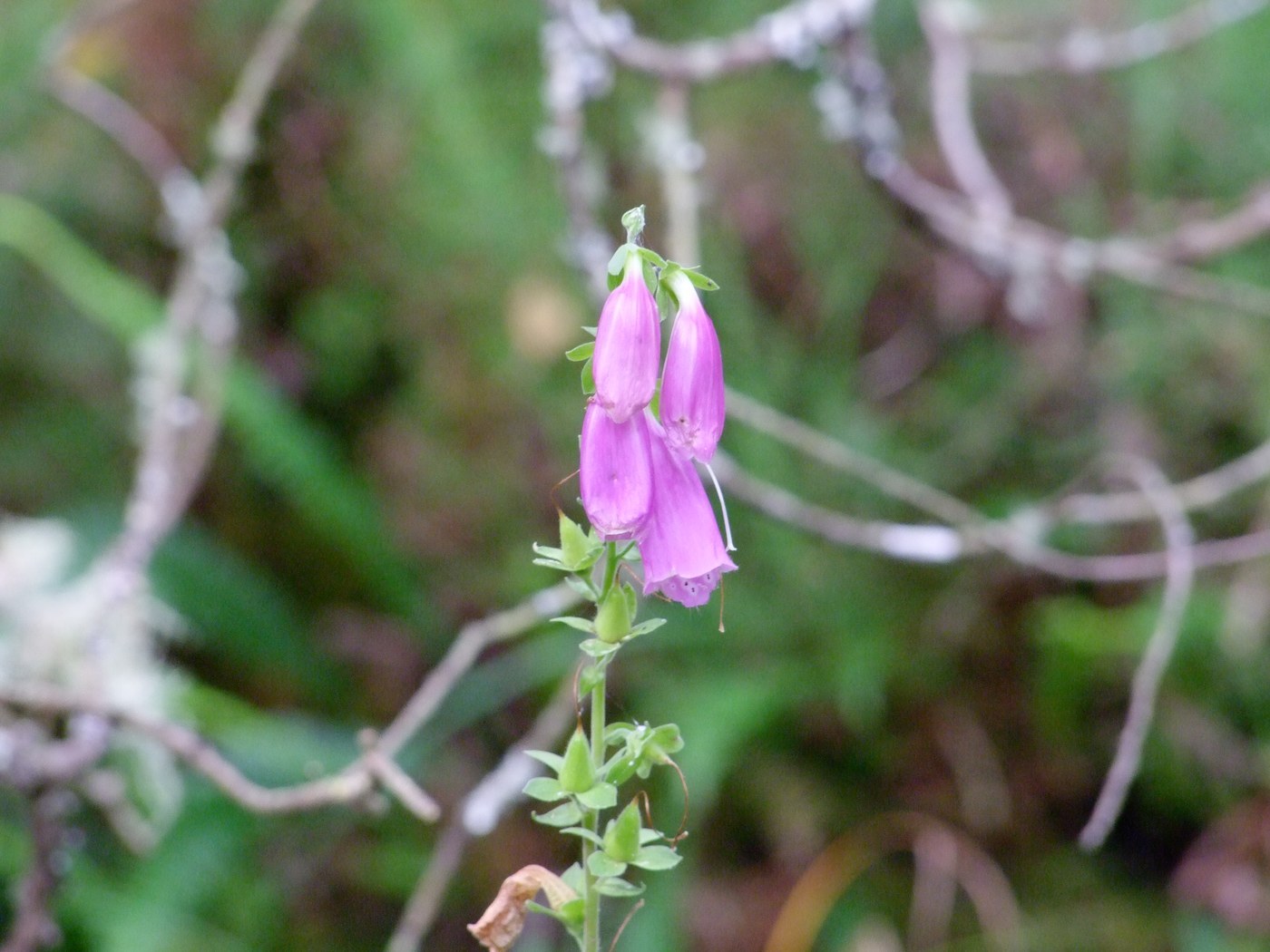
Unmistakable for its tall, one-sided spires of pendant bells.
- Flowers: tubular, thimble-shaped bells, usually pink-purple (also white), with spotted throats, on a tall spike
- Leaves: large, soft, gray-green, wrinkled, in a basal rosette the first year
- Height: 90-180 cm flowering stems in the second year
- Habit: biennial forming a rosette, then bolting to flower
Care & growing
An easy woodland-edge plant that often self-sows.
- Light: partial shade is ideal; tolerates full sun in cooler areas
- Water: keep evenly moist; dislikes drought
- Soil: rich, moist, well-drained, slightly acidic
- Feeding: little needed in good soil
- Propagation: sow seed on the surface (needs light); self-seeds readily for continuous colonies
Habitat & origin
Native to western and central Europe, growing in woodland clearings, hedgerows, heaths, and disturbed acidic soils.
It thrives at woodland edges where light reaches the ground after disturbance. Widely naturalized in North America and elsewhere, it is a staple of shade and cottage gardens.
Frequently asked questions
Do foxgloves come back every year?
Most are biennials, flowering in their second year and then dying, but they self-seed to maintain a presence.
Where do foxgloves grow best?
In partial shade with moist, rich, slightly acidic soil, much like a woodland edge.
How do I get foxgloves to self-seed?
Leave some flower spikes to set seed and scatter onto bare soil; the tiny seeds need light to germinate.
Foxglove guides
In-depth guides for identifying, growing, and caring for Foxglove.
How to Care for Foxglove
Grow tall, spire-flowering foxglove in dappled cottage-garden beds with rich, evenly moist soil and light shade.
Foxglove Identification Guide
Identify foxglove by its tall one-sided spike of tubular thimble-shaped flowers with spotted throats above a basal rosette of soft toothed leaves.
Foxglove identified by the community
Real specimens identified with Plant Identifier.