Petunia Identification Guide
How to recognize petunias by their trumpet-shaped blooms, sticky hairy foliage, and sprawling growth habit, and how to separate them from similar bedding flowers.
Read the full Petunia encyclopedia entry →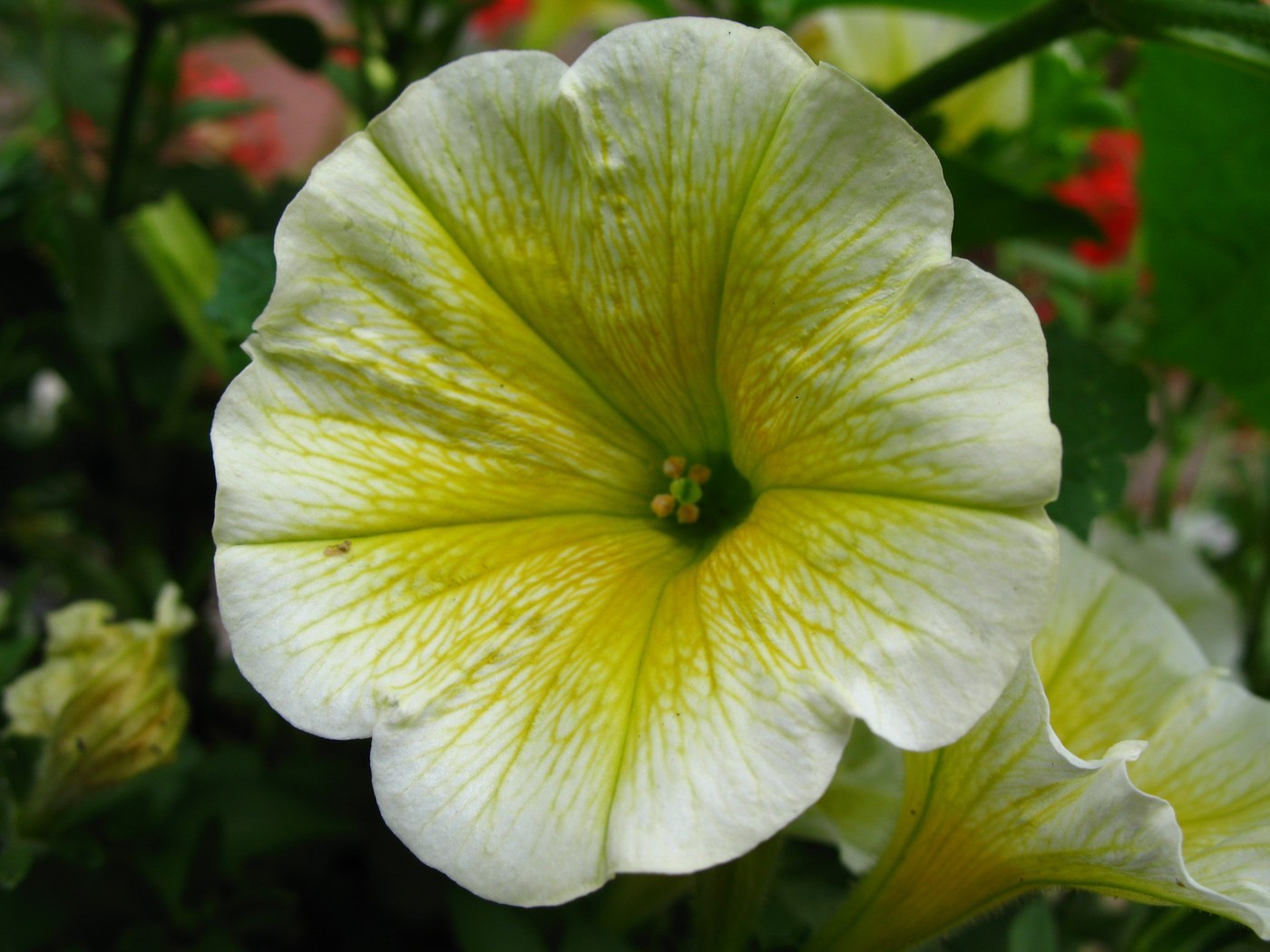
Key Identifying Features
Petunias (Petunia × atkinsiana and related species) are tender perennials grown as warm-season annuals in the nightshade family (Solanaceae). Look for these standout traits:
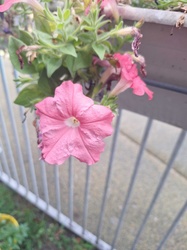
- Single, funnel- or trumpet-shaped flowers with five fused petals that flare into a wide, often ruffled face.
- Sticky, soft-hairy stems and leaves that feel tacky and faintly resinous to the touch.
- A low, spreading or trailing habit, mounding 6–18 inches tall and cascading over container and basket edges.
Leaves & Stems
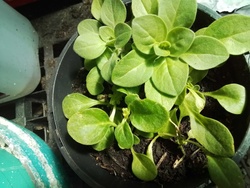
Petunia leaves are oval to spoon-shaped (obovate), soft, and covered in fine glandular hairs that give them a slightly clammy, sticky surface. They are arranged alternately on the lower stem and become nearly opposite near the flowers. Leaf margins are smooth (entire), and the foliage is a soft mid-green, sometimes a bit greasy looking. Stems are green, succulent-soft, and branching, breaking easily and exuding a faint scent when crushed. The whole plant has a relaxed, somewhat floppy structure.
Flowers & Fruit
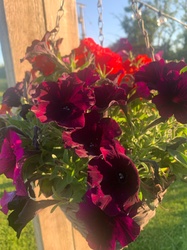
The flower is the signature feature: a fused, five-lobed corolla forming a single trumpet 1–4 inches across (grandifloras largest, millifloras smallest). Colors span white, pink, red, purple, near-black, yellow, and bicolors with veined throats, picotee edges, or star patterns. A green five-toothed calyx cups the base. Many cultivars are lightly fragrant in the evening. After bloom, a small two-chambered capsule forms holding many tiny seeds. Flowering runs continuously from late spring through frost.
How to Tell It Apart from Look-Alikes
- Calibrachoa (Million Bells): Looks like a miniature petunia but flowers are smaller (under 1 inch), leaves are tiny, and stems are woodier; calibrachoa rarely sets the sticky feel as strongly.
- Morning glory: Also trumpet-shaped, but a twining vine with heart-shaped leaves and blooms that close by midday.
- Nicotiana (flowering tobacco): A taller solanaceous relative with longer tubular flowers and larger basal leaves.
- Impatiens: Flat-faced flowers with a spur, smooth (non-sticky) foliage, and shade preference.
The combination of sticky glandular hairs plus a wide fused trumpet is the most reliable petunia tell.
Where You'll Find It
Petunias are among the most common bedding, container, and hanging-basket plants worldwide. They thrive in full sun and well-drained soil, performing best in warm weather. You'll see them edging borders, spilling from window boxes, and massed in public landscape plantings. They are not typically found growing wild outside cultivation in temperate regions.
Quick ID Checklist
- Trumpet-shaped, five-lobed fused flower 1–4 inches wide
- Sticky, hairy leaves and stems
- Oval, smooth-edged, soft green leaves
- Mounding or trailing habit in sun
- Continuous bloom in many colors with a veined throat
- Faint evening fragrance in many varieties
Frequently asked questions
Why do petunia leaves feel sticky?
Petunias are covered in glandular hairs that secrete a tacky, slightly resinous substance. This stickiness is normal and is actually a reliable identification clue, helping separate true petunias from look-alikes like calibrachoa.
How can I tell a petunia from a calibrachoa?
Calibrachoa (Million Bells) blooms are much smaller, usually under one inch across, with tiny leaves and a more compact trailing habit. Petunia flowers are larger trumpets and the foliage is noticeably stickier.
Are petunia flowers fused or separate petals?
They are fused. What looks like five petals is actually one continuous funnel-shaped corolla with five shallow lobes. This single-trumpet structure distinguishes petunias from flowers with truly separate petals.
Do petunias come back every year?
They are tender perennials but are grown as annuals in most climates because they cannot survive frost. In frost-free regions they may persist and rebloom.
Petunia identified by the community
Recent Petunia specimens identified with Plant Identifier.