Petunia
Petunia × atkinsiana
Petunias are prolific, trumpet-shaped bedding flowers prized for nonstop summer color in containers, hanging baskets, and borders. Most garden plants are hybrids derived from South American Petunia species.
- Light
- Full sun
- Water
- Keep evenly moist; avoid soggy soil
- Difficulty
- Easy
Got a plant like this?
Identify any plant from a photo, free.
Overview
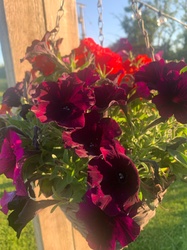
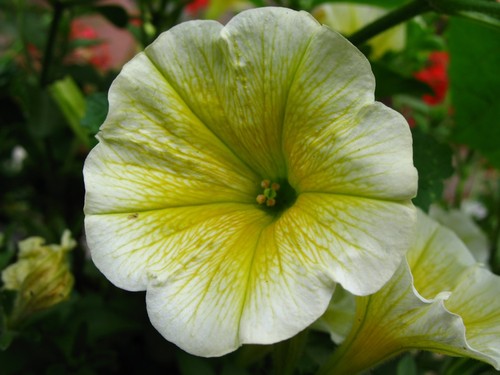
Petunias are among the most popular annual bedding flowers in temperate gardens, valued for their long bloom season and an enormous range of colors from white and pale yellow to deep purple, red, and bicolor patterns.
Most commercial petunias are hybrids (often sold as grandiflora, multiflora, milliflora, or spreading/wave types) bred for flower size, density, and weather tolerance. They are treated as warm-season annuals in most climates, blooming from spring through frost.
How to identify it
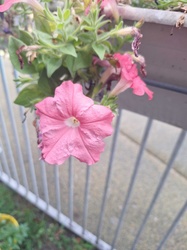
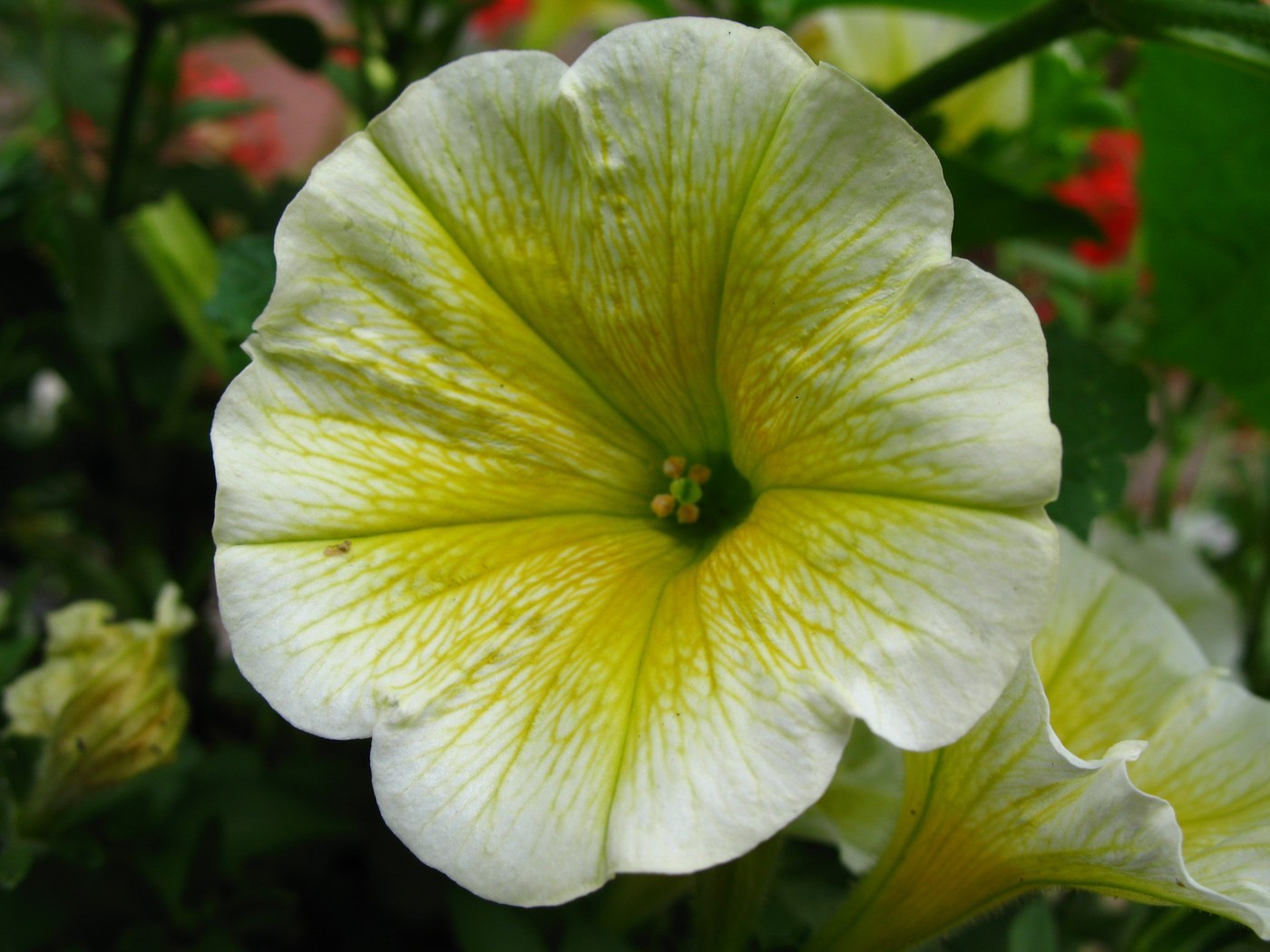
Recognizable by their funnel-shaped, five-lobed flowers and slightly sticky, hairy foliage.
- Flowers: Trumpet or funnel form, 2-5 in wide, single or double, in nearly every color except true blue
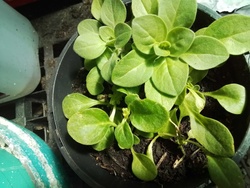
- Leaves: Soft, oval to oblong, covered in fine sticky hairs that feel tacky
- Habit: Mounding to trailing, 6-18 in tall depending on type
- Scent: Many emit a faint sweet fragrance, strongest in the evening
Care & growing
Petunias thrive on warmth, sun, and steady feeding.
- Light: Full sun (6+ hours) for best blooming; leggy and sparse in shade
- Water: Keep soil evenly moist; container plants may need daily watering in heat
- Soil: Light, well-draining potting mix or fertile garden soil
- Temperature: Warm-season; plant after the last frost
- Feeding: Heavy feeders—use a balanced liquid fertilizer every 1-2 weeks
- Maintenance: Deadhead spent blooms and pinch back leggy stems to encourage branching
- Propagation: Usually grown from seed or cuttings; many hybrids are propagated only by cuttings
Habitat & origin
Wild Petunia species are native to South America, particularly Argentina and Brazil. The garden petunia is a hybrid complex developed from species such as Petunia axillaris and Petunia integrifolia.
Today petunias are grown worldwide as ornamental annuals, popular in window boxes, hanging baskets, mass plantings, and seasonal containers.
Frequently asked questions
Why are my petunias getting leggy?
Heat, low light, and lack of pruning cause legginess. Pinch or cut stems back by a third and they will rebush and rebloom.
Do petunias need deadheading?
Older varieties bloom better with deadheading, but many modern hybrids (like the Wave and Supertunia series) are self-cleaning and need little.
Are petunias annuals or perennials?
They are tender perennials grown as annuals in most climates; they rarely survive frost.
How much sun do petunias need?
Full sun, at least 6 hours a day, gives the best flowering; in shade they grow leggy and sparse.
Petunia guides
In-depth guides for identifying, growing, and caring for Petunia.
Petunia identified by the community
Real specimens identified with Plant Identifier.