Pigweed Identification Guide
How to identify pigweed (Amaranthus species) by its oval alternate leaves, often red taproot, and dense bristly green seed spikes.
Read the full Pigweed encyclopedia entry →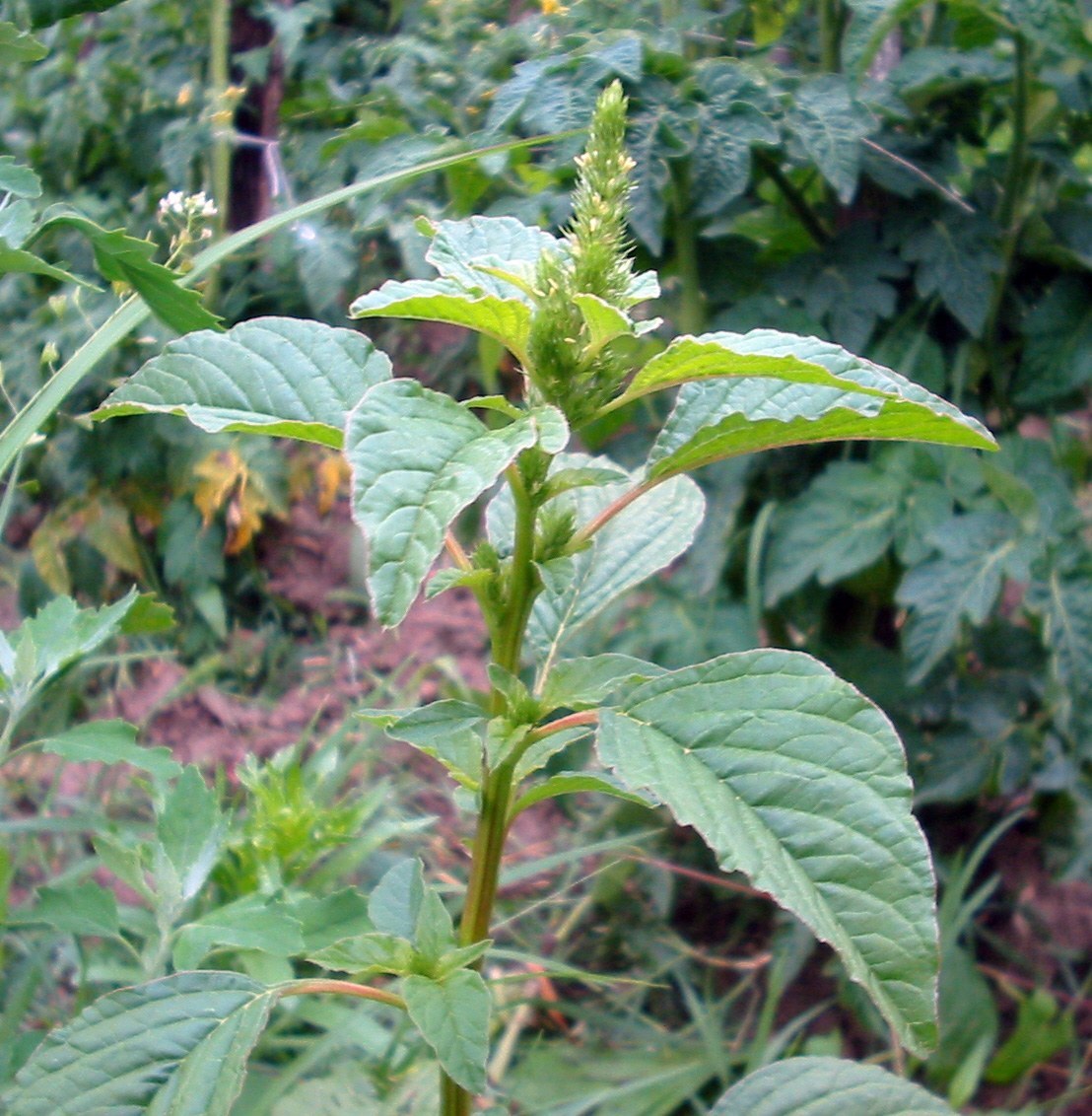
Key Identifying Features
Pigweed is the common name for several Amaranthus species (redroot pigweed, smooth pigweed, Palmer amaranth, waterhemp). These are fast-growing annual broadleaf weeds. Look for:
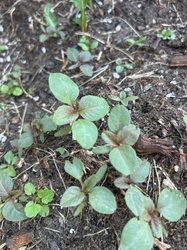
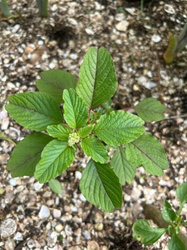
- Alternate, oval to diamond-shaped leaves often with a notched or pointed tip
- A stout, upright stem, frequently hairy and sometimes reddish
- A reddish or pink taproot in several species (hence "redroot")
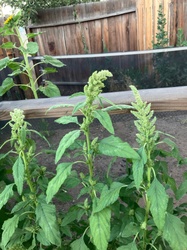
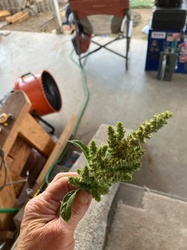
- Dense, bristly green flower/seed spikes at the top and in leaf axils
Plants range from 1 to over 6 feet tall.
Leaves & Stems
Leaves are alternate, egg-shaped to diamond-shaped, with smooth or slightly wavy margins and prominent veins on the underside. Many species show a small notch at the leaf tip and may have a faint whitish or reddish marking. Stems are thick, branching, and often covered with short hairs (especially redroot and smooth pigweed); Palmer amaranth and waterhemp stems are generally smooth/hairless. Roots are commonly pinkish-red, a feature reflected in the name redroot pigweed.
Flowers & Fruit
Flowers are small, greenish, and lack showy petals, packed into dense, bristly, branched terminal spikes and smaller axillary clusters. These spikes feel coarse or prickly to the touch due to stiff bracts. Pigweeds are enormously prolific — a single Palmer amaranth plant can produce hundreds of thousands of tiny black seeds. Some species (Palmer amaranth, waterhemp) are dioecious, with separate male and female plants.
How to Tell It Apart from Look-Alikes
- Lambsquarters: Similar size, but lambsquarters has a white mealy powdery coating and grooved red-streaked stems; pigweed lacks the flour-like dust.
- Palmer amaranth vs. waterhemp: Palmer often has a long petiole (leafstalk longer than the leaf) and a long, sharp seedhead; waterhemp has narrow, glossy, hairless leaves and very smooth stems.
- Redroot vs. smooth pigweed: Both hairy-stemmed; smooth pigweed has a slightly more slender, smooth seedhead.
- Spiny amaranth: Has sharp spines at the leaf bases — a clear separator.
Where You'll Find It
Pigweed dominates disturbed, fertile, sunny ground: crop fields, gardens, fence rows, feedlots, roadsides, and waste areas. It is heat- and drought-tolerant and a major agricultural weed, with Palmer amaranth and waterhemp notorious for herbicide resistance. It germinates in warm soil and grows rapidly through summer.
Quick ID Checklist
- Alternate oval/diamond leaves, often notched tip
- Stout upright stem, hairy or smooth depending on species
- Often a reddish/pink taproot
- Dense bristly green seed spikes, prickly to touch
- No mealy white coating (vs. lambsquarters)
- Tall annual, 1-6+ feet
A stout summer annual with alternate oval leaves, a red taproot, and coarse green bristly seed spikes is almost certainly a pigweed.
Frequently asked questions
Is pigweed the same as amaranth?
Yes, pigweed is the common name for wild Amaranthus species, and it is closely related to the cultivated grain and ornamental amaranths.
How do I tell pigweed from lambsquarters?
Lambsquarters has a distinctive white, flour-like mealy coating on its diamond-shaped leaves and grooved red-streaked stems, while pigweed leaves are smooth or hairy without that powder and it often has a telltale reddish taproot.
Why is Palmer amaranth such a feared weed?
Palmer amaranth grows extremely fast, can exceed six feet, produces hundreds of thousands of seeds per plant, and has evolved resistance to several common herbicides, making it one of the most damaging agricultural weeds in the U.S.
Does pigweed have a red root?
Several species, notably redroot pigweed, have a pinkish-red taproot, which is a helpful identification clue. However, not all pigweeds show strong red roots, so combine this with leaf shape and the bristly seed spikes for confident ID.
Pigweed identified by the community
Recent Pigweed specimens identified with Plant Identifier.