Plum Tree Identification Guide
Identify the plum tree (Prunus domestica and relatives) by its oval toothed leaves, white five-petaled spring blossoms, dull dark bark, and smooth oval stone fruit with a waxy bloom and central groove.
Read the full Plum Tree encyclopedia entry →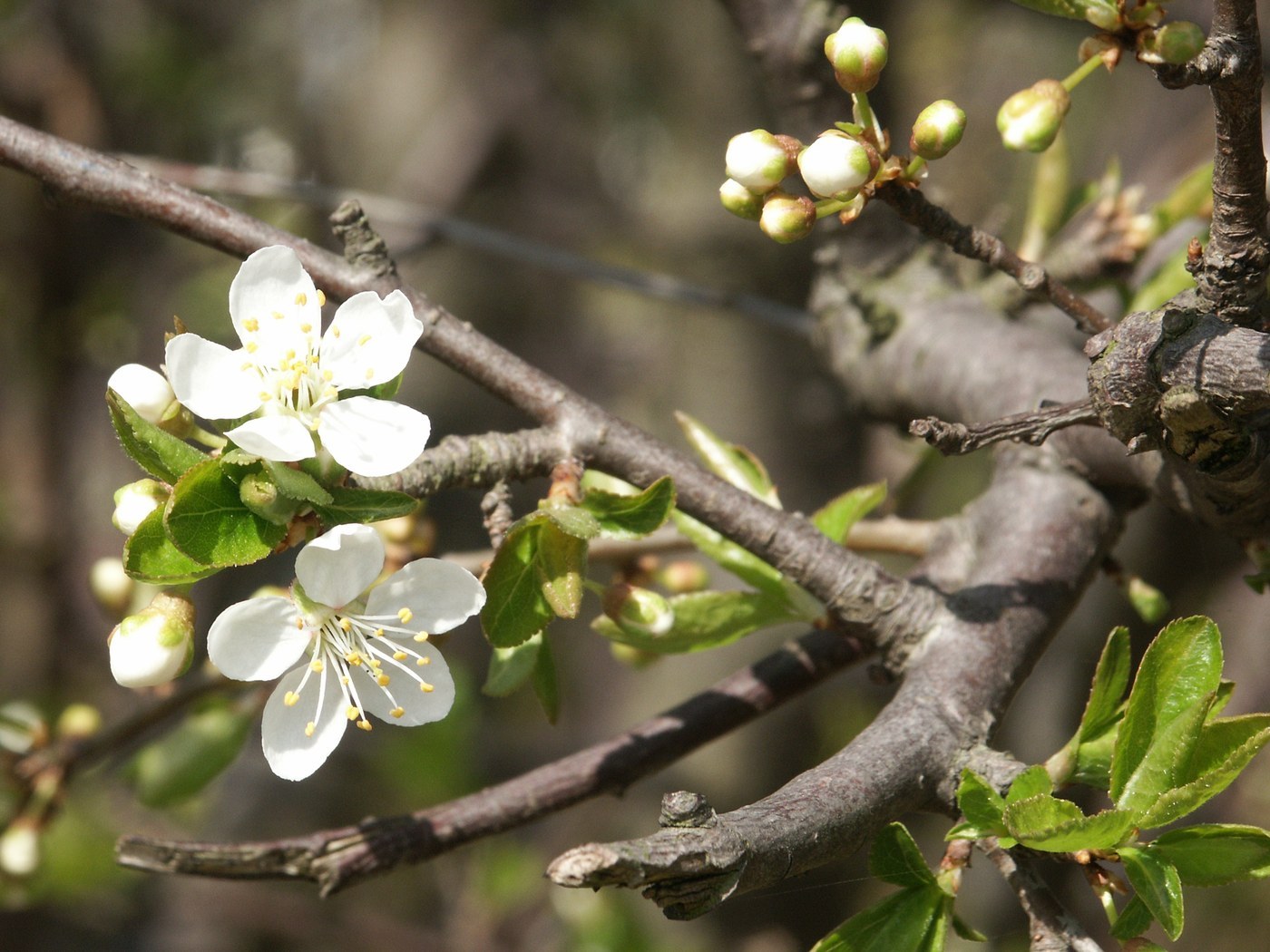
Key Identifying Features
The plum tree (Prunus domestica, P. salicina, and relatives) is a deciduous tree or large shrub, 3-8 m tall, often with a spreading, somewhat twiggy crown. Identify it by its oval, finely toothed leaves, clusters of white five-petaled blossoms in early spring, dull dark grayish-brown bark, and the characteristic smooth, oval-to-round stone fruit (drupe) with a powdery waxy bloom and a lengthwise groove. Like other Prunus, it has small glands on the leaf stalk and a single hard pit inside the fruit.
Leaves & Stems
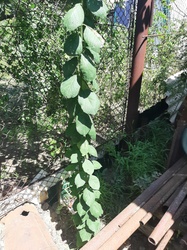
- Leaves are simple, alternate, oval to elliptical, 5-10 cm, with finely toothed margins and a pointed tip.
- Upper surface is dull to slightly glossy green; underside often slightly downy along veins.
- The petiole frequently bears one or two small glands near the leaf base (typical Prunus trait).
- Bark is dull dark gray-brown, becoming rough and fissured (not glossy like cherry); young twigs sometimes spiny in wild types.
Flowers & Fruit
- Flowers open in early spring, often before the leaves, singly or in small clusters of 2-3.
- Each is white, five-petaled, about 1.5-2.5 cm, with many stamens.
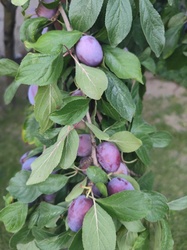
- Fruit is a smooth oval-to-round drupe, 2-7 cm, colored purple, red, yellow, or green depending on variety.
- A fine waxy bloom (whitish dusty coating) covers the skin, and a shallow groove runs from stalk to tip; inside is a single flattened stone.
How to Tell It Apart from Look-Alikes
- Cherry (Prunus avium/cerasus): Has glossy reddish bark with horizontal lenticels and small round long-stalked fruit; plum bark is duller and fruit larger and grooved.
- Blackthorn/sloe (Prunus spinosa): Very thorny, small blue-black astringent fruit; domestic plums are larger and less thorny.
- Apricot (Prunus armeniaca): Heart-shaped leaves and orange velvety fruit.
- Damson: A small dark plum, same species group, with oval purple fruit.
The dull dark bark + toothed oval leaves with petiole glands + white spring blossom + waxy grooved oval stone fruit confirms a plum.
Where You'll Find It
Plums grow in orchards, gardens, hedgerows, and naturalized in woodland edges across temperate regions. They favor full sun and well-drained soil. Spring blossom and late-summer fruiting are the best times to identify them; wild/feral plums and damsons are common in old hedges.
Quick ID Checklist
- Small deciduous tree with dull dark gray-brown bark
- Oval, finely toothed leaves, slightly downy beneath
- Small glands on the leaf stalk
- White five-petaled blossoms in early spring
- Smooth oval stone fruit with a waxy bloom and lengthwise groove
- Single hard pit inside
Frequently asked questions
How do I tell a plum tree from a cherry tree?
Cherry trees have glossy reddish-brown bark with horizontal lenticel bands and small round fruit on long stalks. Plum trees have duller dark bark and larger oval fruit with a waxy bloom and a lengthwise groove. The bark and fruit shape are the quickest tells.
What is the whitish dust on plum fruit?
That is the bloom, a natural waxy coating the plum produces to reduce water loss and protect the skin. It rubs off easily and is a normal sign of fresh, healthy plums, not a disease.
Are the glands on the leaf stalk important for ID?
Yes, those small glands (nectaries) near the leaf base are typical of Prunus species, helping confirm you have a plum, cherry, or related stone fruit rather than an apple or pear.
Is a damson a kind of plum?
Yes. Damsons belong to the same Prunus domestica group, producing small, oval, dark purple, tart fruit. They share the plum's white blossom, toothed leaves, and grooved stone fruit.
Plum Tree identified by the community
Recent Plum Tree specimens identified with Plant Identifier.