Plum Tree
Prunus domestica
The plum tree is a deciduous stone-fruit tree grown for its fruit and early spring blossom. European plums (Prunus domestica) and Japanese plums (Prunus salicina) are the main cultivated types.
- Light
- Full sun
- Water
- Regular deep watering
- Difficulty
- Moderate
Got a plant like this?
Identify any plant from a photo, free.
Overview
Prunus domestica, the European plum, is a deciduous tree in the rose family grown for its fruit. Japanese plums (Prunus salicina) are another widely cultivated type.
Plums are among the easiest stone fruits for home gardens. European types tend to be hardier and more self-fertile; Japanese types bloom earlier and often need a pollination partner.
How to identify it
- Small to medium rounded tree, typically 10-20 ft
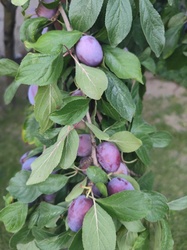
- Oval, finely serrated leaves, often folded along the midrib
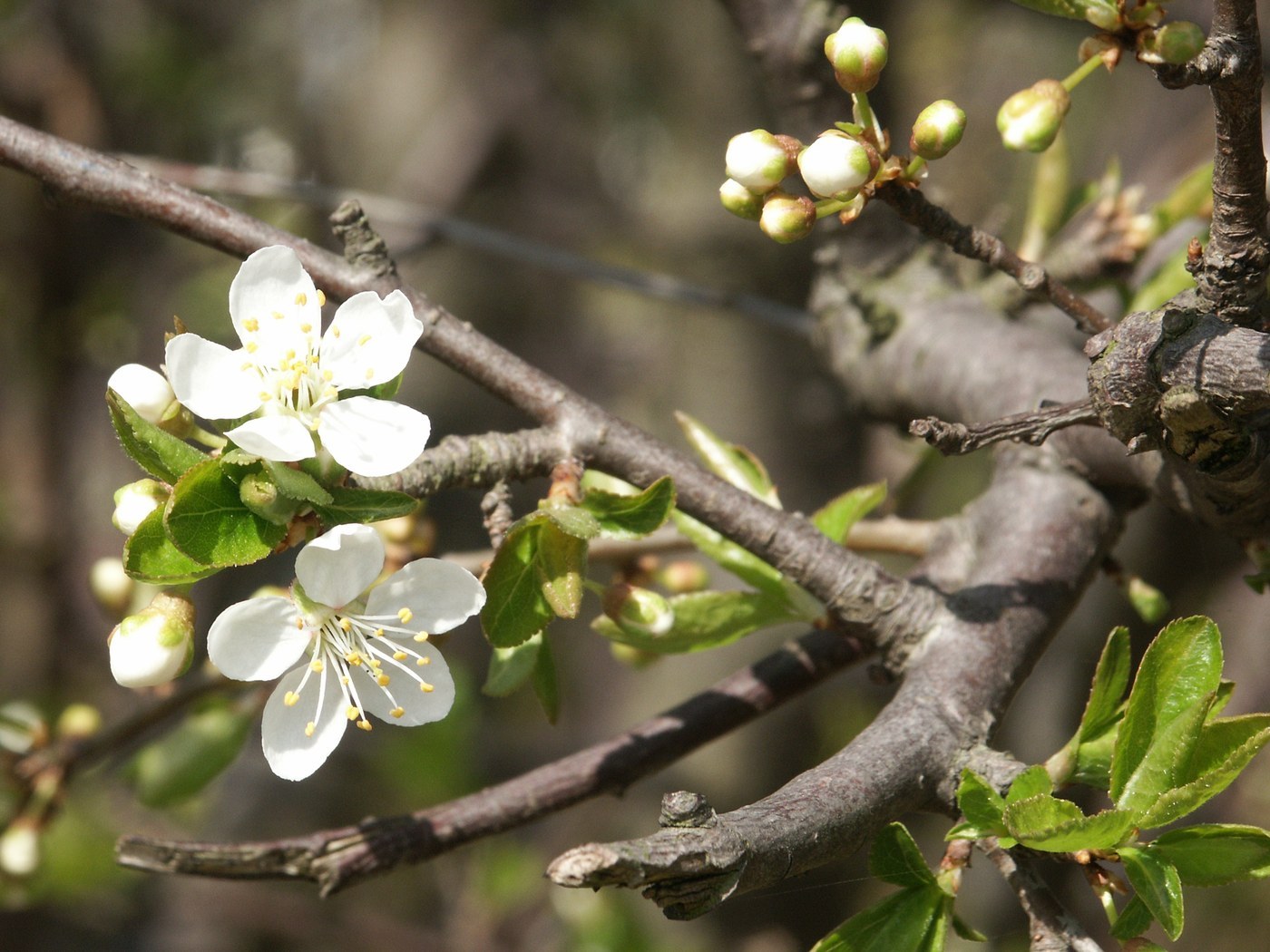
- Profuse white five-petaled blossoms in early spring, usually before leaves emerge
- Smooth-skinned oval-to-round fruit (purple, red, yellow, or green) with a powdery bloom and a flattened pit
- Gray-brown bark, sometimes with short spur shoots and minor thorns
Care & growing
Light: Full sun.
Water: Regular deep watering, especially during fruit swell.
Soil: Fertile, well-drained soil; avoid waterlogged sites.
Temperature: Need winter chill; European plums hardy to zone 4-5, Japanese types more frost-tender at bloom.
Feeding: Modest annual feed.
Pollination: Many European plums are self-fertile; most Japanese plums need a compatible partner.
Thinning/Propagation: Thin heavy fruit to improve size; trees are grafted to control size and variety.
Habitat & origin
Prunus domestica is thought to have originated near the Caucasus and Caspian region as a hybrid, while Prunus salicina comes from China. Both have been cultivated for centuries.
Plums grow across cool- and warm-temperate climates worldwide, with major production in China, Romania, Serbia, and the United States. They suit gardens with cold winters and frost-free bloom.
Frequently asked questions
Do plum trees need a pollinator?
Many European plums are self-fertile, but most Japanese plums and some Europeans crop much better with a compatible second variety nearby.
Why are my plums dropping before ripening?
Some natural 'June drop' is normal. Heavy drop can come from poor pollination, drought stress, or pest damage like plum curculio.
Should I thin plums?
Yes—thinning a heavy crop to a few inches apart improves fruit size and prevents limb breakage and biennial bearing.
Plum Tree guides
In-depth guides for identifying, growing, and caring for Plum Tree.
How to Care for Plum Tree
Grow an ornamental plum tree (Prunus domestica) for spring blossom and a shapely canopy with full sun, deep watering, and annual pruning.
Plum Tree Identification Guide
Identify the plum tree (Prunus domestica and relatives) by its oval toothed leaves, white five-petaled spring blossoms, dull dark bark, and smooth oval stone fruit with a waxy bloom and central groove.
Plum Tree identified by the community
Real specimens identified with Plant Identifier.