Salvia Identification Guide
Identify salvia (sage) by its square stems, opposite aromatic leaves, and spikes of two-lipped tubular flowers. Covers ornamental salvias and common sage within this large mint-family genus.
Read the full Salvia encyclopedia entry →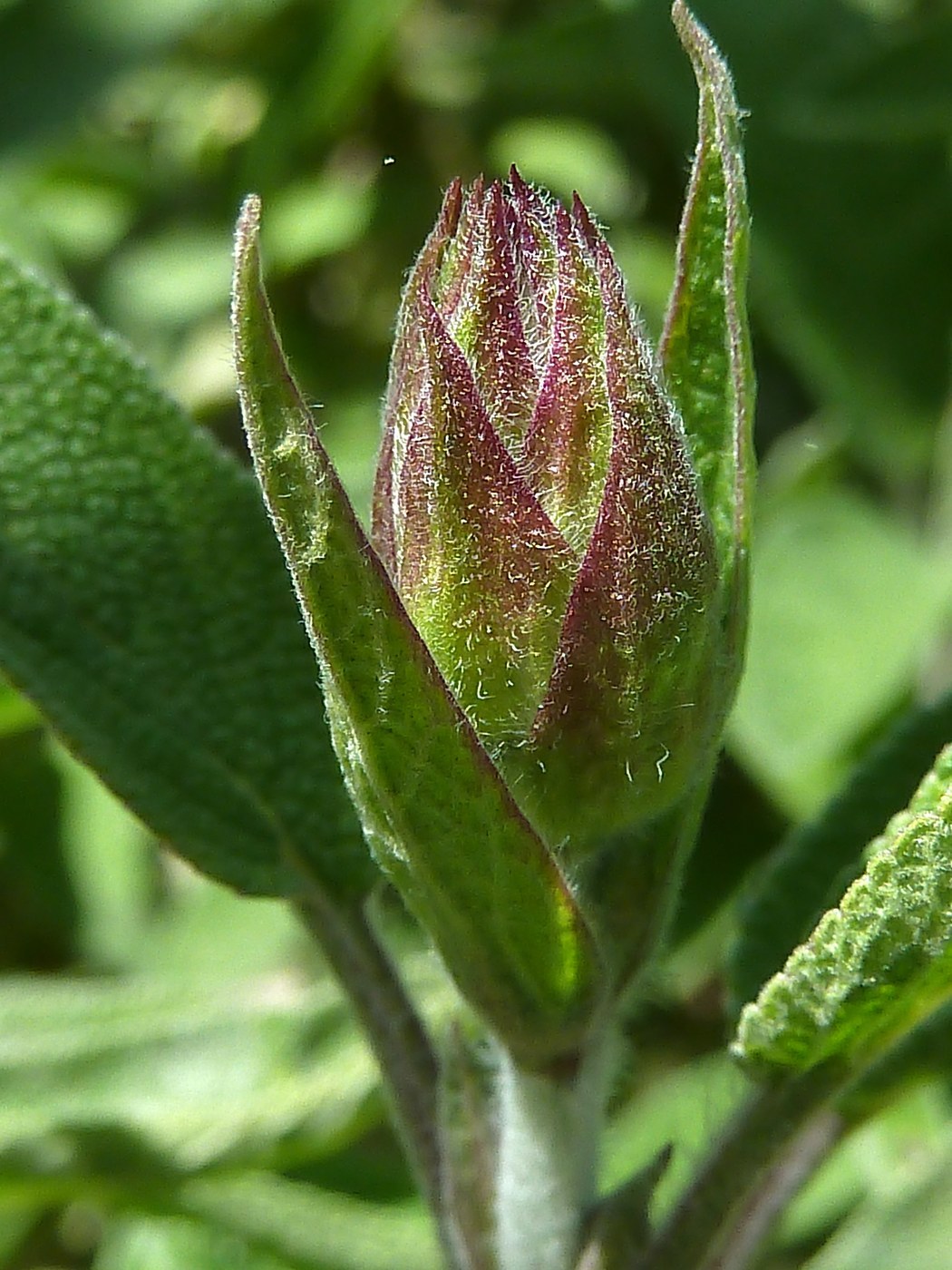
Key Identifying Features
Salvia is the largest genus in the mint family (Lamiaceae), known commonly as sage. Members range from aromatic herbs to flashy ornamentals, but they share a clear set of mint-family traits.
- Square (4-sided) stems—roll one between your fingers to feel the edges
- Opposite, often aromatic leaves
- Spikes or whorls of two-lipped (bilabiate) tubular flowers
- Colors: red, blue, purple, pink, white; some scarlet (e.g. Salvia splendens)
Leaves & Stems
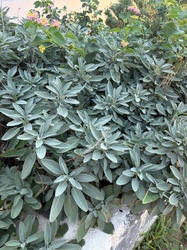
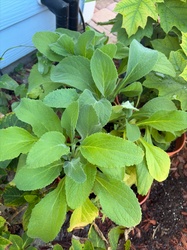
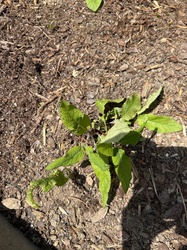
Leaves are opposite, simple, and frequently fragrant when crushed, often with a soft, textured, or gray-green surface (common sage, Salvia officinalis, has velvety gray-green leaves). Margins may be smooth, scalloped, or wrinkled. The square stem is a reliable family marker. Plants may be soft annuals, perennials, or woody subshrubs.
Flowers & Fruit
Flowers are arranged in whorls up a vertical spike and each has a distinctive two-lipped shape: an upper hood and a lower landing lip, forming a tube ideal for bees and hummingbirds. Salvia has a unique pollination lever in the stamens. Below each flower is a leafy or colored bract, sometimes showy. Fruit is four small nutlets, typical of the mint family.
How to Tell It Apart from Look-Alikes
- Other mints (catmint, hyssop): also square stems and two-lipped flowers; salvia tends to have larger, more separated flowers in distinct whorls and often a prominent lower lip.
- Veronica (speedwell): vertical flower spikes too, but flowers are small and 4-lobed, stems round.
- Penstemon: tubular flowers but with rounder stems and a different five-lobed mouth.
- Square stem + opposite aromatic leaves + two-lipped whorled flowers confirms a salvia.
Where You'll Find It
Salvias are mainstays of sunny borders, herb gardens, and pollinator plantings worldwide; wild species occupy meadows, scrub, and dry slopes across the Americas, Mediterranean, and Asia. They favor full sun and well-drained soil and are drought-tolerant. Common sage is a popular garden herb.
Quick ID Checklist
- Square stem (feel the four edges)
- Opposite, aromatic leaves
- Two-lipped tubular flowers in whorled spikes
- Often with colored bracts
- Bee- and hummingbird-friendly
- Sun-loving, drought-tolerant
A square-stemmed plant with paired fragrant leaves and spikes of two-lipped tube flowers is a salvia (sage).
Frequently asked questions
Is common sage a salvia?
Yes. The garden herb sage is Salvia officinalis, a woody-based perennial in the same large genus as the ornamental flowering salvias.
How can I confirm a plant is in the mint family like salvia?
Feel the stem; mint-family plants including salvia have square, four-sided stems, paired with opposite leaves and often aromatic foliage.
What pollinates salvia?
The two-lipped tubular flowers are adapted for bees and hummingbirds; salvia even has a lever mechanism in its stamens that dusts pollen onto visiting pollinators.
Why are salvia flowers shaped with two lips?
The bilabiate shape provides an upper hood protecting the stamens and a lower lip as a landing platform, guiding pollinators into the nectar tube.
Salvia identified by the community
Recent Salvia specimens identified with Plant Identifier.