Spirea Identification Guide
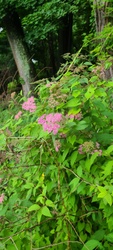
Identify Spirea by its small simple toothed leaves on slender twiggy stems and its dense clusters of tiny five-petaled white or pink flowers.
Read the full Spirea encyclopedia entry →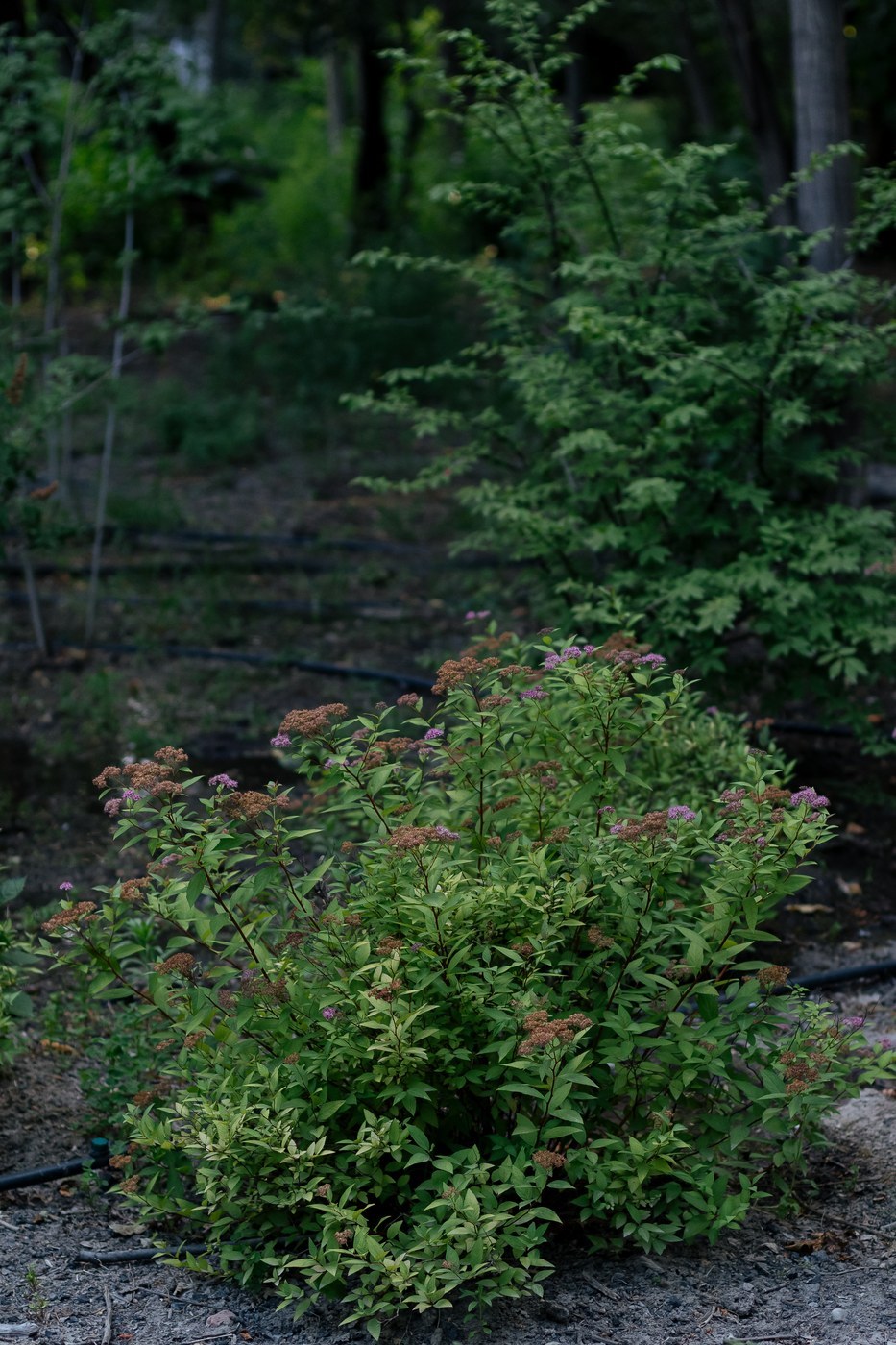
Key Identifying Features
Spirea (genus Spiraea) is a group of small to medium deciduous shrubs popular for their profuse clusters of tiny flowers and easy care. They are recognized by small alternate toothed leaves, slender wiry stems, and dense flat-topped or plume-like flower clusters of many tiny five-petaled blooms.
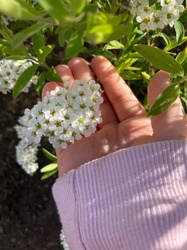
- Many tiny 5-petaled flowers in dense clusters (white or pink)
- Small, alternate, simple, toothed leaves
- Slender, arching or mounded twiggy stems
- Flower form varies: flat-topped corymbs or upright plumes
Leaves & Stems
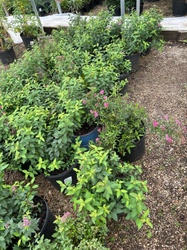
Leaves are alternate, small (0.75–3 in), simple, oval to lance-shaped, with toothed (serrated) margins, often only toward the tip. Foliage color ranges from blue-green to chartreuse or golden in cultivars, frequently with good orange-red fall color. Stems are slender, wiry, and numerous, forming either a low mounded shrub (e.g., Japanese spirea) or a tall arching one (e.g., bridalwreath spirea). Bark is thin and brown, often peeling on older wood.
Flowers & Fruit
Flowers are tiny but borne in great numbers, each with five rounded petals and a tuft of protruding stamens. They cluster into either flat-topped to rounded corymbs (pink/rose, summer-blooming types like S. japonica) or rounded white sprays along arching stems (spring-blooming bridalwreath, S. prunifolia/S. ×vanhouttei). The fruit is a small cluster of dry follicles. Bloom can be so heavy it hides the foliage.
How to Tell It Apart from Look-Alikes
- Meadowsweet/astilbe are herbaceous, not woody shrubs.
- Deutzia has opposite leaves, while spirea leaves are alternate — a key check.
- Bridalwreath spirea vs. its white-flowered look-alikes: spirea's arching stems lined with small rounded white flower clusters and small toothed leaves are distinctive.
- The combination of small alternate toothed leaves + slender twiggy stems + dense masses of tiny 5-petaled flowers confirms Spirea.
Where You'll Find It
Spireas are among the most widely planted landscape shrubs in temperate gardens, used in foundation plantings, borders, and mass groupings for their long bloom and toughness. Different species are native to Asia, Europe, and North America; they grow in full sun in average, well-drained soil.
Quick ID Checklist
- Masses of tiny 5-petaled flowers (white or pink)
- Small alternate toothed leaves
- Slender wiry stems, mounded or arching
- Flat-topped clusters or white-flowered arching sprays
- Common in foundation and border plantings
Frequently asked questions
How do I recognize spirea quickly?
Look for a twiggy shrub smothered in masses of tiny five-petaled white or pink flowers, with small alternate toothed leaves on slender stems.
What is the difference between spring and summer spireas?
Spring bloomers like bridalwreath spirea have white flowers along long arching stems, while summer bloomers like Japanese spirea have flat-topped pink-to-rose clusters on mounded plants.
How can I distinguish spirea from deutzia?
Check leaf arrangement: spirea leaves are alternate, whereas deutzia leaves are opposite, even though both can carry showy white flower clusters.
Are spirea leaves and flowers small?
Yes. Both the leaves and individual flowers are small, but the flowers occur in such dense clusters that the shrub can appear completely covered in bloom.
Spirea identified by the community
Recent Spirea specimens identified with Plant Identifier.