Strawberry Identification Guide
Identify the strawberry plant (Fragaria) by its low rosette, three-part toothed leaves, white five-petaled flowers, runners, and seed-studded red fruit.
Read the full Strawberry encyclopedia entry →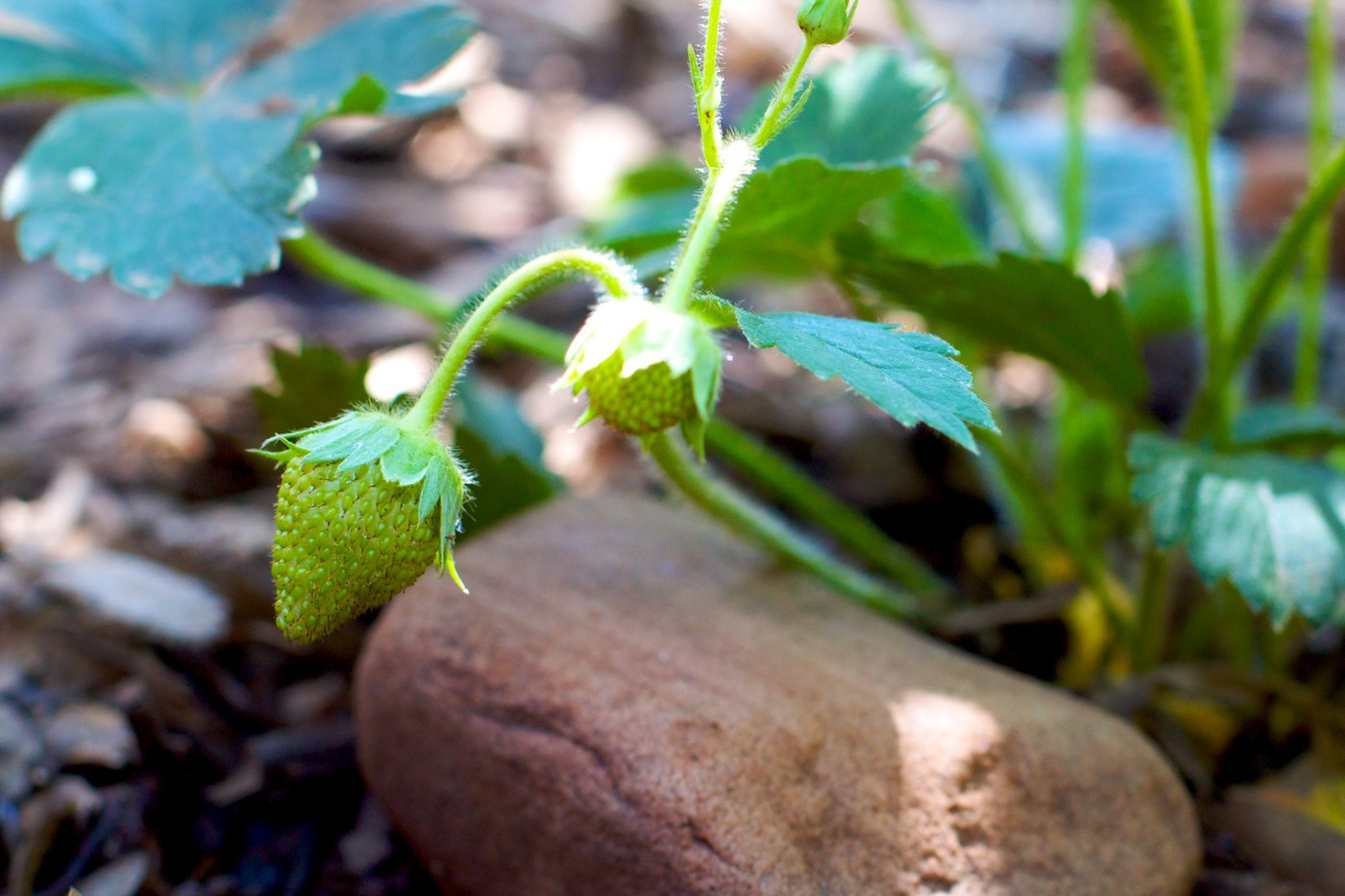
Key Identifying Features
The strawberry (Fragaria spp.) is a low-growing perennial in the rose family (Rosaceae). Look for a ground-hugging rosette of trifoliate (three-leaflet) leaves, white five-petaled flowers with yellow centers, slender runners (stolons) that root new plantlets, and the familiar red fruit dotted with tiny seeds (achenes) on its surface.
Leaves & Stems
- Plants form a compact crown at ground level rarely over 25 cm (10 in) tall.
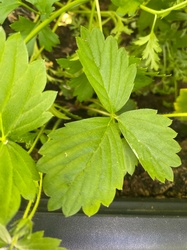
- Leaves are divided into three oval leaflets (occasionally a fourth or fifth), each with coarsely toothed (serrated) margins and prominent veins.
- Leaf surface is medium-green, sometimes slightly hairy, on long stalks rising from the crown.
- The plant spreads by runners — thin horizontal stems that touch down and root new daughter plants at the tips.
Flowers & Fruit
- Flowers are white (sometimes pink), about 2 cm across, with five rounded petals, many yellow stamens, and a green five-pointed calyx behind the petals.
- The true "fruit" is the swollen red receptacle, technically an aggregate accessory fruit. The actual fruits are the tiny seed-like achenes embedded in pits over the surface.
- A persistent green leafy cap (calyx) sits at the stem end of each berry.
- Wild strawberries (Fragaria vesca) bear much smaller but intensely fragrant berries.
How to Tell It Apart from Look-Alikes
- Mock strawberry (Potentilla / Duchesnea indica): very similar trifoliate leaves but yellow flowers and a dry, watery-looking red berry that points upward. Real strawberries have white flowers and fragrant, nodding fruit.
- Cinquefoil (Potentilla spp.): similar leaves but usually five leaflets and yellow flowers, with no fleshy berry.
- Barren strawberry (Waldsteinia): white-flowered look-alike but produces no fleshy berry.
Where You'll Find It
Cultivated strawberries grow in garden beds, raised rows, hanging baskets, and matted ground plantings in full sun. Wild and woodland strawberries colonize field edges, trail sides, lawns, and clearings, spreading into dense mats via runners. Look for spreading low patches connected by thin runners in spring and early summer.
Quick ID Checklist
- Low rosette, no woody stem
- Three toothed oval leaflets per leaf
- White five-petaled flowers with yellow centers
- Thin runners rooting new plantlets
- Red fruit studded with surface seeds and a green leafy cap
- Fragrant, nodding berry (not dry or watery-looking)
Frequently asked questions
How do I tell a real strawberry from a mock strawberry?
Check the flower color: true strawberries have white (sometimes pink) flowers, while mock strawberry (Duchesnea) has yellow flowers. The mock berry is also dry-looking and points upward, whereas real berries are fragrant and nod down.
Are strawberry seeds really on the outside?
Yes. The little dots covering the red surface are the actual fruits (achenes), and the juicy red part is a swollen receptacle. This makes the strawberry an aggregate accessory fruit rather than a true berry.
What are the thin stems running across the ground?
Those are runners (stolons). They are horizontal stems that root at their tips to form new daughter plants, which is the strawberry's main way of spreading and a reliable identifying feature.
How can I identify a wild woodland strawberry?
Wild strawberries (Fragaria vesca) have the same three toothed leaflets and white flowers but produce much smaller berries that are remarkably fragrant. They grow in woods, clearings, and trail edges.
Strawberry identified by the community
Recent Strawberry specimens identified with Plant Identifier.