Sunflower Identification Guide
A practical guide to recognizing the common sunflower by its towering rough stem, large heart-shaped leaves, and the iconic ray-and-disk flower head.
Read the full Sunflower encyclopedia entry →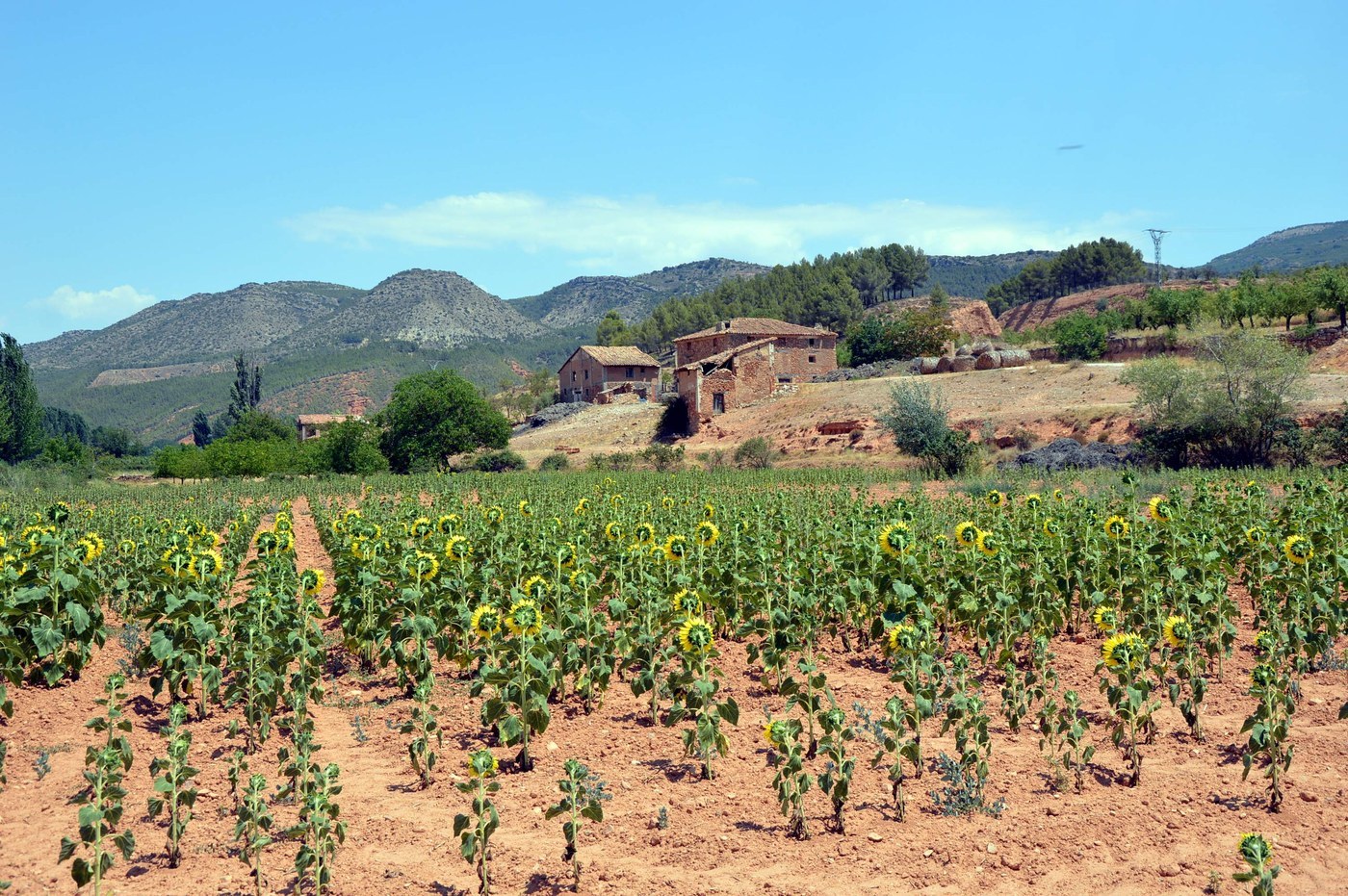
Key Identifying Features
The common sunflower (Helianthus annuus) is one of the easiest plants to identify once it flowers. Look for:
- A single, tall coarse stem often 1.5-3 m (5-10 ft) tall, sometimes branched in garden and wild forms
- A large composite flower head 10-30 cm across, made of bright yellow ray florets surrounding a central disk of tiny brown, purple, or yellow florets
- Rough, bristly hairs covering the stem and leaves that feel like fine sandpaper
- Big, alternate, heart- to triangular-shaped leaves with toothed margins
The central disk is not a single flower but hundreds of small disk florets arranged in interlocking spirals (a classic example of the Fibonacci pattern), which later mature into the familiar striped seeds.
Leaves & Stems
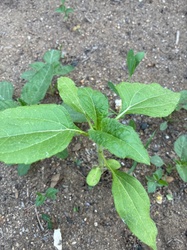
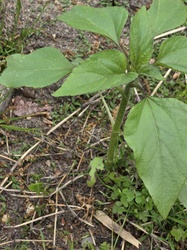
Sunflower leaves are large (often 7-30 cm long), broadly ovate to heart-shaped, with three main veins and coarsely toothed edges. The lower leaves are usually opposite while upper leaves become alternate along the stem. Both surfaces are rough-hairy. The stem is solid, erect, and noticeably hairy, with a fibrous, somewhat woody base in mature plants. Crushed foliage has a mild green, resinous smell.
Flowers & Fruit
Each head sits atop the stem ringed by green, pointed, overlapping bracts (phyllaries) with hairy tips. The outer ray florets are sterile and purely showy; the inner disk florets are fertile and produce seeds. Bloom time is mid- to late summer. After flowering the head dries, droops, and fills with achenes (seeds) that are flattened, teardrop-shaped, and often gray-and-white striped or solid black. Young heads famously track the sun (heliotropism); mature heads usually face east.
How to Tell It Apart from Look-Alikes
- Jerusalem artichoke (Helianthus tuberosus) and other perennial sunflowers have many smaller heads and narrower leaves; the common annual sunflower typically has one large dominant head.
- Black-eyed Susan (Rudbeckia) is much shorter, with a smaller dark dome and narrower leaves.
- False sunflower (Heliopsis) has fertile ray florets and smoother foliage.
- The combination of great height, sandpapery hairs, heart-shaped leaves, and one huge head is diagnostic for Helianthus annuus.
Where You'll Find It
Sunflowers grow in full sun in gardens, farm fields, roadsides, disturbed ground, and prairies. Native to North America, they are now cultivated and naturalized worldwide. They favor well-drained soil and tolerate poor, dry conditions.
Quick ID Checklist
- Tall coarse stem, often head-high or taller
- Rough, sandpaper-textured stem and leaves
- Large heart- to triangular leaves with toothed edges
- One big head with yellow rays around a brown/purple central disk
- Green hairy bracts ringing the head
- Seeds maturing into flat striped or black achenes
If the plant is tall, fuzzy-rough, and topped by a sun-like yellow disk flower, you are almost certainly looking at a sunflower.
Frequently asked questions
How do I tell a sunflower from a black-eyed Susan?
Sunflowers are usually much taller with a large head (10-30 cm) and big heart-shaped, sandpapery leaves. Black-eyed Susans are shorter, with smaller flower heads, a prominent dark dome, and narrower, hairy leaves.
Is the yellow part one flower or many?
It is a composite of hundreds of tiny flowers. The yellow 'petals' are sterile ray florets, and the central brown disk is packed with fertile disk florets that become seeds.
Do all sunflowers track the sun?
Only young, growing flower buds and immature heads follow the sun across the sky. Once the head matures and seeds develop, it stops moving and typically faces east.
How big do common sunflowers get?
Wild and garden annual sunflowers commonly reach 1.5-3 m (5-10 ft), and some cultivated varieties exceed 4 m with heads over 30 cm wide.
Sunflower identified by the community
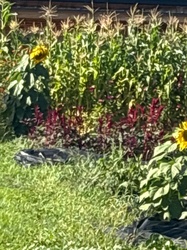
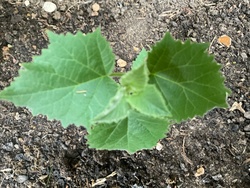
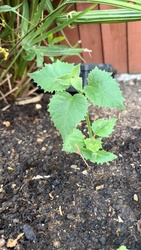
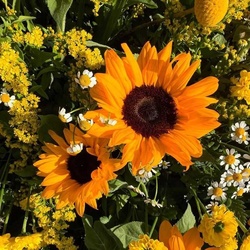
Recent Sunflower specimens identified with Plant Identifier.