Peace Lily Identification Guide
Recognize the peace lily (Spathiphyllum) by its glossy dark leaves and signature white spathe-and-spadix flower, and distinguish it from calla lilies and other aroids.
Read the full Peace Lily encyclopedia entry →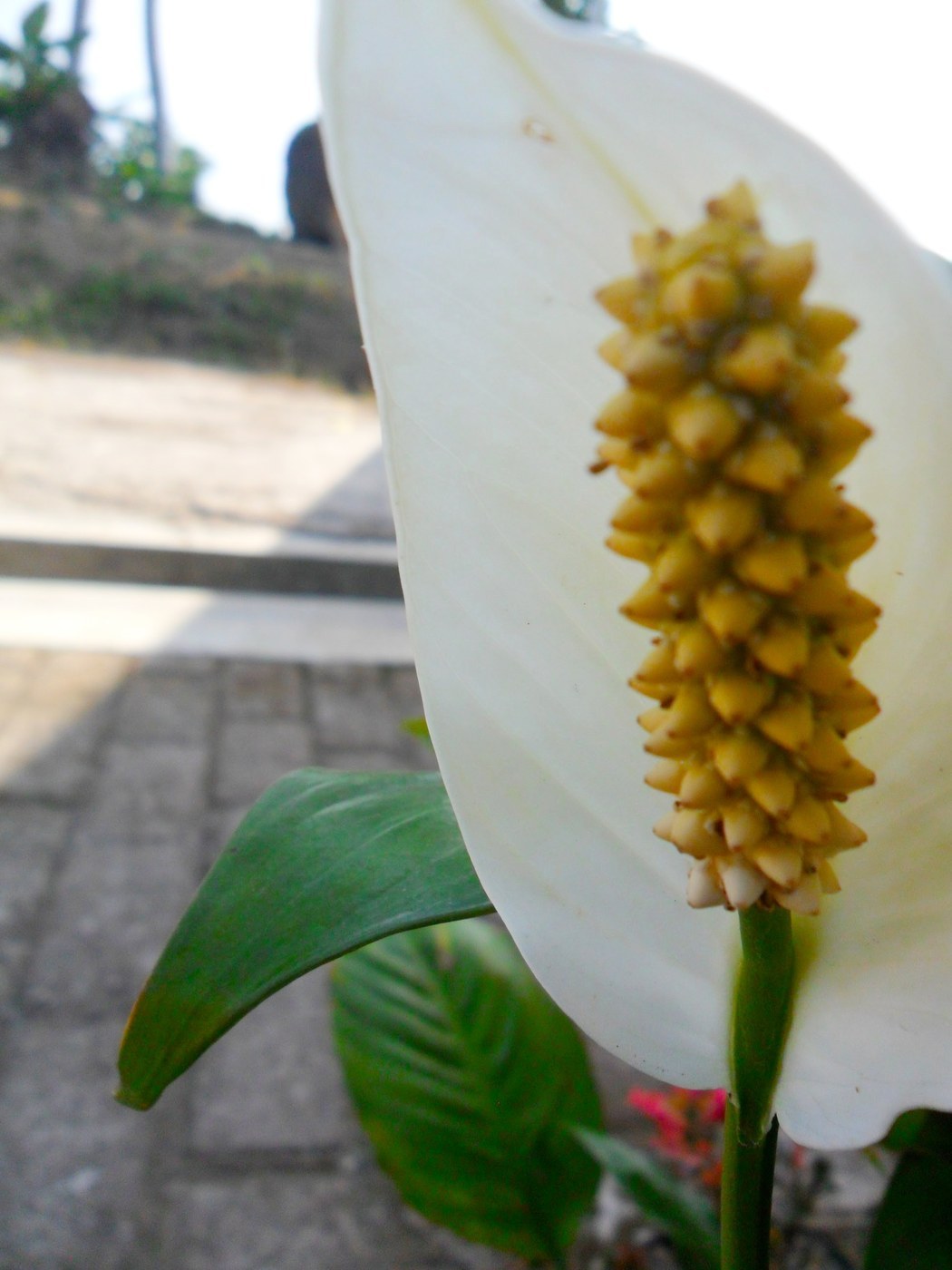
Key Identifying Features
The peace lily (Spathiphyllum species and hybrids) is identified by:
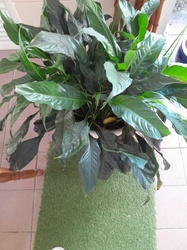
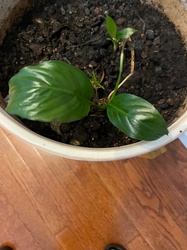
- Glossy, dark green, lance- to oval-shaped leaves rising in a clump directly from the soil.
- The unmistakable white "flower": a single curved spathe (bract) wrapped around a knobbly spadix.
- A clumping, stemless rosette habit with leaves on long stalks.
Despite the name, it is not a true lily — it's an aroid (Araceae family).
Leaves & Stems
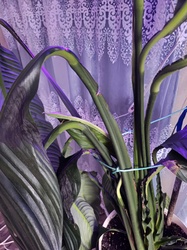
Leaves are smooth, glossy, and deep green, with a prominent central midrib and fine parallel side veins, tapering to a pointed tip. They grow on long, slender petioles straight from the base — there is no upright woody stem. Leaf size ranges from compact (20 cm) to large (over 50 cm) by cultivar.
The foliage forms a dense, fountain-like clump. Leaves droop noticeably and dramatically when the plant is thirsty, then recover after watering — a behavioral clue many owners recognize.
Flowers & Fruit
The signature bloom is a white (sometimes greenish) spathe — a modified leaf-like bract — partially enclosing a cream-to-pale-green spadix covered in tiny true flowers. Blooms are held on stalks above the foliage and last for weeks, fading to green as they age. Pollinated spadices may form small green berries.
How to Tell It Apart from Look-Alikes
- Calla lily (Zantedeschia): also has a spathe-and-spadix, but the spathe is a fully rolled funnel/trumpet in white, yellow, pink, or purple, and grows from a tuber with arrow-shaped, often spotted leaves. Peace lily's spathe is flatter, open, and white, with plain lance leaves.
- Anthurium: spathe is flat, waxy, and usually red/pink, with a straight or curled colorful spadix.
- Aglaonema (Chinese evergreen): similar leaf clump but typically patterned/silvery leaves and an inconspicuous green spathe.
The deciding trait: plain glossy lance leaves + open white spathe with a pale spadix = peace lily.
Where You'll Find It
Native to tropical rainforest floors of the Americas and Southeast Asia, where it grows in deep shade and humidity. Worldwide it's a top low-light houseplant. Outdoors it grows only in warm, frost-free, shaded gardens (USDA zones 11–12).
Quick ID Checklist
- Glossy dark green lance-shaped leaves in a clump
- Leaves on long petioles from the base (no woody stem)
- White open spathe around a pale spadix
- Wilts dramatically when dry, recovers after watering
- No bulb/tuber visible; fibrous rooted clump
A shade-loving leafy clump producing open white spathe flowers is a peace lily, not a true lily or calla.
Frequently asked questions
Is the white part the flower?
Not exactly. The white part is a spathe, a modified leaf-like bract, and the real flowers are the tiny structures on the central spadix that the spathe surrounds. Together they form the characteristic aroid inflorescence.
How is a peace lily different from a calla lily?
A calla lily's spathe is rolled into a funnel or trumpet and comes in many colors, growing from a tuber with arrow-shaped leaves. A peace lily has a flatter, open white spathe and plain lance-shaped leaves from a fibrous clump.
Why does my peace lily keep drooping?
Peace lilies wilt dramatically when the soil dries out and perk back up within hours of watering. This thirst signal is a recognizable behavior, though chronic drooping can also mean overwatering or root problems.
Peace Lily identified by the community
Recent Peace Lily specimens identified with Plant Identifier.